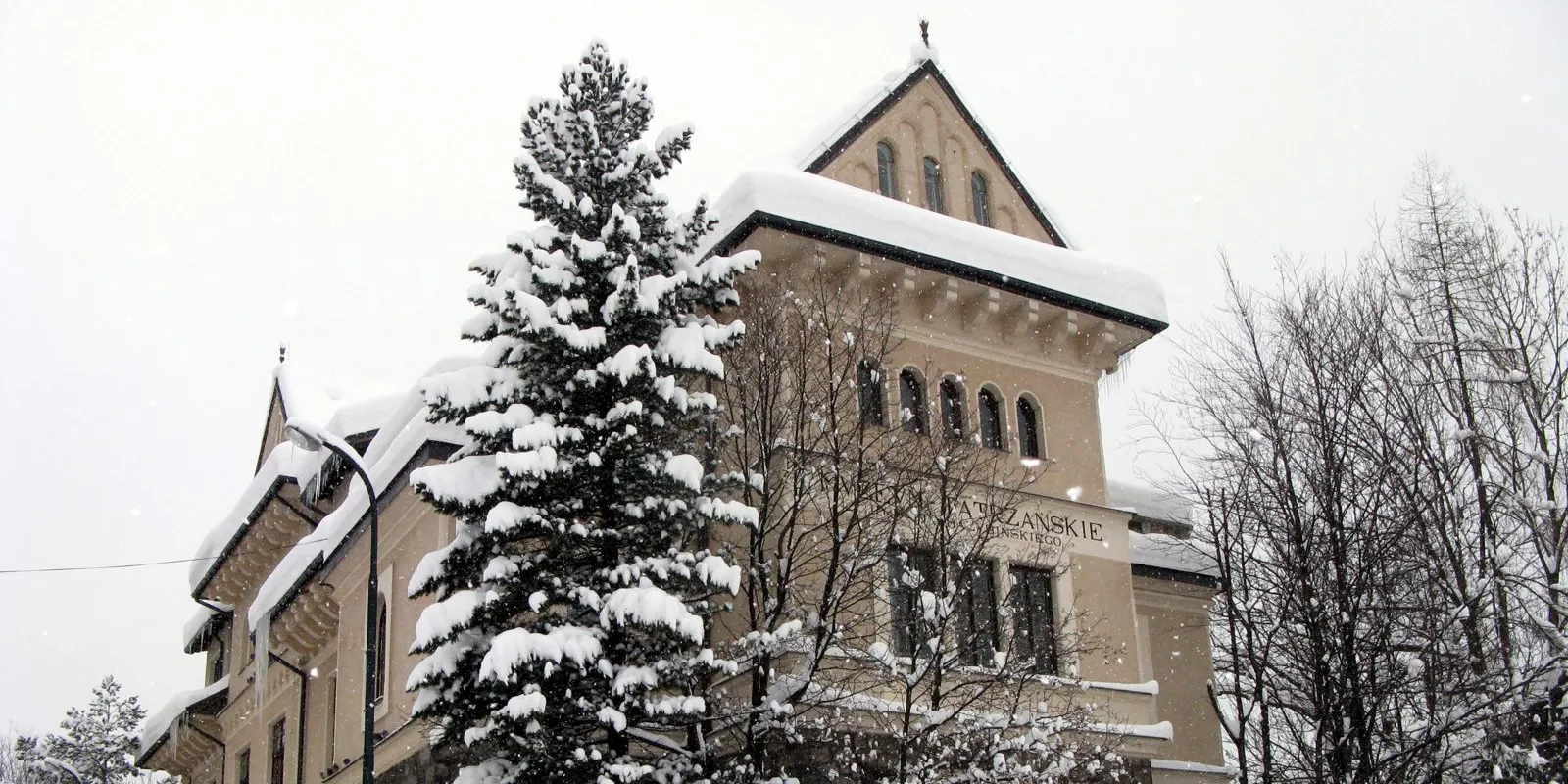
The Tatra Museum had to wait more than twenty years for a home. Founded in 1889 by the society that bore the name of the mountains, it gathered rocks, birds, costumes and everyday objects long before it found a permanent address: the building on Krupówki went up only between 1913 and 1924. Today that building is the heart of a network of branches scattered across town and the nearby villages, and choosing where to start is the real problem.
The main building: from rock to hearth
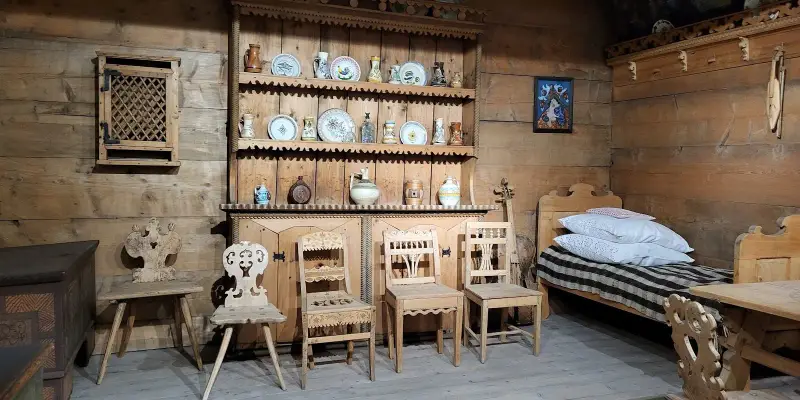
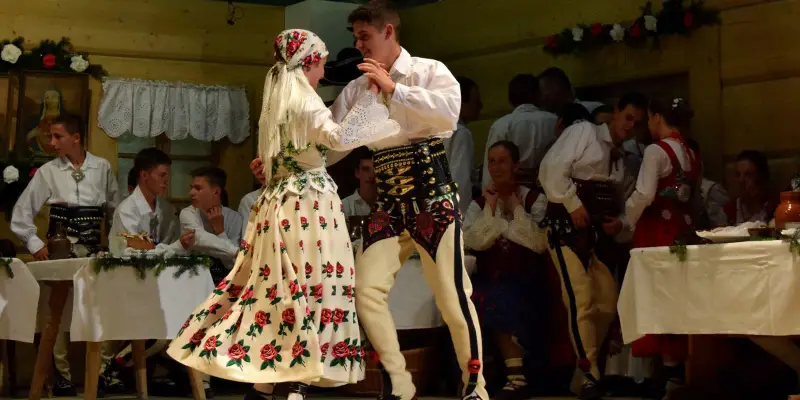
The Tatra Museum carries the name of Dr Tytus Chałubiński and was designed by Stanisław Witkiewicz, with Franciszek Mączyński handling the technical side. The permanent display weaves natural history into ethnography: first rocks and minerals, the vegetation zones of the Tatras, birds and mammals; then the everyday objects of Podhale, Spisz and Orava. One section shows a house built in the Zakopane Style, and the library holds about 30,000 volumes of Tatra literature.
The beauty lies in that very passage: you realise the mountains and the people who live in them are a single story. Anyone short of time should stop here, because the museum makes everything else readable. One caution: opening hours and open rooms can change, so check in advance.
The Hasior Gallery: art made from scrap
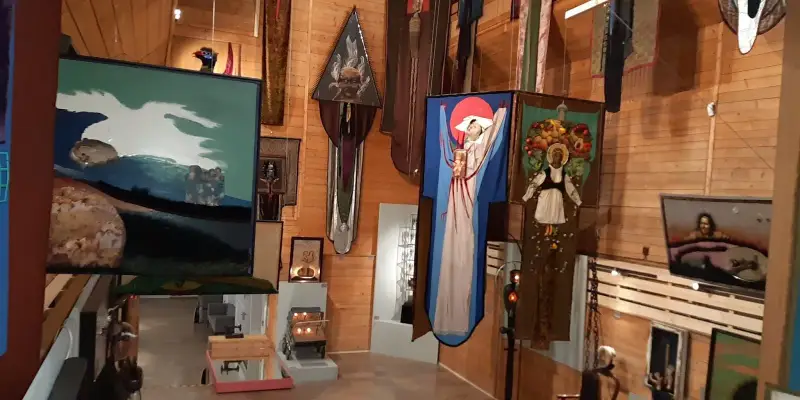
The second branch is the most disorienting. Władysław Hasior (born in Nowy Sącz in 1928, died in 1999) trained under Antoni Kenar, then at the Academy of Fine Arts in Warsaw and in Ossip Zadkine’s Paris studio. His gallery occupies the former resting terrace of the Warszawianka sanatorium, built in 1935, and the works were moved there from his studio in December 1984.
You find banners, spatial compositions and sculptures, many assembled from everyday objects and scrap: visual poetry by an artist who also worked with fire, water and sound in open-air monuments and as a stage designer. His pieces are in several Polish museums, and open-air monuments by him also stand in Denmark and Sweden. It is a very different visit from the rest, and that is why it is worth it: after so much carved timber, contemporary art made from poor materials changes the rhythm of the morning.
Villa Opolanka: Makuszyński’s house
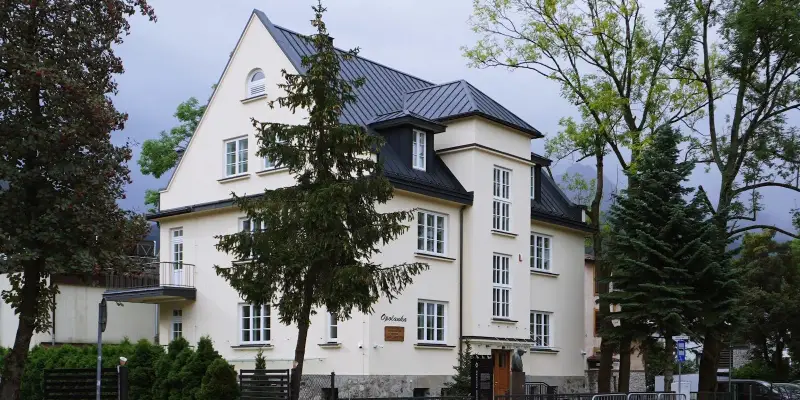
The Kornel Makuszyński Museum is in Villa Opolanka, where the writer and his wife spent many holidays from 1934 and where they settled for good after the war. The museum came about thanks to a donation from his widow, Janina Gluzińska-Makuszyńska, and is Zakopane’s second biographical and literary museum after the Kasprowicz one.
Two themed rooms, “The Life and Work of Kornel Makuszyński” and “Literary Zakopane”, show manuscripts, letters, press clippings, photographs and illustration designs. The interiors keep antique furniture, porcelain, glass, lamps and clocks, along with paintings and sculptures by Julian Fałat, Władysław Skoczylas, Stanisław Wyspiański and Henryk Kuna. If you do not know Makuszyński, do not worry: the house also works as a portrait of a way of living in the town in the twentieth century.
Other branches: if the morning stretches
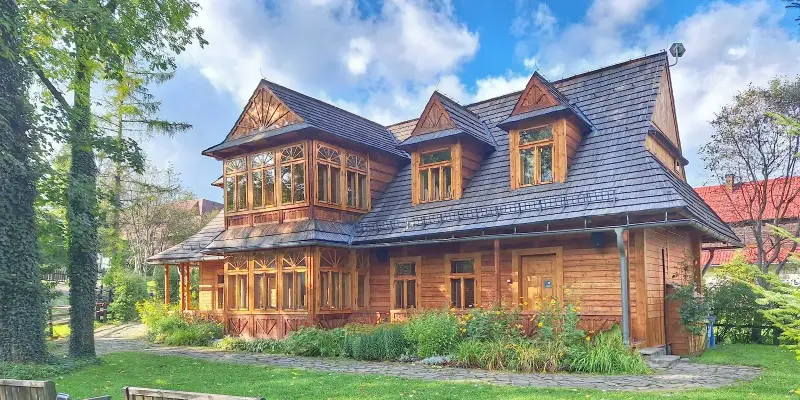
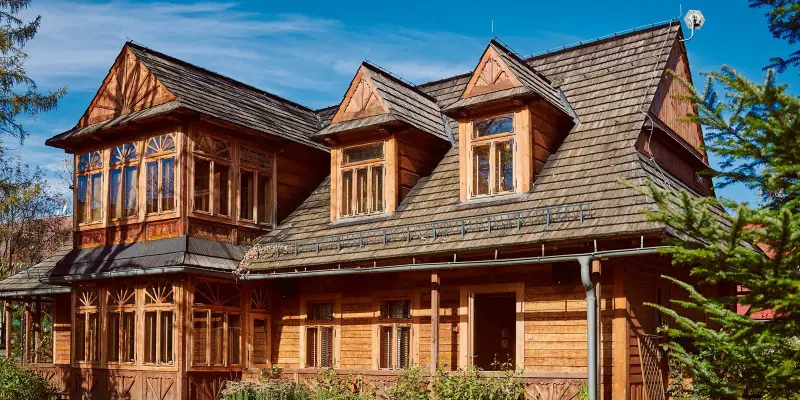
The museum also has more specific themed branches. Villa Koliba houses the Museum of Zakopane Style, dedicated to Witkiewicz; the Gąsienica Sobczak Cottage hosts the exhibition “Zakopane Style – Inspirations”, with the black chamber, the white chamber and the Dembowski collection; in Chochołów, in a log house, there is the museum of the 1846 uprising and of a nineteenth-century highland home. On a rainy trip they all make excellent fallbacks.
The rule is simple: do not try to do everything in one day. Museum fatigue is real, and the risk is walking out remembering nothing. Choosing two branches of different character leaves more behind than five glimpsed at a run.
How to choose in one morning
Here are three reasonable combinations, depending on interest.
- For mountain nature and history: the main building on Krupówki, then a coffee and a walk in the centre.
- For art: the Hasior Gallery, then, if time is left, the main building.
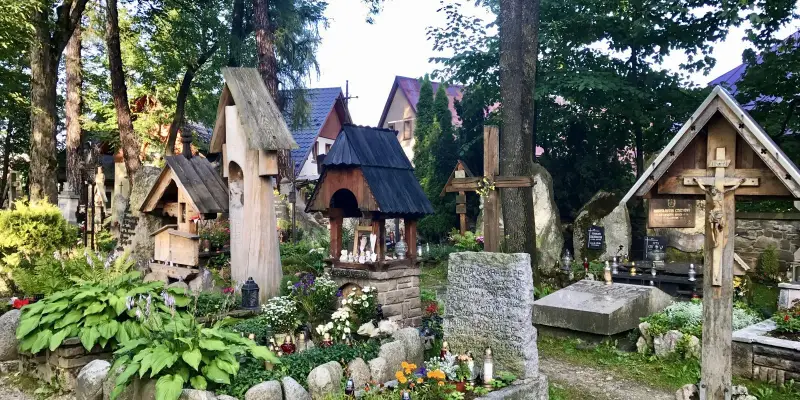
- For literature: Villa Opolanka and, in the afternoon, the Old Cemetery at Pęksowy Brzyzek where Makuszyński rests.
With children the main building is the safest choice, thanks to the birds and animals; with adults curious about architecture, the Koliba and the Gąsienica Sobczak cottage. For those who love the unexpected, the Hasior Gallery is the surprise of the town. Whichever you choose, leave with one clear idea: Zakopane is not only a launchpad for the summits but also a place with an archive of memories.
Frequently asked questions
Is the Tatra Museum good for a rainy day?
Yes, it is one of the best choices, because the rooms are indoors and the route mixes nature, ethnography and architecture. In heavy rain, pair the main building with a nearby branch and keep transfers short.
How many branches does the Tatra Museum have?
Besides the main building on Krupówki, the network includes several branches in Zakopane and nearby villages, among them the Koliba, the Gąsienica Sobczak cottage, the Hasior Gallery, Villa Opolanka and the Chochołów museum.
Is the Hasior Gallery suitable for children?
Generally yes, because banners and sculptures made of everyday objects intrigue even the smallest. Some works are strong or unsettling, so it is better to know them first and explain a little to more sensitive children.
Are the museum labels in English?
It depends on the branch and exhibition: labels are generally in Polish and partly in other languages. Ask on the spot, or prepare the visit with some reading so you do not lose the sense of the ethnographic collections.