On the night of 21 February 1846 a group of highlanders attacked an Austrian frontier guard post and declared a revolt. Within two days it was over. Yet the Chochołów Uprising remains one of the moments in which the górale, the highlanders of Podhale, recognise themselves as a community with a history of its own. To understand who they are, the starting point is not a costume or a song but this small border episode.
Who the górale are and where they live
The word górale simply means “highlanders”, and it refers to the people of Podhale, the region at the foot of the Polish Tatras of which Zakopane is now the informal capital. They have a language of their own, a dialect all their own, a tradition of shepherds and woodworkers, and a strong sense of belonging that has survived any pressure from tourism.
Their world was never confined to the mountains. When Zakopane became a spa, the highlanders were guides, musicians, carpenters, guesthouse cooks. You can see it in the stories of Jan Krzeptowski Sabała, storyteller and fiddler, and in the builders who raised Villa Koliba to Witkiewicz’s design: without them the Zakopane Style would not exist.
Chochołów: memory in a log house
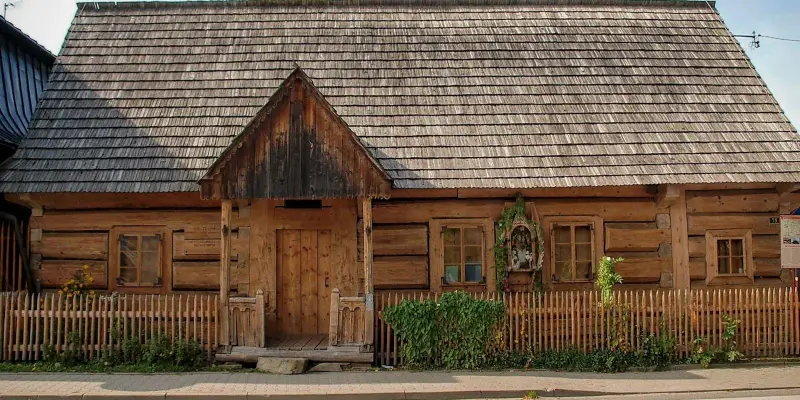
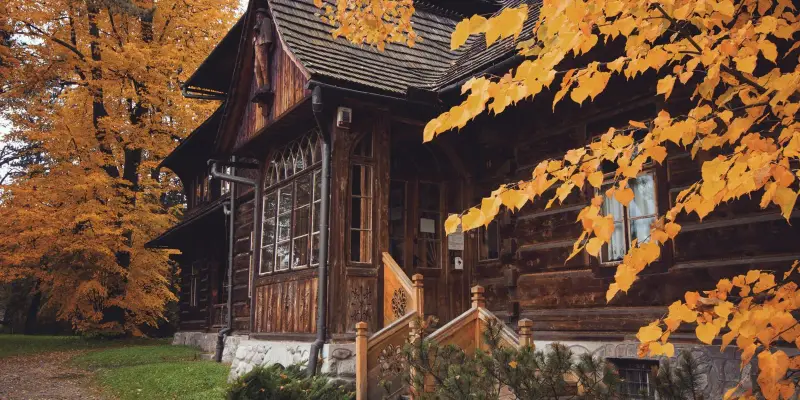
The best place to touch this history is the Chochołów Uprising Museum, in the village of that name, inside a log cottage of the Bafia family. It is a branch of the Tatra Museum. It tells the story of the insurrection led by Jan Kanty Andrusikiewicz and Father Leopold Kmietowicz: the rebels attacked an Austrian guard post, but within two days were forced to surrender to border guards and reinforcements. Many ended up in prison and were freed in 1848.
The most interesting part, though, is the ethnographic one: the museum recreates a nineteenth-century highland home with the everyday black room and the festive white room. A section also recalls the poet Seweryn Goszczyński and the later commemoration of the uprising. The village itself, with its timber houses in a row, is worth the stroll, and it works well as a half day away from Zakopane.
Costume, music and dialect: what is alive and what is staged
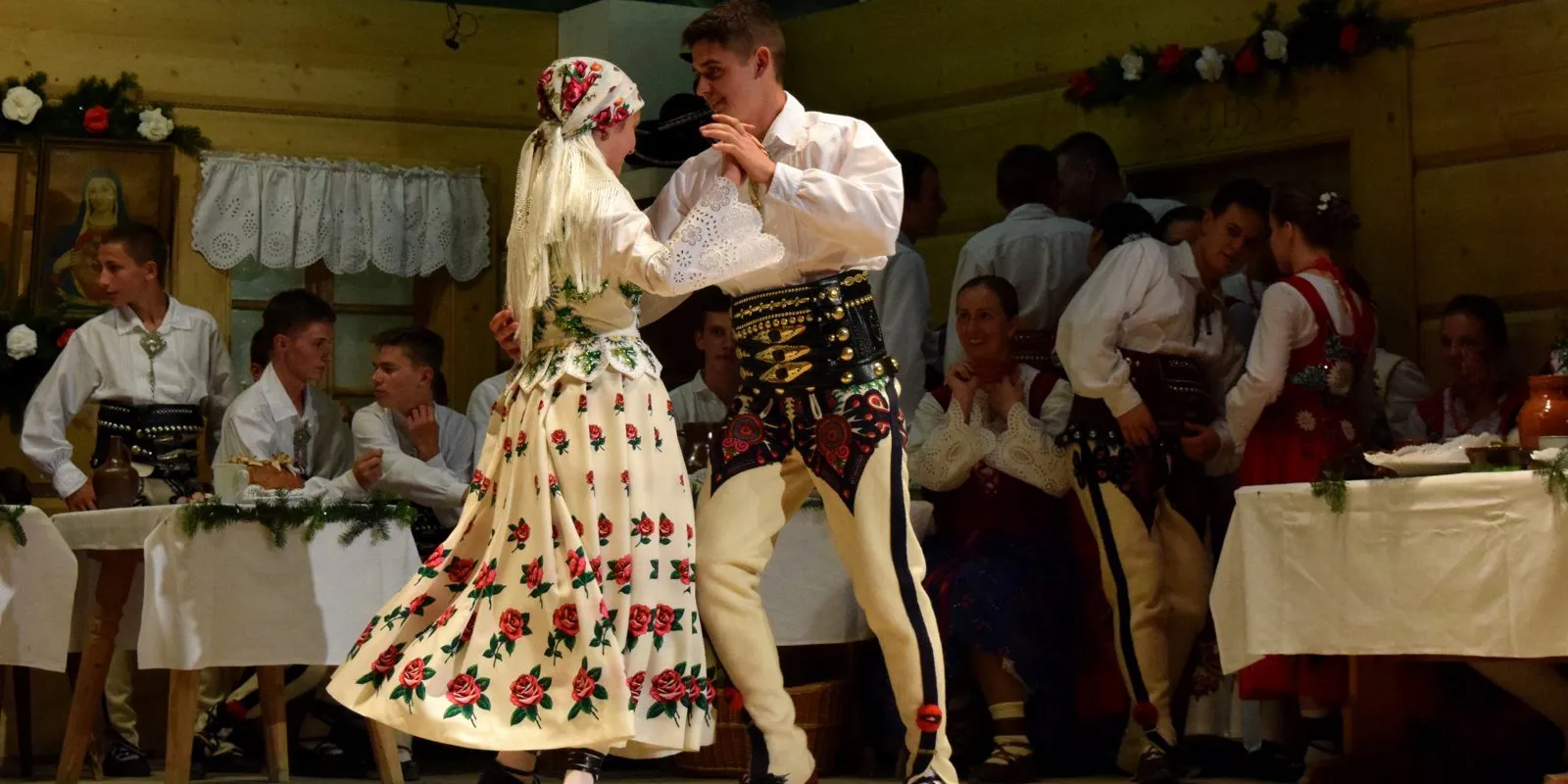
Traditional dress remains a strong sign: felt trousers with embroidery, decorated hats, worked jackets and sheepskins. It appears at festivals and religious occasions, and in many families it is handed down with care. Music is the other hallmark: small bands with fiddles and a dry-sounding double bass, melodies and dances with unmistakable rhythms. You cannot learn it in an afternoon, but one live occasion is enough to see why people care so much.
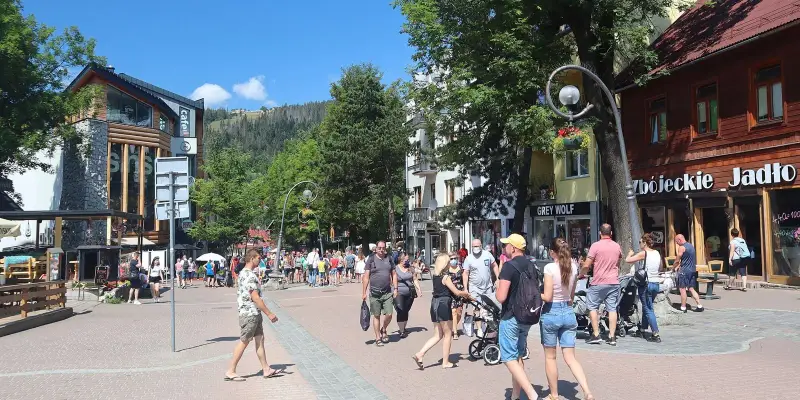
It is worth being honest here. Along Krupówki, between shops, horse-drawn carriages and the White Bear statue, highland culture is also visible as a show for visitors, with costumes for photographs and mass-produced souvenirs. That is not “fake” in a strict sense, but it is a surface layer: the authentic lies more in homes, craftsmen’s workshops and museum rooms. The street’s tilted lamps shaped like shepherd’s crooks are a nice nod, but they remain a symbol, not the substance.
Hospitality and stereotypes: how to behave
The górale have a reputation for being hospitable and proud, and one does not cancel out the other. The welcome is real, but it rests on a pact of respect: newcomers do well to greet politely, not to treat costumes as masks and not to mistake local identity for scenery. Avoid generalisations about highlander character too: they are people with jobs, opinions and modern lives, not characters in a fairy tale.
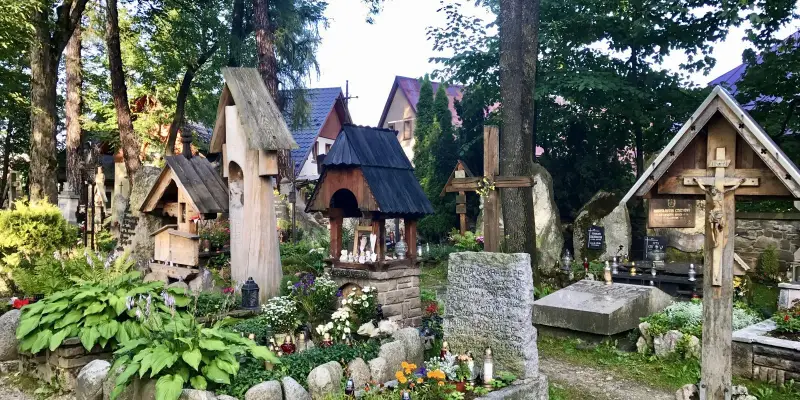
A small practical tip: if you arrive during a religious festival or village fair, watch before you photograph. Ask permission when filming people in costume; in churches and cemeteries keep a sober attitude. The Old Cemetery at Pęksowy Brzyzek, where Sabała lies, is a fine place to feel the more intimate side of this culture.
How to build a real encounter
A sensible order for a single day: a morning in Chochołów, for the history and the houses, then an afternoon in Zakopane at the Gąsienica Sobczak Cottage, which shows the highland interiors that inspired Witkiewicz, plus a taste of Krupówki, without expecting it to be the heart of the culture. If you can, choose an evening of live music: that is where you learn how different the sound of fiddles is from any recording.
Who is this theme for? For those who love local cultures and want to feel the difference between lived tradition and folklore in a shop window. For anyone who only wants a photo in costume it remains a poor version. Those who stop to listen discover that the mountains have something else to offer beyond panoramas: a language, a memory and a way of being together.
Frequently asked questions
What is the difference between górale and Poles?
The górale are Poles, but with a regional identity of their own tied to the mountains: dialect, costume, music and pastoral traditions. They see themselves as highlanders of Podhale, and in daily life local and national culture sit together without contradiction.
Can I photograph people in traditional dress?
It is best to ask permission, especially during festivals and religious services. Those who pose for tourists along Krupówki usually do so as an open activity, but for costumes worn by families at occasions, courtesy is essential.
Where can you hear górale music live?
Usually in traditional venues and at regional festivals and fairs; the programme changes every season, so ask locally. A live band of fiddles and double bass is the experience that comes closest to this culture.
Is Chochołów far from Zakopane?
It lies in Podhale, north-west of Zakopane, and can be reached with a short drive or local transport. Give it a morning, and also walk among the village’s historic timber houses after visiting the museum.