A museum that existed long before its home
The first exhibition of the Tatra Museum was held in a rented house on Krupówki that no longer exists, and the building you see today came decades later, after other homes. The museum was founded in the late 1880s (sources give 1888 or 1889) by friends of Dr Tytus Chałubiński (1820-1889), regarded as the man who discovered Zakopane's worth as a health resort.
From a rented house to a masonry building
The first collections covered botany, geology, zoology and ethnography, plus a library, put together from donations and purchases of private collections. Chałubiński himself gave rocks gathered between 1873 and 1887 and a moss herbarium of more than 2700 specimens. In 1892 a building designed by Józef Pius Dziekoński went up on Chałubińskiego Street, on land given by Chałubiński's children, and the collections moved in.
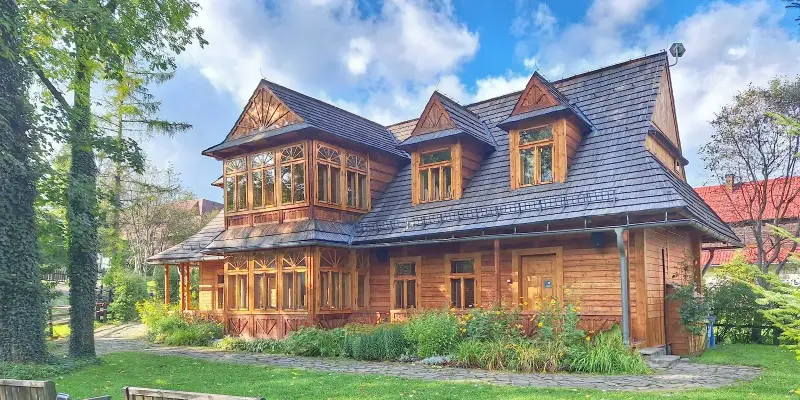
In 1911 the society accepted a design by Franciszek Mączyński, which Stanisław Witkiewicz criticised harshly; Mączyński was then asked to produce a technical design in the Zakopane Style based on Witkiewicz's concept. Work began in 1913, stopped with the war and resumed afterwards, ending in 1924; by 1922, though, the collections were already in the rooms and the museum had opened to visitors. Count Władysław Zamoyski, a member of the society, gave the building stone, and financial support from Maria Skłodowska-Curie helped finish the building and the displays. It is one of the few masonry realisations of the Zakopane Style.
From rock to costume: the permanent display
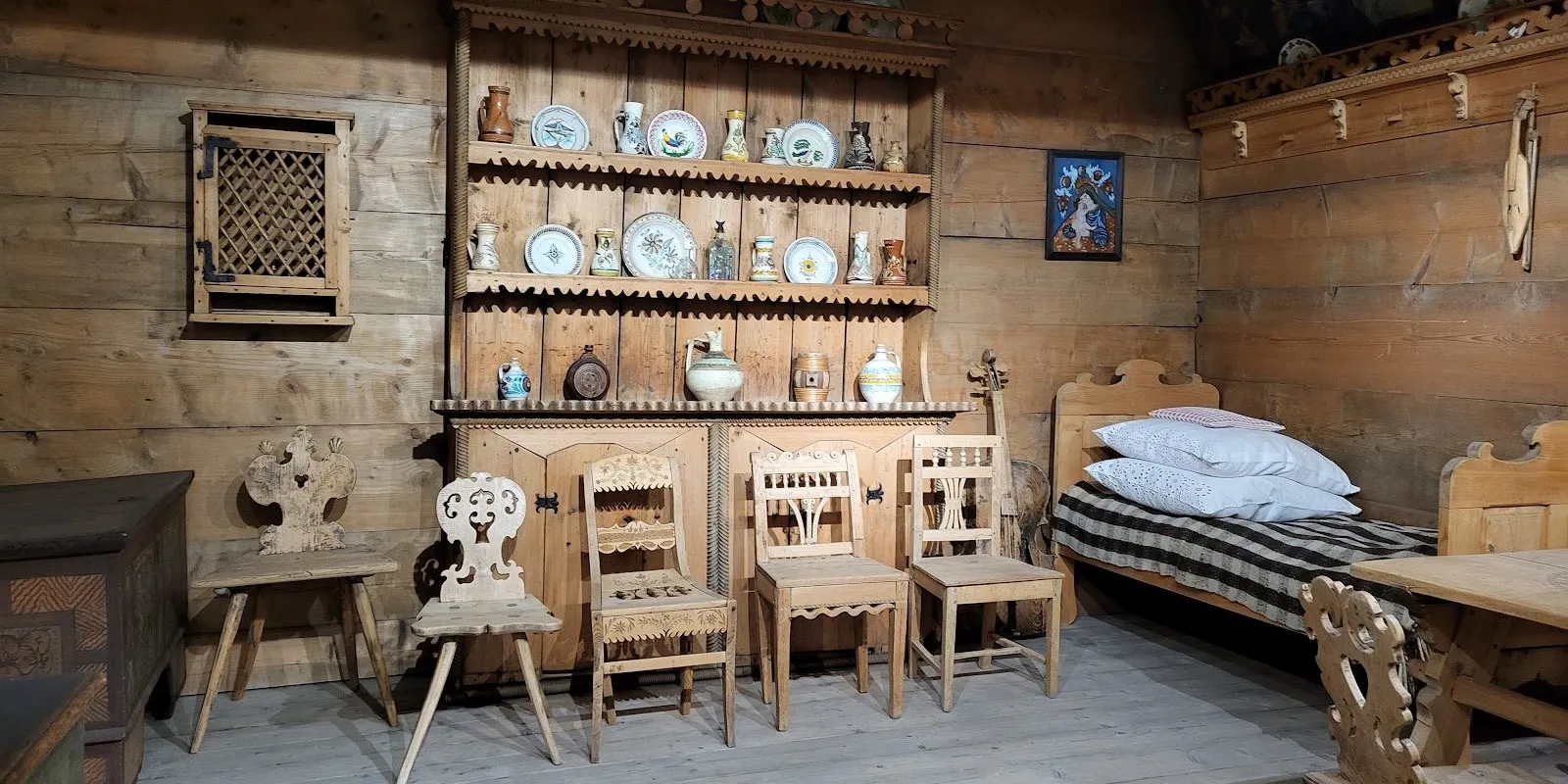
The rooms hold natural history and ethnography together. Geology shows rocks and minerals, botany the vegetation zones of the Tatras, and behind the main building lies an alpinarium; the fauna, mainly birds and mammals, numbers about 230 species. The ethnographic section covers Podhale, Spisz and Orava and reconstructs a 19th-century Podhale cottage with its white and black rooms divided by a vestibule; among the pieces stands an entrance door with diagonal wooden pegs, bought in 1905 from a house in Kościelisko. There is also a house built in the Zakopane Style.
The history exhibition runs from prehistory to the present and tells how Zakopane grew from a village into a health resort and, between the wars, an artistic centre. For art the museum holds graphics, painting, glass painting, sculpture and photographs, with a particular focus on Podhale.
Library, branches and fitting it into a visit
The library holds about 30,000 volumes of Tatra literature, and the museum publishes the journal "Rocznik Podhalański". Juliusz Zborowski, who led the museum for decades until 1965, was reportedly the first in Poland to record folk music on a phonograph. During the Second World War the institution survived without major damage.
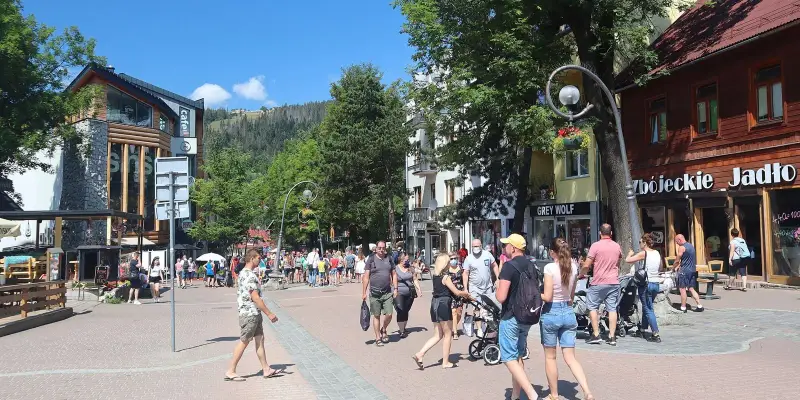
The museum anchors a network of branches. In Zakopane they include, among others, the Museum of the Zakopane Style in the Koliba villa and the gallery in the Oksza villa, both designed by Witkiewicz, the Władysław Hasior Gallery and the Kornel Makuszyński museum; outside town are the branches at Chochołów, Czarna Góra, Jurgów and Łopuszna. If you come from a stroll along Krupówki, the museum is at number 10: it is a good choice on a rainy or foggy day in the Tatras, and you should allow enough time, because natural history, ethnography, history and art are not exhausted in a few minutes. For which rooms are open, ask on the spot.
Where it is
Tours and activities
-
 From €27 per person
Zakopane
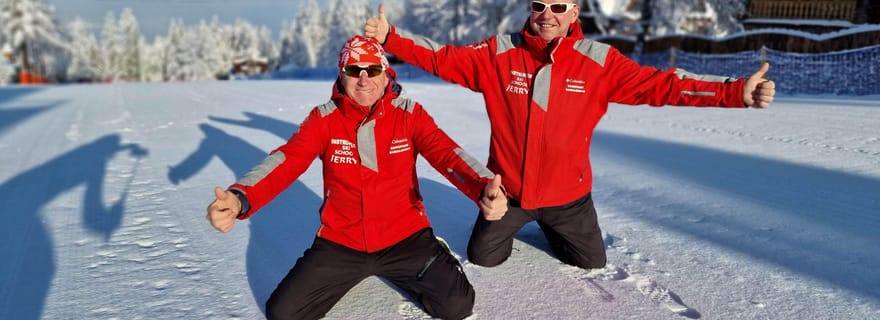
Zakopane: Ski Lesson on Gubałówka Hill for beginners
★ 4.9 (87 reviews) · Free cancellation
Duration: 1 h
Guide in:
See availability Details


-
 From €22 per person
Zakopane
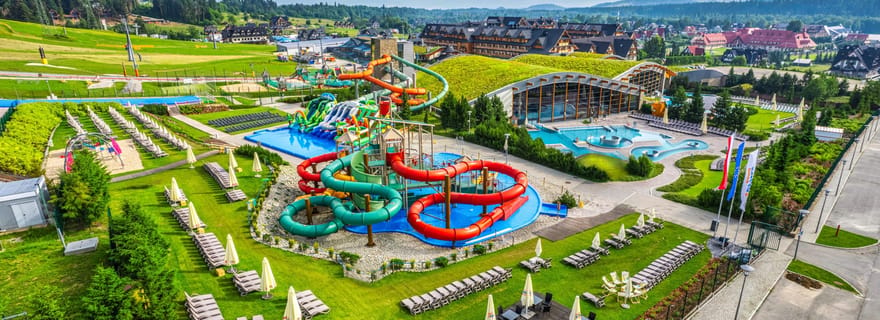
Terma Bania Aquapark Tickets in Białka Tatrzańska
★ 4.6 (132 reviews) · Free cancellation
Duration: 3h30
See availability Details -
 From €5 per person
Zakopane
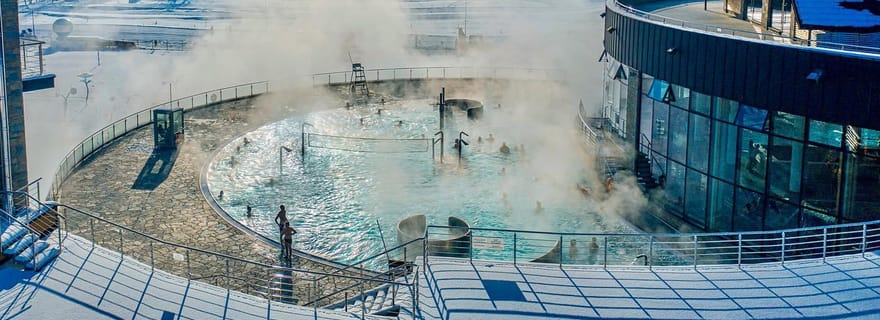
Chochołowskie Thermal Baths Entry with a Personal Host
★ 4.5 (116 reviews) · Free cancellation
Duration: 3–10 h
Guide in:
See availability Details

-
 From €81 per person
Zakopane
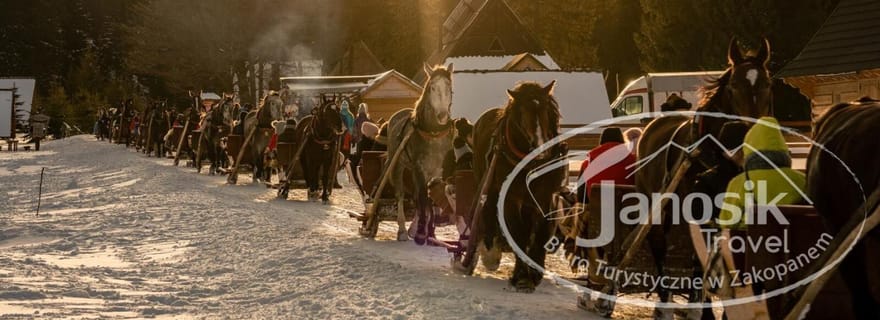
Zakopane: Chochołowska Valley Sleigh Ride with Bonfire
★ 4.4 (58 reviews) · Free cancellation
Duration: 3 h · Hotel pick-up
Guide in:
See availability Details