Banners, fire and found objects
For Władysław Hasior fire was a material like iron or wood: the “fiery birds” of his monuments in Szczecin (1975) and Koszalin (1977) are among the most cited public works in Poland. Born in Nowy Sącz in 1928 and died in 1999, he is regarded as one of the most original Polish sculptors of the post-war years. His gallery in Zakopane is not a museum built around him from the outside: it is the place where the artist worked and lived.
From a rest terrace to a gallery
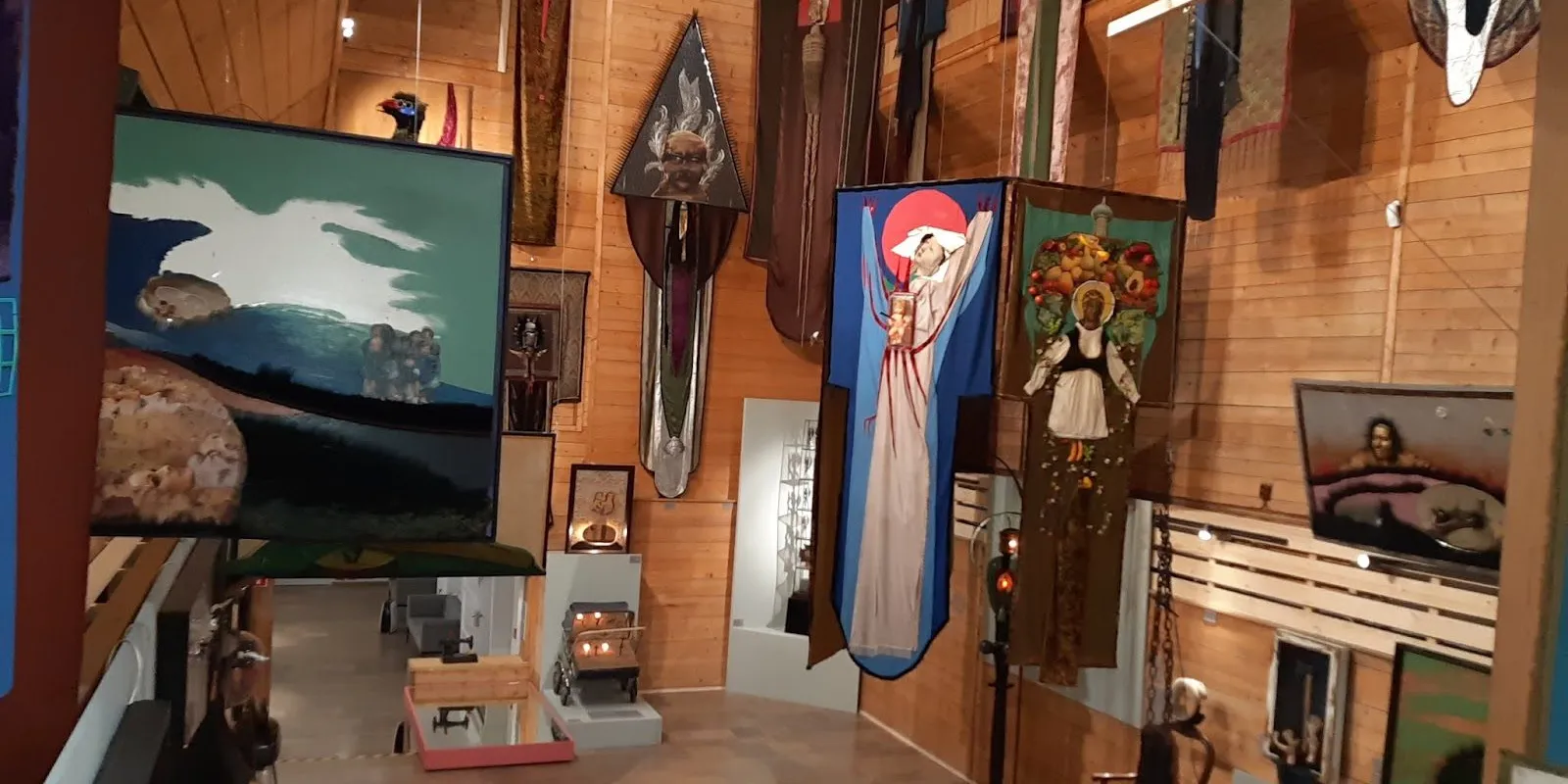
The building was the leżakownia, the open-air rest pavilion of the Warszawianka sanatorium, built in 1935. It was wooden, two storeys high, glazed on the south side. The conversion produced multi-level interiors that served as exhibition halls, a concert space, the artist's flat and his studio. The works were moved here in December 1984 from his small studio, and the gallery opened in February 1985. Today it is a branch of the Tatra Museum.
An artist formed between Zakopane, Warsaw and Paris
Hasior was born into a poor family and worked from childhood. From 1947 to 1952 he studied at the art school in Zakopane under the sculptor Antoni Kenar, then at the Academy of Fine Arts in Warsaw (1952–1958). In 1959 he was in Paris, in the studio of Ossip Zadkine, on a scholarship from the French Ministry of Culture. One of his first solo shows was held in 1961 at the Jewish Theatre in Warsaw; more than seventy followed in Poland and across Europe. His works of those years include Niobe (1961) and, in 1972, Black Song.
Banners, scrap, fire
The banners are the best known part: assemblages inspired by military standards and by the banners of religious processions, ceremonies that fascinated him. The series dates from 1965–1975. Alongside them are spatial compositions, collages and sculptures of everyday objects and scrap, which the artist called “worn-out props of everyday life” and which take on other meanings in his work. The titles are metaphorical, witty and contrarian, and prompt reflection on the contemporary world and on art. He drew on mythology, the Bible, history and current events, and on a folk craftsmanship he knew at first hand.
Outside the halls he also worked with fire, water and sound in monuments and open-air sculptures. Besides the birds of Szczecin, in Kasprowicz Park, and Koszalin, there are the Burned Pietà near Copenhagen (1972) and the sun chariot at Södertälje in Sweden (1976). He was also a theatre stage designer.
How to look at these rooms
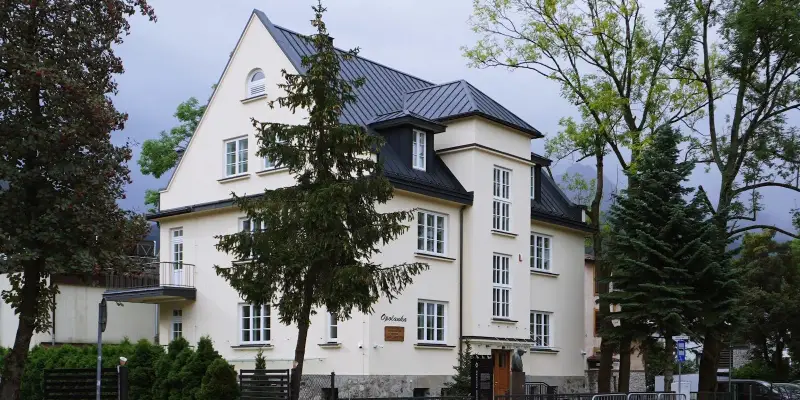
There is no need to look for a chronological route: it is better to stop at a few pieces and read the materials before the titles. The gallery stands at ulica Jagiellońska 18b, on the grounds of the former sanatorium, and unlike the museums of the Zakopane Style it shows a different Podhale, that of the post-war years. Hasior rests in the Cemetery of the Meritorious at Pęksowy Brzyzek, a few minutes from the centre.
Where it is
Tours and activities
-
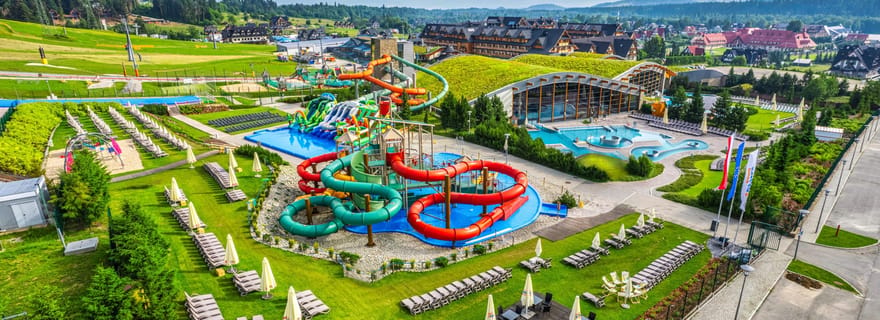 From €22 per person
Zakopane
Terma Bania Aquapark Tickets in Białka Tatrzańska
★ 4.6 (132 reviews) · Free cancellation
Duration: 3h30
See availability Details -
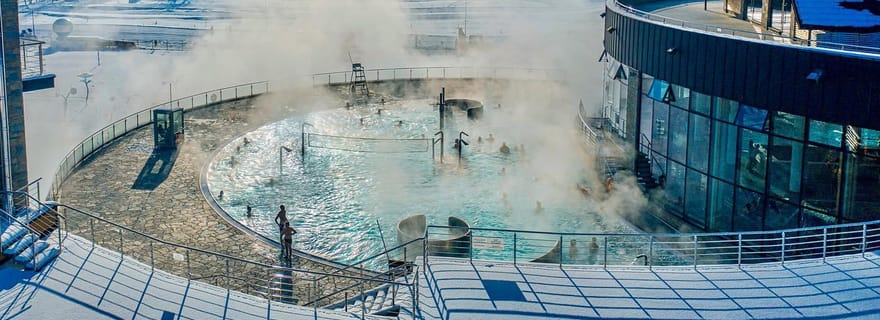 From €5 per person
Zakopane
Chochołowskie Thermal Baths Entry with a Personal Host
★ 4.5 (116 reviews) · Free cancellation
Duration: 3–10 h
Guide in:
See availability Details



-
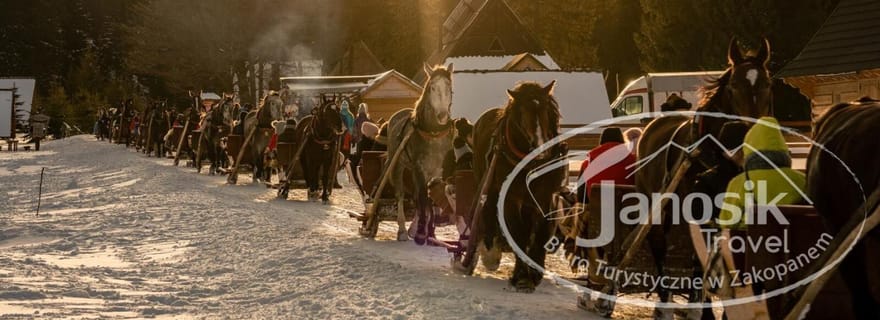 From €81 per person
Zakopane
Zakopane: Chochołowska Valley Sleigh Ride with Bonfire
★ 4.4 (58 reviews) · Free cancellation
Duration: 3 h · Hotel pick-up
Guide in:
See availability Details -
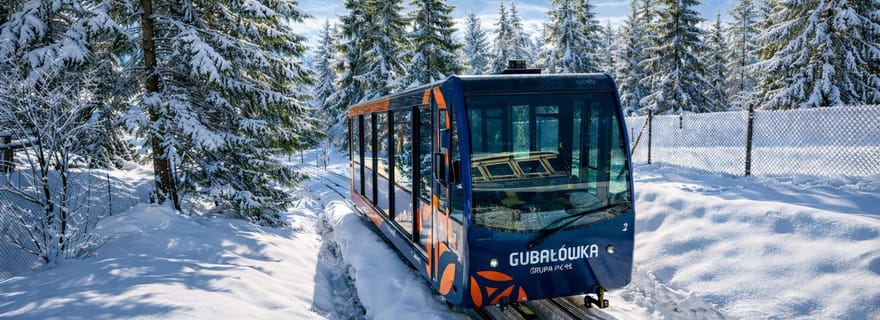 ★ Top rated
From €18 per person
Zakopane
Zakopane and the Tatra Mountains Day Trip from Kraków
★ 4.7 (371 reviews) · Free cancellation
Duration: 5–9 h · Hotel pick-up
Guide in:
See availability Details