The street that grew out of an ironworks
Krupówki exists because there was an ironworks at Kuźnice: the street that is now Zakopane's busiest promenade was laid out to connect the village with the forges, and it takes its name from the Krupówki clearing. For a time the same name was also used for what is now Zamoyskiego street.
From ironworks to tourism
The Kuźnice works were set up shortly before 1776. In 1807 they passed to the Hungarian-origin Homolacs family, and by the middle of the nineteenth century they were the largest of their kind in Galicia: about 500 tonnes of pig iron and 700 of bar iron and sheet a year, more than 120 workers, a water wheel on the Bystra stream and charcoal from Tatra beech. Then the ore ran low and cheap English iron brought a crisis: the blast furnace was shut down in 1875 and metal production ended in 1878. As industry stopped paying and tourism was taking its first steps, the road was reconceived as the axis of a new town; it is the youngest part of Zakopane, with an origin some 150 years back, perhaps 170. In 1888 the Kuźnice estate was bought at auction by Władysław Zamoyski, who liquidated the works.
A little over a kilometre uphill
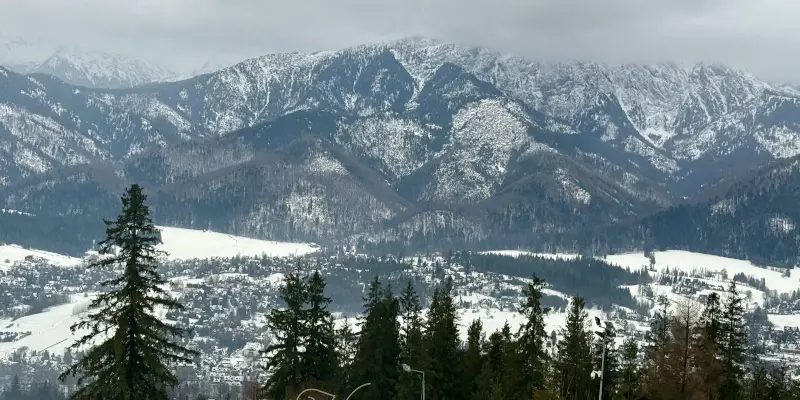
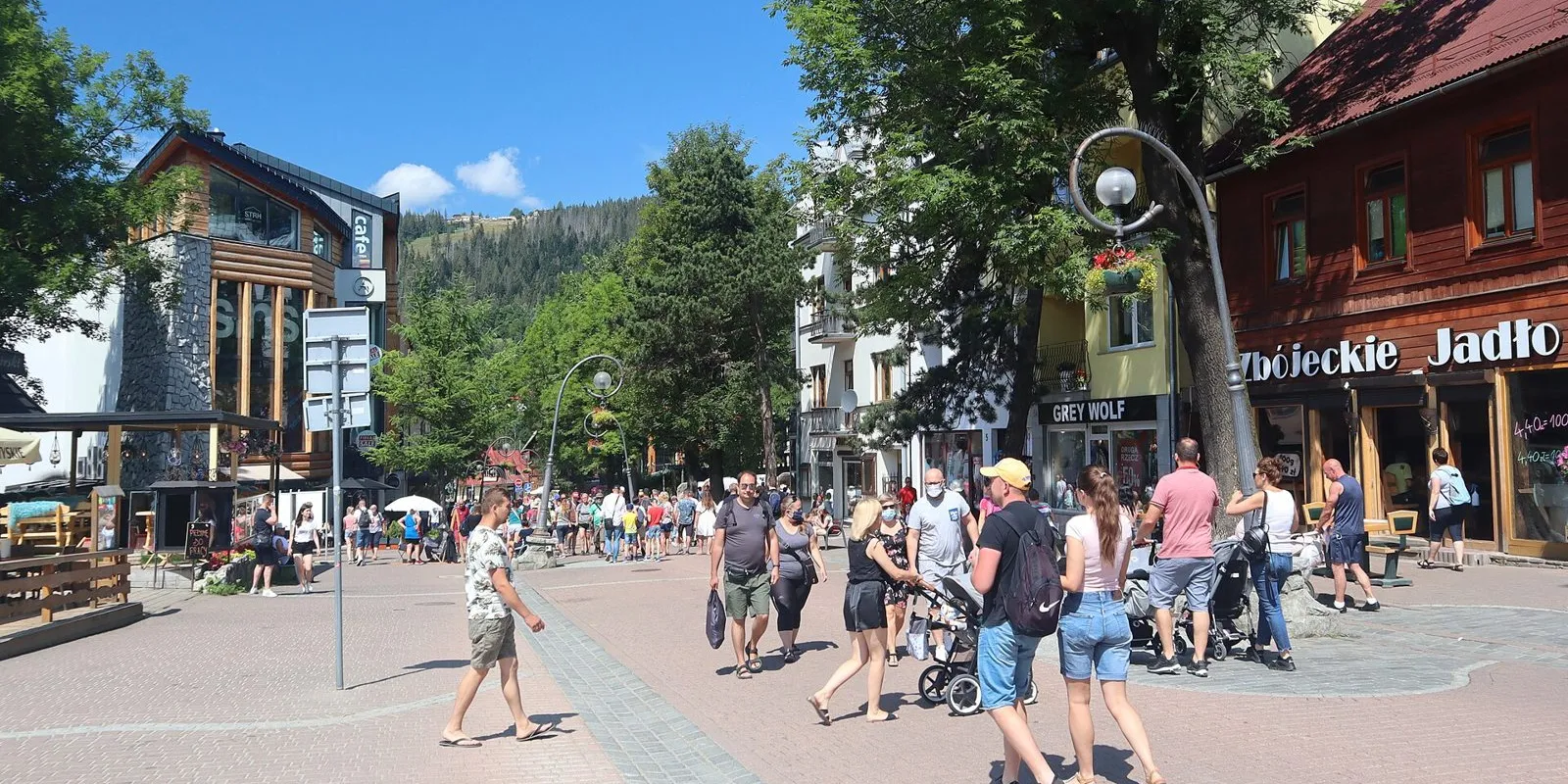
The street begins at the junction with Nowotarska and Kościeliska streets and climbs for just over 1 km south-east to Zamoyskiego street and Aleja 3 Maja. The crossing with Kościuszki street is regarded as the centre of Zakopane. Today it is a pedestrian street, closed to cars and bicycles. The repaving, begun in 1992 to a design by Maciej Krawczyński and Andrzej Orłowski, reused black basalt, grey granite and red concrete blocks recovered from under the old asphalt and laid in decorative patterns; the street lamps stand on granite bases, tilted and shaped like shepherd's crooks. The work divided residents and visitors. From some points along the way you can see Gubałówka and the Tatras, Giewont above all.
The buildings worth a look
At no. 10 stands the Tatra Museum, named after Tytus Chałubiński and founded in 1889 by the Tatra Museum Society. The building is by Stanisław Witkiewicz, with the technical design by Franciszek Mączyński: work ran from 1913 to 1924, the collections moved in during 1922, and it is one of the few brick buildings in the Zakopane style. At no. 41 is the Bazar Polski, a listed building put up for artists. At number 30 stands the Morskie Oko hotel, whose theatre hall hosted Witkacy with his first plays, met with strong reactions, and Helena Modrzejewska; Jerzy Żuławski founded a literary cabaret here. No. 1a is the Holy Family church. At the junction with Aleja 3 Maja stands the monument to Władysław Zamoyski, the work of the Zakopane sculptor Michał Gąsienica-Szostak.
The white bear, the carriages, the crowds
The White Bear is not a statue: it is a person in costume. The tradition began in 1922, when the photographer Henryk Schabenbeck ordered the first sheepskin costume from a furrier; in the Twenties and Thirties several bears posed for photographs at different spots in town. The costume imitates a polar bear and is sewn from sheepskins. Horse-drawn carriages also run along the street, and between shops, restaurants and stalls it gets very crowded in high season; the street is now a cultural park, set up to keep advertising and alterations in check. To see the wooden façades and the details without the crush, climb it early in the morning.
Where it is
Tours and activities
-
 From €27 per person
Zakopane
Zakopane: Ski Lesson on Gubałówka Hill for beginners
★ 4.9 (87 reviews) · Free cancellation
Duration: 1 h
Guide in:
See availability Details

-
 From €22 per person
Zakopane
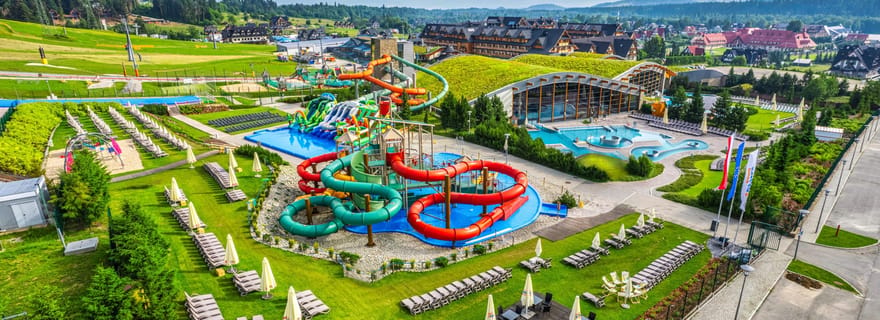
Terma Bania Aquapark Tickets in Białka Tatrzańska
★ 4.6 (132 reviews) · Free cancellation
Duration: 3h30
See availability Details -
 From €5 per person
Zakopane
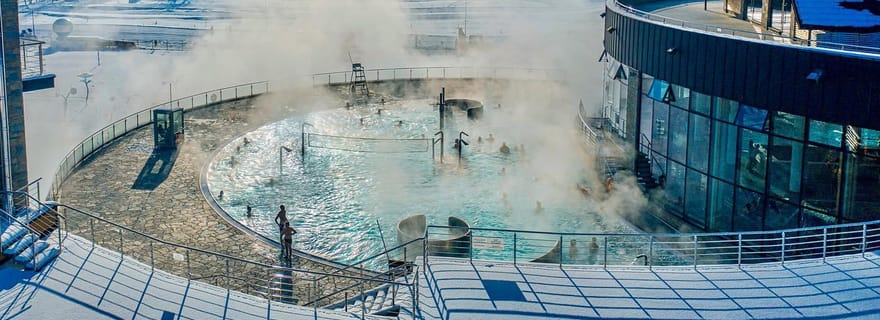
Chochołowskie Thermal Baths Entry with a Personal Host
★ 4.5 (116 reviews) · Free cancellation
Duration: 3–10 h
Guide in:
See availability Details

-
 From €81 per person
Zakopane
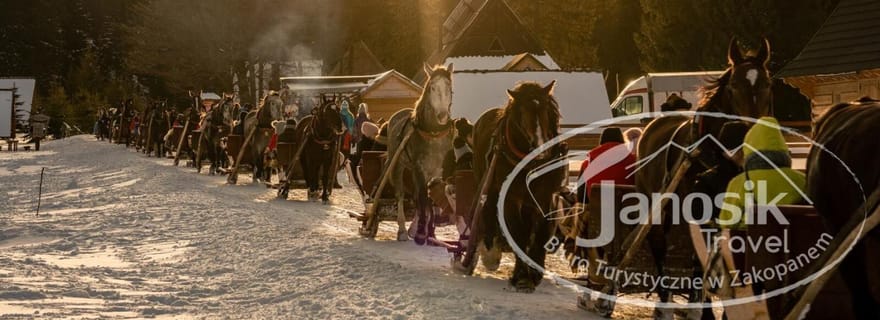
Zakopane: Chochołowska Valley Sleigh Ride with Bonfire
★ 4.4 (58 reviews) · Free cancellation
Duration: 3 h · Hotel pick-up
Guide in:
See availability Details