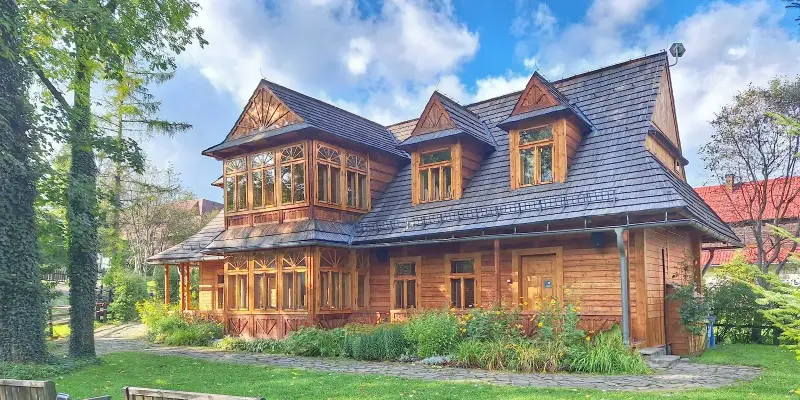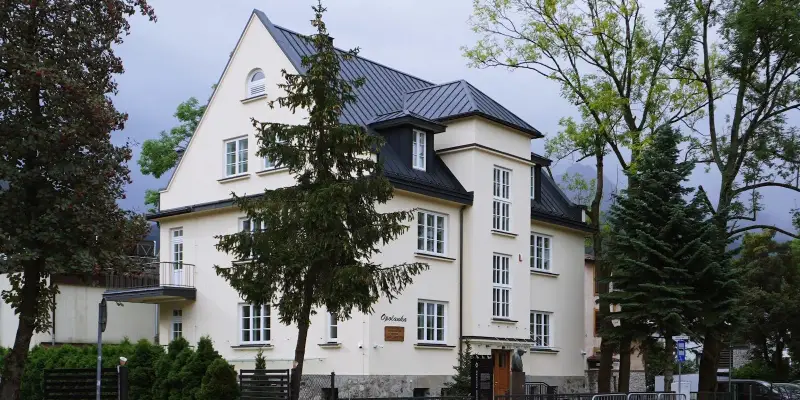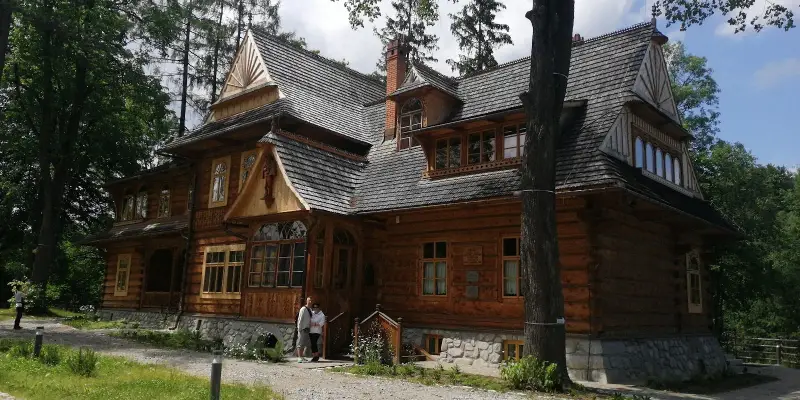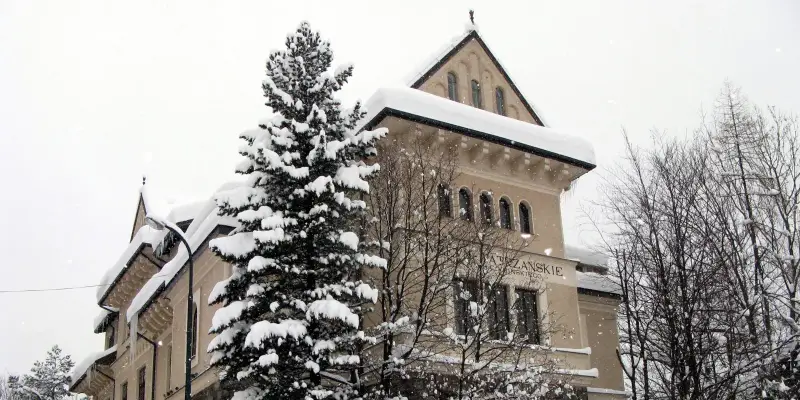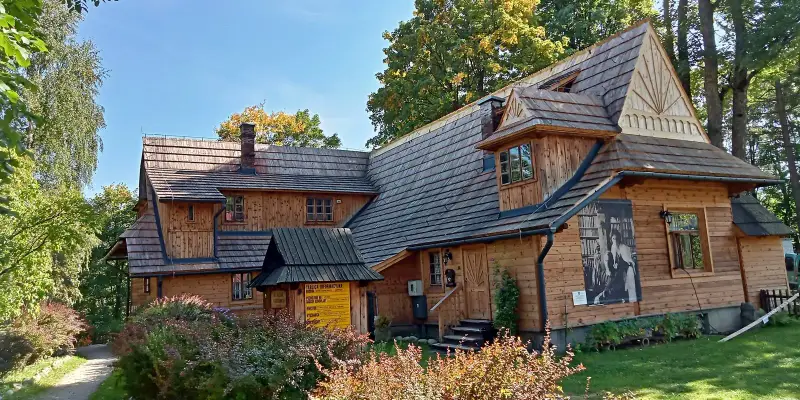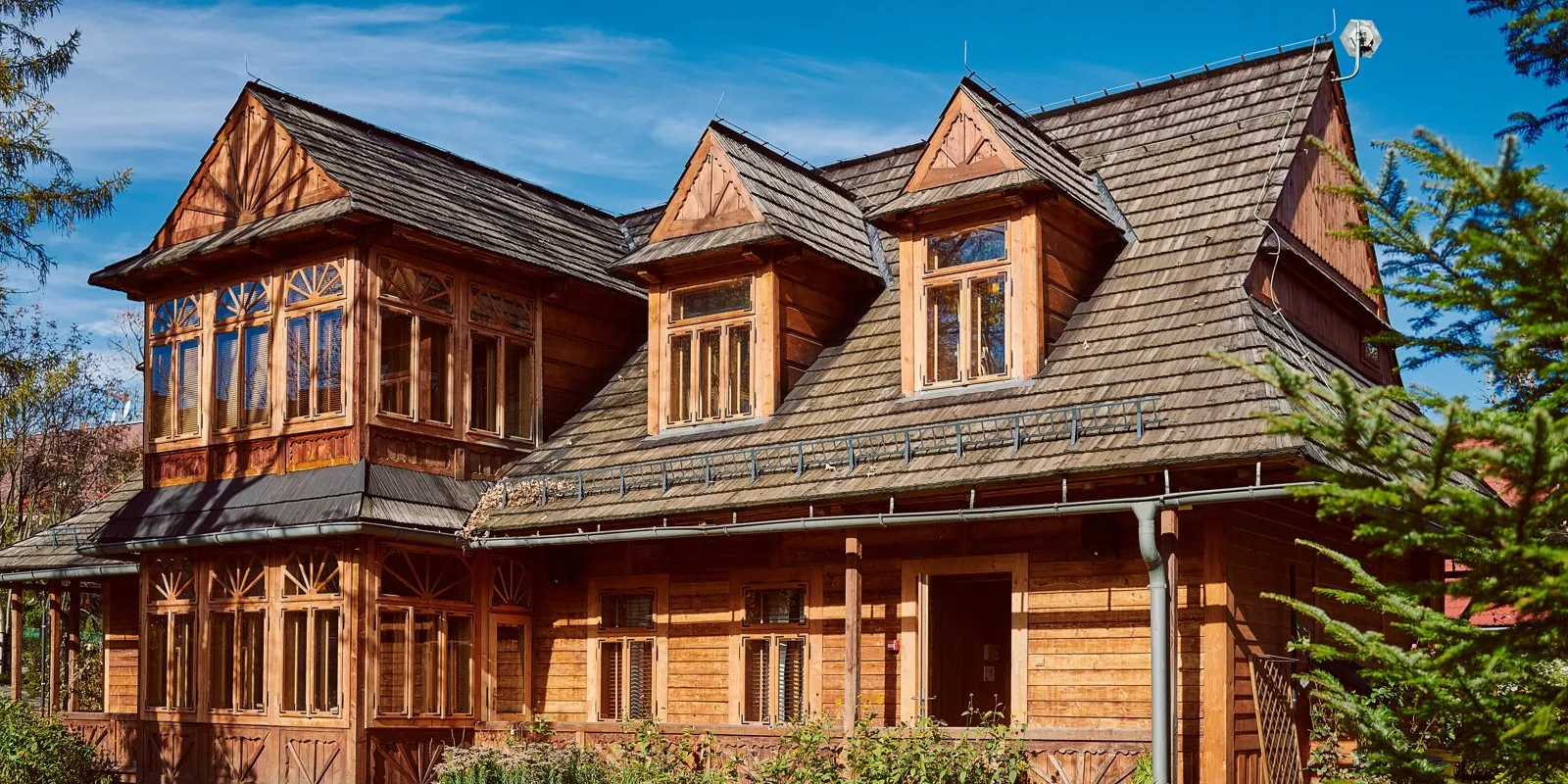
One of Poland's greatest twentieth-century composers described the house he rented as a small, humble mountaineer's cottage, yet its name was the Sanskrit word for the soul: Villa Atma. Karol Szymanowski came to this timber guesthouse already weakened by tuberculosis, looking for thin air and quiet. Today it is a compact museum, and one of the few places in Zakopane that proves the mountains inspired more than climbers and skiers.
A guesthouse built for visitors from the city
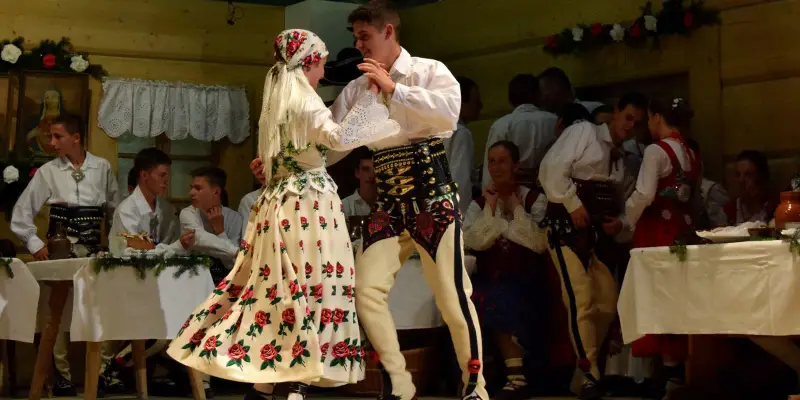
The villa was built in 1895 as a guesthouse, at the time when Zakopane was turning from a village of shepherds into a health resort for city dwellers. The name Atma, meaning soul, was added only in the 1920s. When Szymanowski rented it in 1930, his health was already failing and he wanted somewhere he could work without interruption. He knew Zakopane well: he had spent long stretches here in earlier years, and the music of the górale, the highlanders of Podhale, had captivated him with its harshness, its odd scales and a fiddle that sounds out of tune and turns out to be exactly right.
It helps to picture the house as a guesthouse rather than a palace: rooms of human size, wooden stairs, windows facing the mountains. That is the charm. This is not the monumental residence of a celebrated artist but the lodging of a tired man who chose a simple place to compose.
The composer and the music of the highlanders
Szymanowski is the musician who took the folk music of Podhale into the concert hall without turning it into a postcard. His work most tied to this region is the ballet Harnasie, inspired by the brigand-heroes of mountain tradition and built on rhythms and melodies that anyone who has heard a highlander band will recognise. But his output is much wider: the opera King Roger, the Stabat Mater, song cycles and violin concertos, in a sensuous and refined language far from the image of a strictly national composer.
Someone who knows nothing about his music can still walk into Villa Atma comfortably. You do not need to be a classical expert, only curious about where a body of music was written, and willing to listen to a piece before or after. One practical suggestion: play Harnasie the evening before, and the rooms will sound different.
What you see inside
The ground floor holds a reconstruction of the composer's study, the room where he wrote his Fourth Symphony and second Violin Concerto. On the wall hangs his portrait by Witkacy, the painter, writer and playwright who grew up in Zakopane, was his friend, and has a cenotaph in the old cemetery of the town. Seeing the musician and his portraitist side by side, two restless, anti-academic minds, conveys the intellectual atmosphere of the village between the wars.
There is also a room with a piano where small concerts are held, an inspired choice: chamber music in a wooden room, a few metres from where it was written, has an intimacy a big hall cannot give. Upstairs are a library and an archive. The museum is a branch of the National Museum in Kraków, and exists thanks to a fundraising campaign led by the writer Jerzy Waldorff, who rallied a great many people to buy a musician's house.
A small museum, best taken slowly
Do not expect a half-day visit: Villa Atma is a museum to wander slowly, and it works well as a stop between two walks. If you like museums with interactive screens you may be disappointed; if you enjoy house museums where a person's life still hangs in the air, this is one of the most successful in town. It differs from the larger museums of Zakopane in scale: the groups are small, the narrative is restrained and the details count, from books to working objects.
It suits people who love music, literature or timber architecture, and is less suited to very small children, who will find little to touch or do. When it rains, it is an excellent alternative to the mountains; when it is sunny, pair it with a stroll through the villa district, where the Zakopane Style can still be read in the older houses. Opening hours and the chance of hearing a concert change during the year, so it is wise to check locally or on the museum's own website.
Fitting it into a cultural day
Villa Atma talks to other places in town. The style it is built in is the one invented by Stanisław Witkiewicz in the late nineteenth century, visible in Villa Koliba and in the chapel at Jaszczurówka. The Tatra Museum tells the story of the mountains and highlander culture, while the old cemetery at Pęksowy Brzyzek holds the graves of many who shaped the cultural life of the town. A well-planned route links these stops in a single day devoted to culture and history, leaving Villa Atma for the quietest moment, when the crowds of Krupówki feel far away.
Szymanowski died in 1937, far from Zakopane, but the town still treats him as its own, and the museum is the most direct way of seeing why. What visitors find here is not just a wooden house but a life choice: a cosmopolitan composer who, already ill, decided that the best place to listen to himself was a guesthouse on a hillside, with the mountains behind the windows and a highlander's fiddle in his ears.
Frequently asked questions
Is Villa Atma worth visiting if I do not know Szymanowski's music?
Yes, the visit works even without knowing his music. The house is interesting in itself as an example of Zakopane timber architecture and as a record of the town's cultural life. Listening to a piece by Szymanowski beforehand does make the rooms richer.
Who was Witkacy and why does he appear in the villa?
Witkacy is Stanisław Ignacy Witkiewicz, a painter, writer and playwright who grew up in Zakopane and was the son of the creator of the Zakopane Style. He was a friend of Szymanowski and painted his portrait, now displayed in the reconstructed study. He has a cenotaph in the old cemetery.
Where is Karol Szymanowski buried?
Szymanowski is not buried in Zakopane. He died in Switzerland in 1937 and was laid to rest in Kraków, in the crypt of the Skałka church where Poland honours its great artists. In Zakopane you will find the house where he lived and worked.
Can I hear live music at Villa Atma?
Sometimes. The room with the piano hosts small concerts, usually chamber music. The programme changes through the year, so ask at the museum or check its website before planning your day around one.