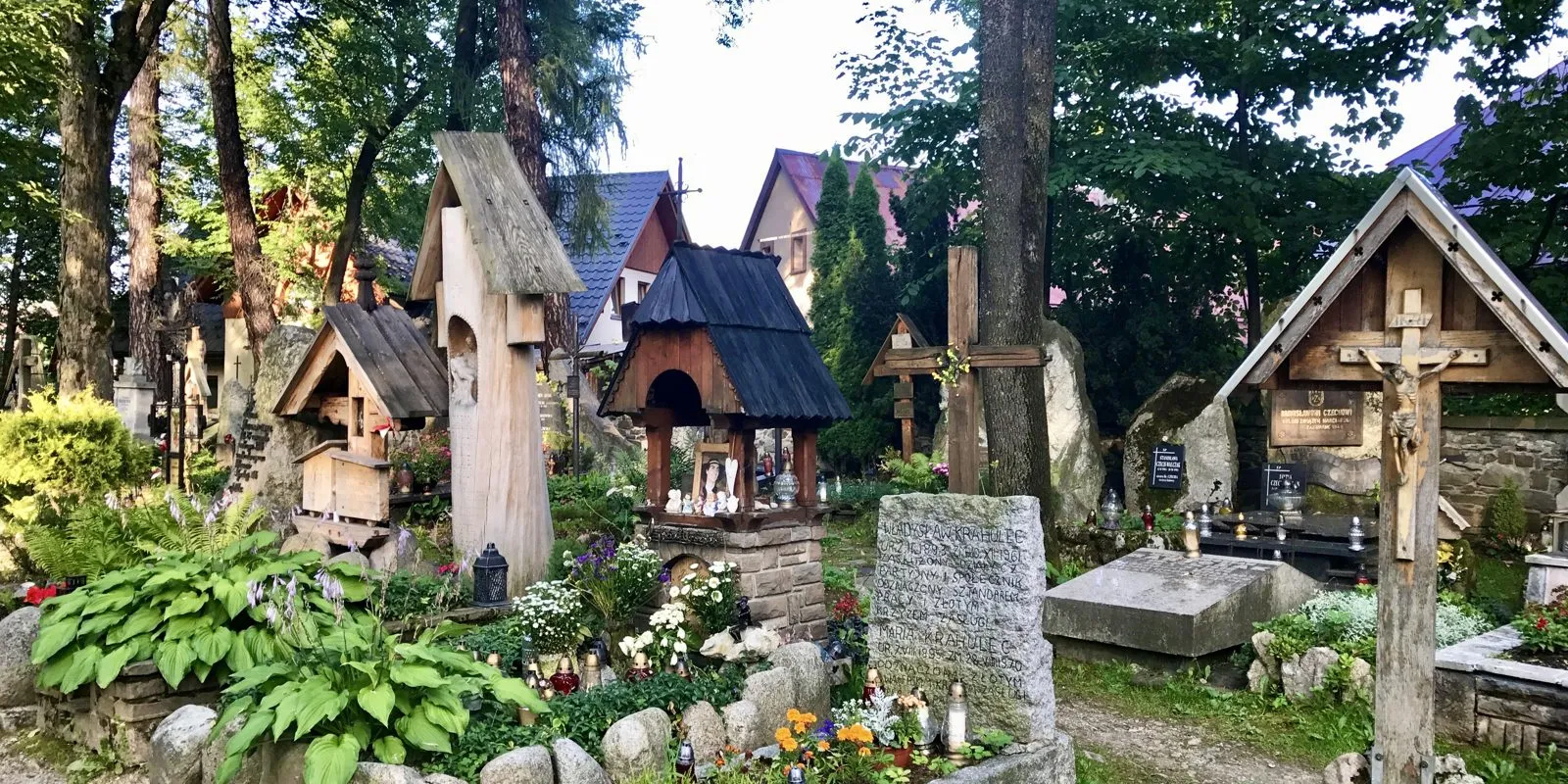
In a corner of Zakopane, a few steps from the traffic, a gate opens onto a wood of wooden and stone gravestones where every name matches a chapter of local history. Pęksowy Brzyzek cemetery is not a postcard sight, and that is exactly why it stays with many visitors longer than certain famous summits. Here you seem to leaf, unhurried, through the catalogue of the people who turned a mountain village into a town.
A log church and an even older chapel
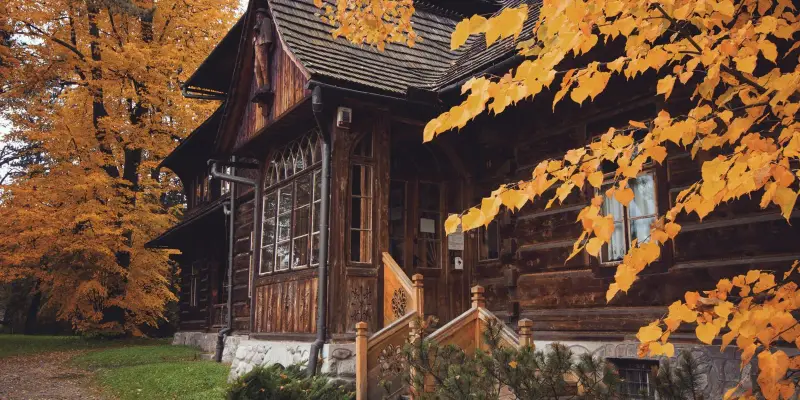
Before the graves comes the church. The Old Church of Our Lady of Częstochowa is Zakopane’s oldest place of worship. It was built between 1847 and 1851 thanks to the landowners Klementyna and Edward Homola and under the guidance of the carpenter Sebastian Gąsienica Sobczak. It is a single-nave log building with three altars and a shingled roof, and it still holds its original paintings and saint figures. Going in means seeing how highland builders worked before the Zakopane Style existed.
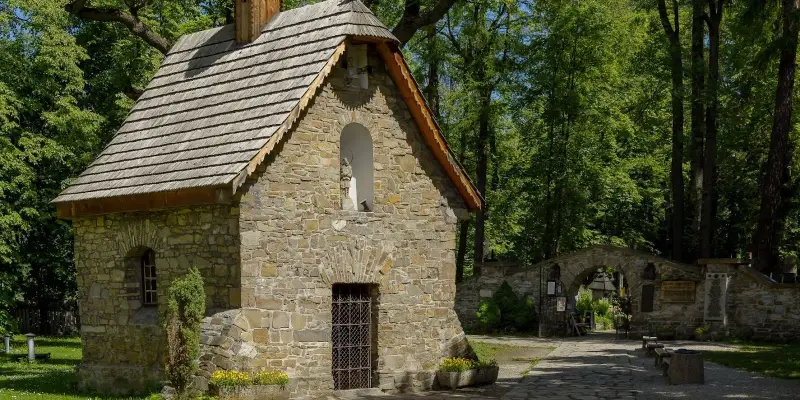
Beside the church stands a small masonry chapel of the Gąsienica family, older still: it dates from the early nineteenth century and is regarded as the oldest religious structure in Zakopane. The difference in materials between the two buildings, timber against masonry, is a small lesson in Podhale history.
Why it is called that, and who rests here
The name comes from Jan Pęksa, who donated the land the cemetery stands on (brzyzek, in dialect, means a steep bank above a stream). Since then the cemetery has grown, and today it reads like a roll call of the Tatras. Among the best-known names is the physician Tytus Chałubiński, who championed Zakopane’s climate; beside him, Jan Krzeptowski Sabała, the highlander storyteller and fiddler; the writer Kornel Makuszyński; and the first parish priest, Father Józef Stolarczyk.
The doctor and the highlander tell an era by themselves: the physician who came from the city to promote the valley and the storyteller who knew it by heart, brought together in the same ground. It is pairs like this, more than the names alone, that make the cemetery so eloquent.
The names of art: Witkiewicz, Orkan, Tetmajer
Here rest Stanisław Witkiewicz, creator of the Zakopane Style, and two writers tied to the region, Władysław Orkan and Kazimierz Tetmajer. Witkiewicz’s son, the painter and playwright Witkacy, has a cenotaph in the same cemetery. Then there is the category of symbolic graves, such as that of General Mariusz Zaruski, which mark the memory of people with no known resting place. Do not treat them as curiosities: each cenotaph is a way the community decided not to forget someone.
Gravestones as folk art
Even if you recognise none of the names, there are reasons to stop. Many gravestones are fine pieces of folk art: carved wood, worked crosses, stones with ornament recalling the highlanders’ decorative repertoire. Walk slowly and look closely, as in an open-air museum, while never forgetting that it is not one.
It must be said plainly: this is a working cemetery, not a park. Speak quietly, do not climb on graves, photograph monuments rather than people in prayer. Around the days of remembrance for the dead, in early November, the paths fill with candles and families: the effect is beautiful, but asks for even more discretion. A place that asks for respect gives back far more to those who offer it.
Fitting it into a day
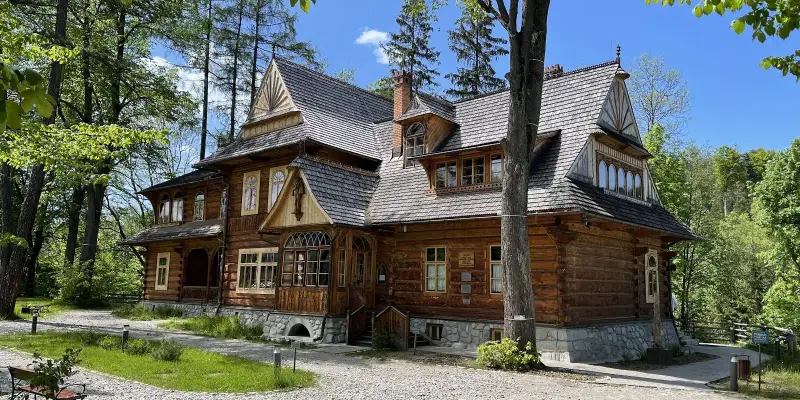
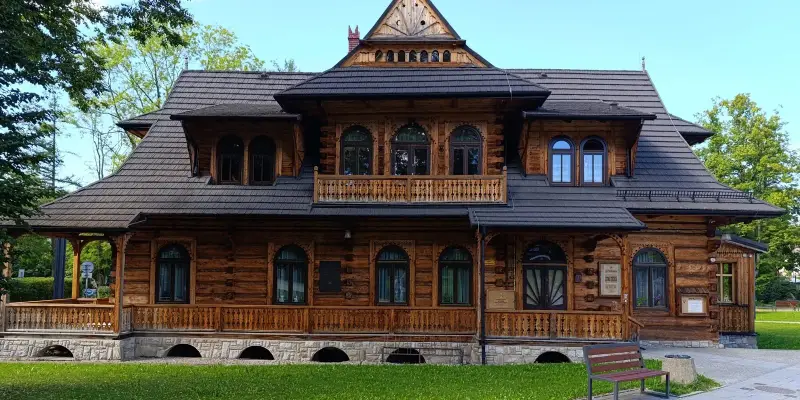
The visit is short, but do not rush it. Half an hour covers the church and the best-known graves; an hour lets you read the stones calmly. It pairs well with a cultural morning: the Makuszyński Museum in Villa Opolanka continues the literary thread, and Witkiewicz’s style makes more sense after seeing his grave. Light rain gives the place an especially intense mood, but bring a waterproof, because the paths are unpaved.
Who is it for? People who love history, literature or sober photography, and those who want to understand Zakopane beyond the ski lifts. Less so for anyone travelling with very small children or with little appetite for silence. After the visit the town looks different: its streets and villas have authors, and the surnames on plaques start to sound familiar.
Frequently asked questions
Can you visit Pęksowy Brzyzek freely?
Yes, it is a parish cemetery open to visitors, but it remains a place of worship and mourning. Enter quietly, avoid stepping on graves and do not photograph people at prayer. If a service is under way, wait or come back later.
Where is Tytus Chałubiński’s grave?
Chałubiński rests in the Old Cemetery at Pęksowy Brzyzek, in the area behind the wooden church. The same cemetery holds the grave of Jan Krzeptowski Sabała, his companion on Tatra excursions, a highlander storyteller and fiddler.
What does a symbolic grave mean?
A symbolic grave, or cenotaph, commemorates a person whose burial place is unknown or whose remains are not here. Pęksowy Brzyzek has several, including that of General Mariusz Zaruski, and they are an integral part of the collective memory.
Should you bring flowers or candles?
It is a welcome gesture but not required. Candles belong to Polish tradition, especially around the commemoration of the dead; if you bring one, place it tidily without moving those left by families. What counts is respect, not the offering.