The first house in the Zakopane Style
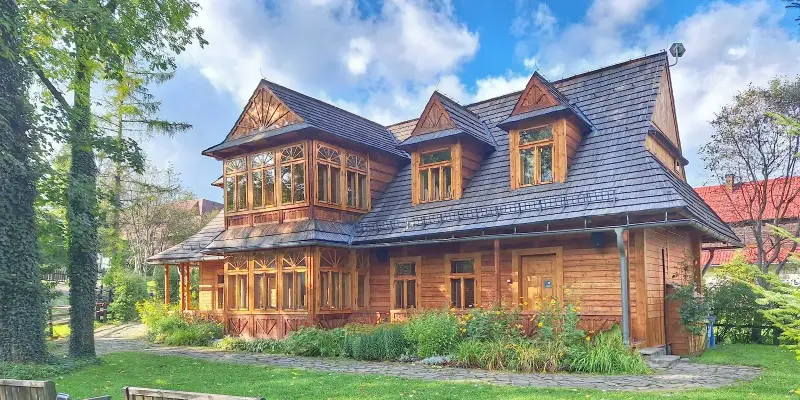
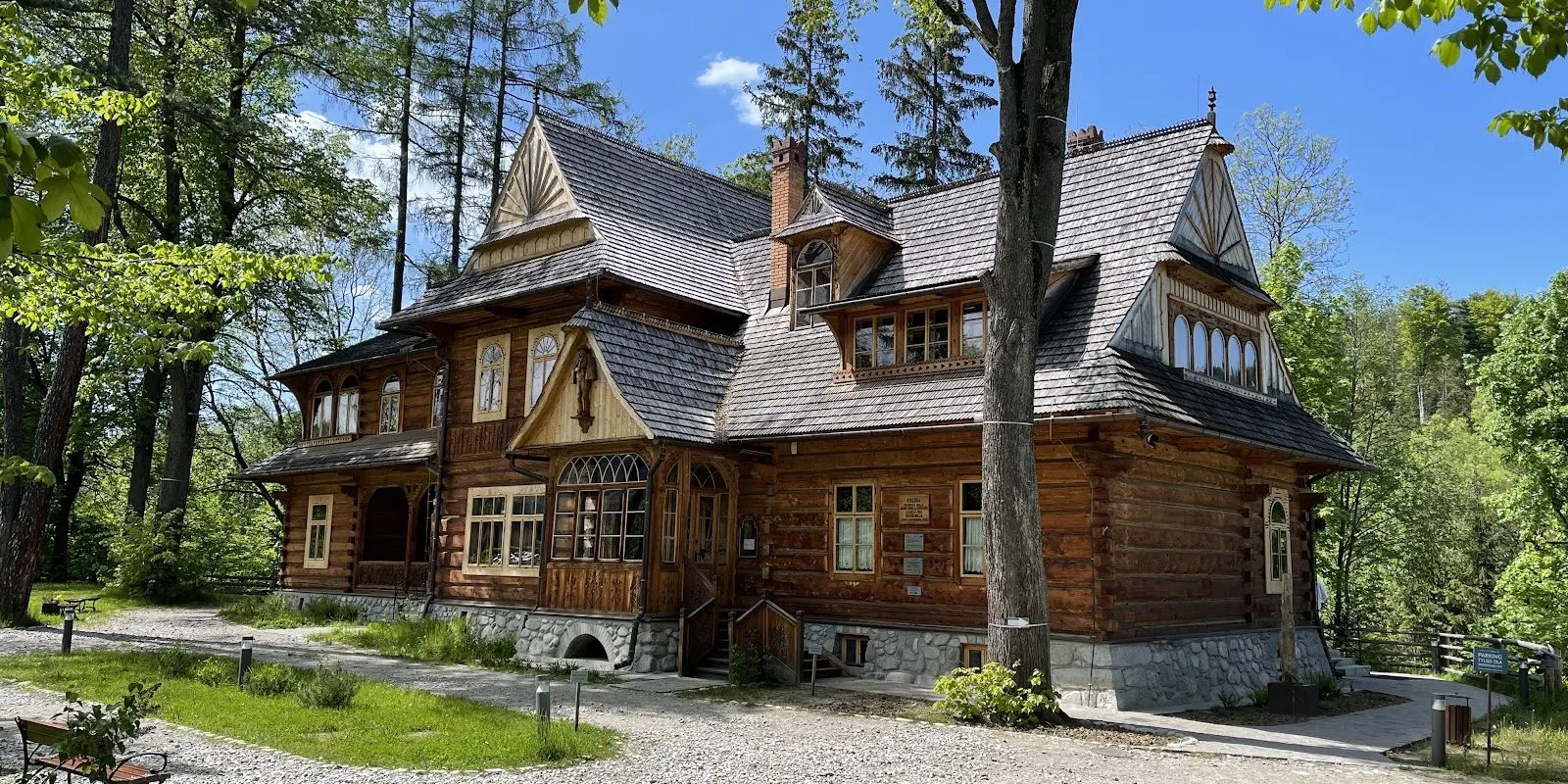
“Koliba” in the highlander dialect means a shepherd's hut, and that is how its client first imagined it: a simple mountain house for his collection. Zygmunt Gnatowski, a landowner who came from Ukraine, where he owned the Jakimówka estate, collected Podhale folk art. It was Stanisław Witkiewicz who persuaded him to build a villa in the Zakopane Style instead, one that adapted the forms of highlander houses to the needs of townspeople and landowners. In 1892–1893 this produced Villa Koliba, the first house in the Zakopane Style.
Who built it
Construction was entrusted to local carpenters, who carried out Witkiewicz's design. He wanted the architecture to be completed by matching furnishings: the interiors received made-to-measure furniture, tile stoves and wrought metal fittings, all following the form, structure and ornament of objects in highlander houses. It was a new idea: the house did not copy a hut but translated its language for people who came to the mountains as holidaymakers.
The extension and the hard years
In 1901 Gnatowski added a large two-storey wing on the west side, which changed the mass of Witkiewicz's original design: stylistically it represents the Zakopane Style at its peak, but it is a different house. A few years earlier Witkiewicz had designed the far grander Pod Jedlami (1896–1897) for Jan Gwalbert Pawlikowski. Gnatowski died in 1906 without heirs and the villa was sold; it changed hands several times and fell into decay. In 1935 the Kolejowe Przysposobienie Wojskowe (Railway Military Training Organisation) took it over to run a guesthouse: the conversion removed most of the original stoves and altered floors and façade. During the occupation it was a Hitler Youth base. After the war it was a rest house and then an orphanage, until December 1981.
The museum
The villa has been on the register of monuments since 1983. The Tatra Museum took it over, with repairs in 1984 and conservation in 1987. In December 1993 it opened the Museum of Zakopane Style named after Witkiewicz; the interiors were arranged by Władysław Hasior, the artist of the Zakopane gallery that bears his name. The five rooms of the oldest part follow their original functions: dining room, drawing room and bedroom on the ground floor, Gnatowski's room and a servant's room upstairs. The “Tatra highlander's chamber” displays Gnatowski's ethnographic collection. The oldest part lets you read Witkiewicz's original design, while the west wing of 1901 shows how the client transformed it: two moments of the style in the same villa.
How to read it well
The villa stands on ulica Kościeliska, among greenery. To understand the style it helps to look first at the exterior, with its carved beams and steep roofs, then at the interiors, where the furnishings follow the same grammar: it is the right place to see how a “national” architecture grew out of highlander houses, before you start recognising its variations along Zakopane's streets. Anyone wanting to compare it with a later phase can walk on to the Gallery of Twentieth-Century Art at Villa Oksza, Witkiewicz's third villa.
Where it is
Tours and activities
-
 From €27 per person
Zakopane
Zakopane: Ski Lesson on Gubałówka Hill for beginners
★ 4.9 (87 reviews) · Free cancellation
Duration: 1 h
Guide in:
See availability Details


-
 From €22 per person
Zakopane
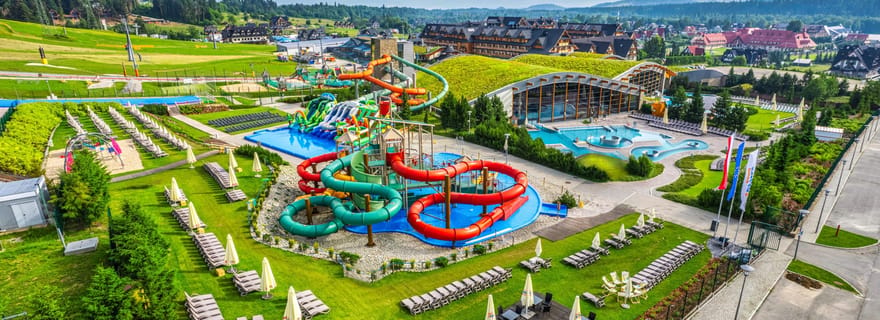
Terma Bania Aquapark Tickets in Białka Tatrzańska
★ 4.6 (132 reviews) · Free cancellation
Duration: 3h30
See availability Details -
 From €5 per person
Zakopane
Chochołowskie Thermal Baths Entry with a Personal Host
★ 4.5 (116 reviews) · Free cancellation
Duration: 3–10 h
Guide in:
See availability Details

-
 From €81 per person
Zakopane
Zakopane: Chochołowska Valley Sleigh Ride with Bonfire
★ 4.4 (58 reviews) · Free cancellation
Duration: 3 h · Hotel pick-up
Guide in:
See availability Details