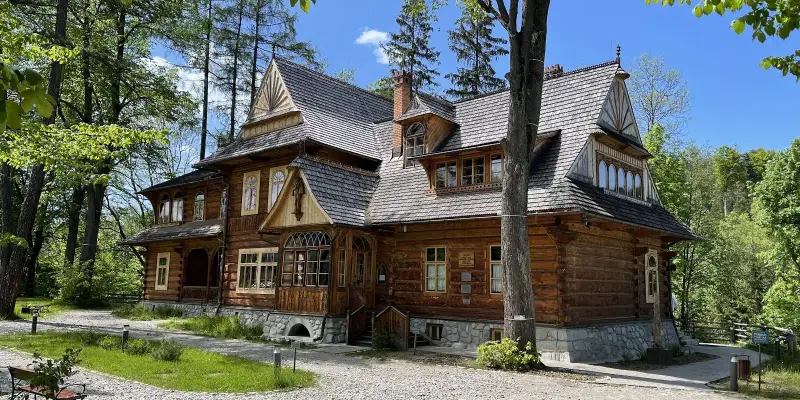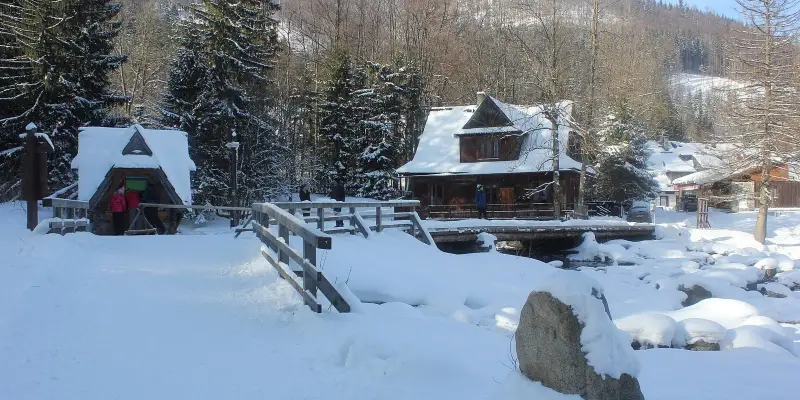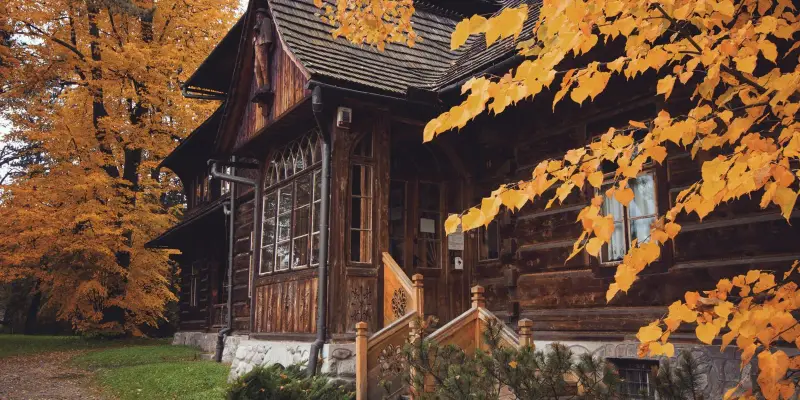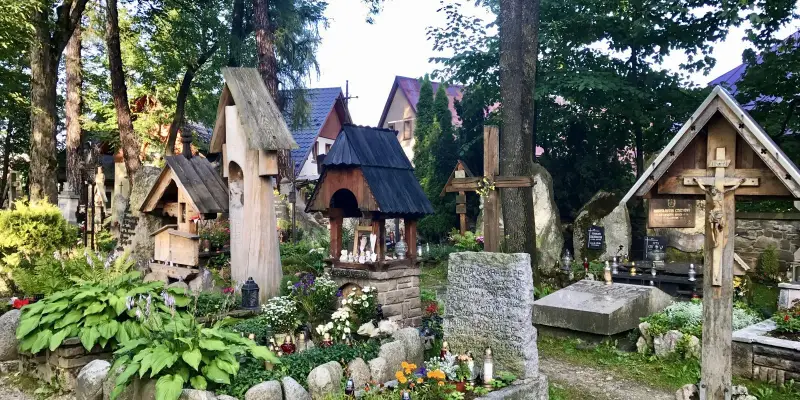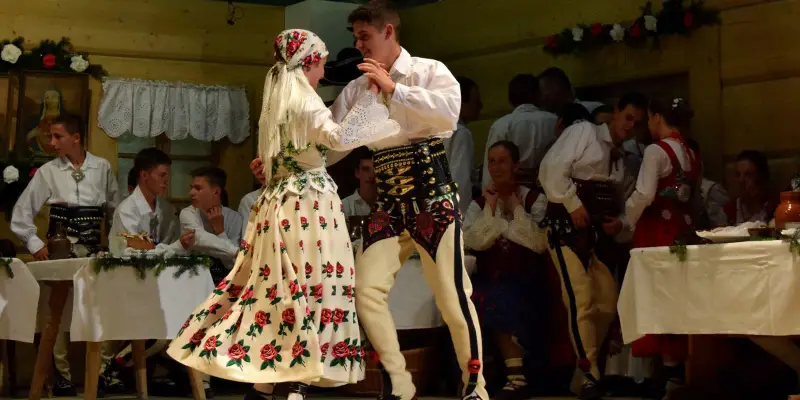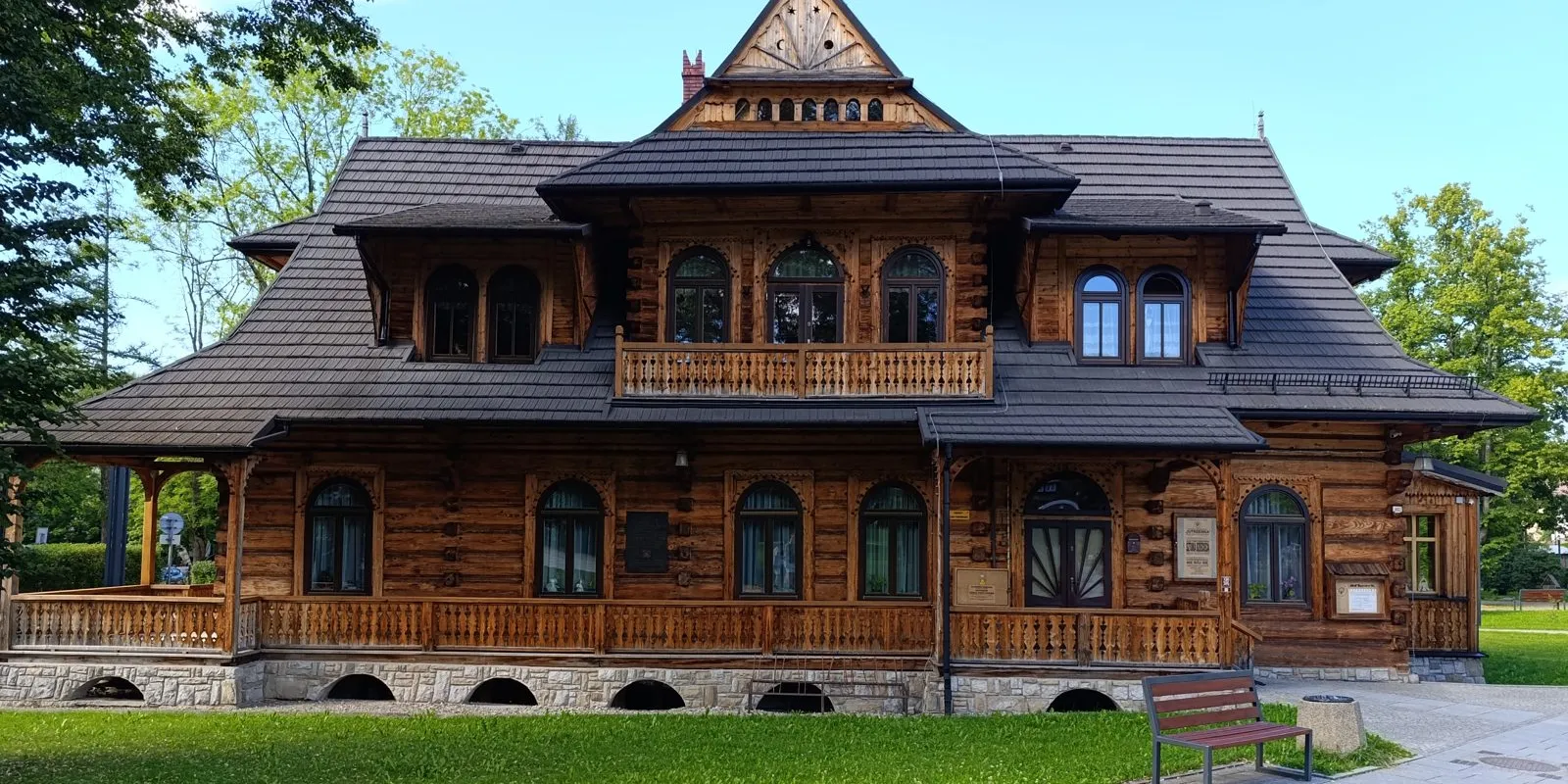
In 1892 a painter turned architect did something that would still sound daring today: instead of importing a model, he went and watched how highlanders built. Stanisław Witkiewicz designed Villa Koliba in 1892–93, and local górale built it under his supervision. The result was the first house of the Zakopane Style, a vocabulary of carved beams and steep roofs that within a few decades gave the town its face. More than a century later, a walk through the streets is enough to see how thoroughly the idea took root.
How a highlander cottage became a “national” architecture
To understand the style, it helps to remember what Zakopane had been. In 1676 it was a village of just 43 people; in the nineteenth century came the Kuźnice ironworks and then, above all, the physician Tytus Chałubiński, who from the mid-1870s promoted the valley’s climate. In 1886 the village was officially recognised as a spa, and with the visitors came painters, writers and hikers. Meanwhile the Tatra Society, founded in 1873, opened a woodcarving school in 1876: local craft was already seen as a treasure to protect.
There was a bigger backdrop too. Zakopane lay in Austrian Galicia, and Poland did not exist on the map at the time: divided among three empires, it was searching for an identity. Witkiewicz argued that the art of the Podhale highlanders could become the foundation of a national architecture. He did not simply copy cottages. He took the steep roof, the log structure and the carved ornament and rearranged them into larger, richer houses suited to city families looking for good air.
How to recognise it: the details to look for
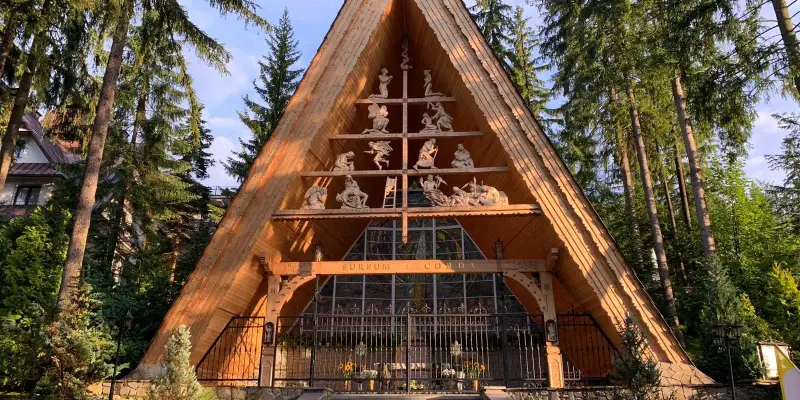
The easiest method is to look up. The style reads first in the roof: steeply pitched slopes, often covered in shingles or something imitating them, and decorated gables. Then comes the worked timber: exposed beams, brackets, balconies and porches with pierced balustrades, windows framed with carving. The ornament draws on the highlanders’ repertoire, with forms inspired by the sun and by mountain plants, repeated with a certain freedom from one building to the next.
Once you can spot these elements, the town changes. What looked like an ordinary guesthouse reveals its kinship with the Koliba; a chapel at the edge of a wood turns out to be the child of the same idea. The game works best on the side streets, away from the bustle of Krupówki, where villas have stayed in the middle of their gardens and the timber has had time to darken.
Where to see the originals: two museums, two moments in the story
For anyone short on time the choice comes down to two addresses that tell the two ends of the thread. The Museum of Zakopane Style occupies Villa Koliba itself and is dedicated to Witkiewicz; it is a branch of the Tatra Museum. Its rooms show furniture and interiors from the style’s golden age, around the turn of the twentieth century, and let you see how carving entered everyday life, from chairs to sideboards.
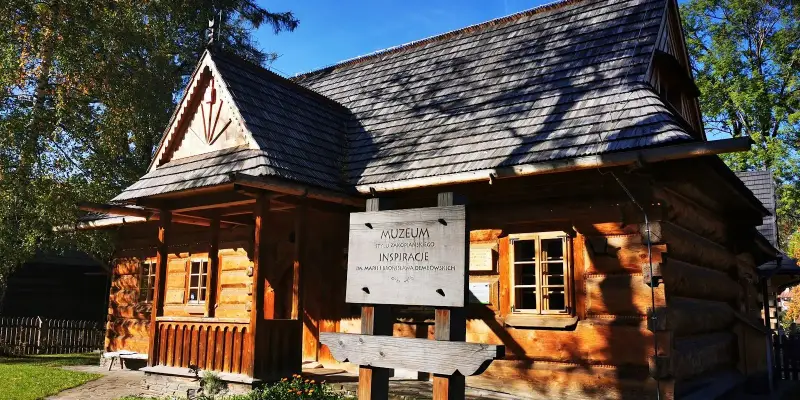
The other address is the Gąsienica Sobczak Cottage, home to the exhibition “Zakopane Style – Inspirations”. It is a highlander house whose oldest part dates from around 1830 and which got its present shape from a late nineteenth-century extension; it counts among the most valuable historic regional buildings in town. Inside, the black chamber, the centre of a family’s daily life, is furnished as in the late 1800s; the white chamber, once the living room, shows part of the ethnographic collection of Maria and Bronisław Dembowski, assembled between 1886 and 1893. Those objects inspired Witkiewicz.
The advice on order is simple: the Gąsienica Sobczak cottage first, then the Koliba. You see the source and then the interpretation an architect made of it; done the other way round, the effect is lost. The two sites are in different parts of town, so plan a transfer and check opening hours beforehand, since they change with the season.
Jaszczurówka, Krupówki and the villas: confirmation in the field
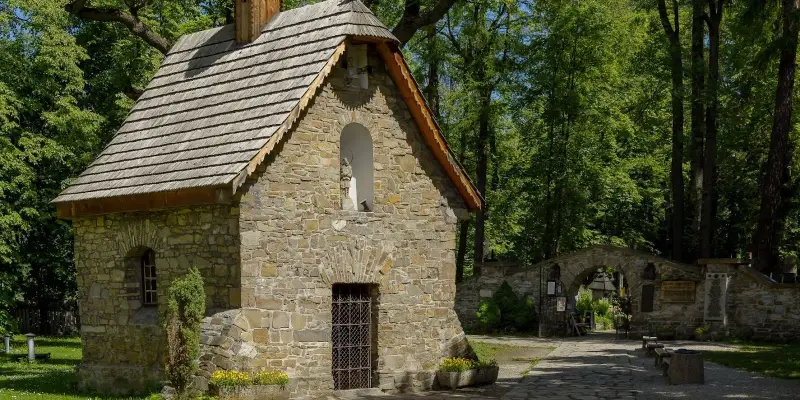
Outside the museums, the best-known example is the Jaszczurówka chapel, built in 1904–07 to Witkiewicz’s design: a timber building on a stone base standing among the spruces that shows the idea at maturity, with an interior decorated in the same spirit. It is worth the trip for the atmosphere alone, as long as you arrive without hurry and do not expect a large space.
In the centre, the Tatra Museum on Krupówki was also designed by Witkiewicz, with Franciszek Mączyński handling the technical side, and built between 1913 and 1924. Along the streets you will then spot dozens of villas and guesthouses in the same spirit: most are private homes or lodgings, so you look from the pavement, without stepping into courtyards or pointing a lens at windows.
Authentic or imitation? Some honest advice
One thing deserves saying plainly: not everything that looks like the “Zakopane style” really is. For decades the vocabulary has been reproduced on modern buildings, often concrete structures clad in decorated boards. Imitations give themselves away through proportion: roofs too large, carving too regular, timber too uniform. Originals have the slightly rough irregularity of hand-made joints.
Who is this route for? People who love architecture, craft and stories in which one idea changes a landscape. It suits less those who only want panoramas: two hours among timber rooms and carved furniture do not replace a day at altitude. It works very well, though, as a half-day fallback when it rains, mixing short walks outdoors with rooms under a roof. By the end you notice a curious thing: the town is the same, but every steep roof seems to have a name and an author behind it.
Frequently asked questions
Who invented the Zakopane Style?
The idea belongs to Stanisław Witkiewicz, a painter and architect who in the 1890s reinterpreted the art of the Podhale highlanders. He did not work alone: Villa Koliba was built by local craftsmen, and the Tatra Society with its woodcarving school had prepared the ground.
Can you go inside Zakopane Style villas?
Almost never: most are private homes or guesthouses. Accessible interiors are in museums, such as the Koliba and the Gąsienica Sobczak cottage, and in the Jaszczurówka chapel. For all other villas you look from the street, respecting fences and gardens.
How long do you need to see the Zakopane Style sites?
A morning or an afternoon covers the two museums, the Jaszczurówka chapel and a stroll among the villas. Adding the Tatra Museum on Krupówki is better done as a separate outing, because getting around town takes time.
Is the timber in Zakopane buildings always original?
No, many recent buildings imitate the vocabulary with modern structures clad in decorated boards. Historic buildings show irregular carving and weathered wood, and they usually appear on museum routes or are marked as monuments.