There are two Witkiewiczes in Zakopane, father and son, and almost everything you see in town carries the mark of one of them. The father, Stanisław Witkiewicz (1851–1915), built the image of timber and carved beams that now looks as old as the mountains. The son, Stanisław Ignacy Witkiewicz, known as Witkacy (1885–1939), crossed that image as a painter and playwright and became the most restless soul of the town. To understand Zakopane it helps to meet them both, in that order.
A painter who started designing houses
The elder Witkiewicz was not born an architect: he was a painter, critic and writer, and he moved to the Tatras when the village was turning into a health resort. In 1886 Zakopane had been officially recognised as a spa, thanks in part to the physician Tytus Chałubiński, and those arriving from the cities wanted houses fit for the place. Witkiewicz studied the highlanders’ homes, with their steep roofs and carved wood, and saw in them more than postcard folklore.
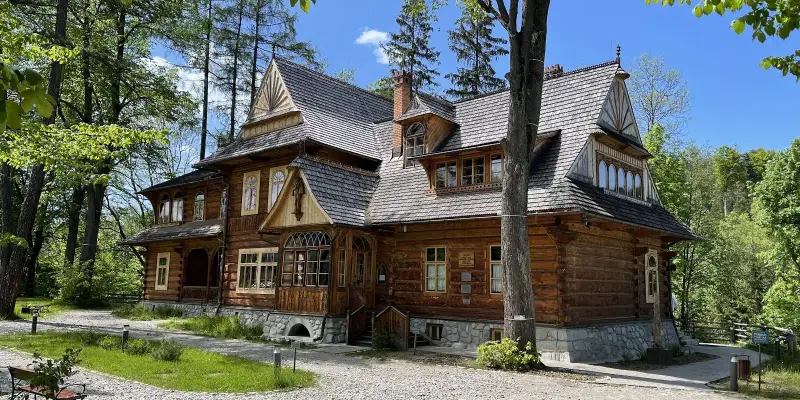
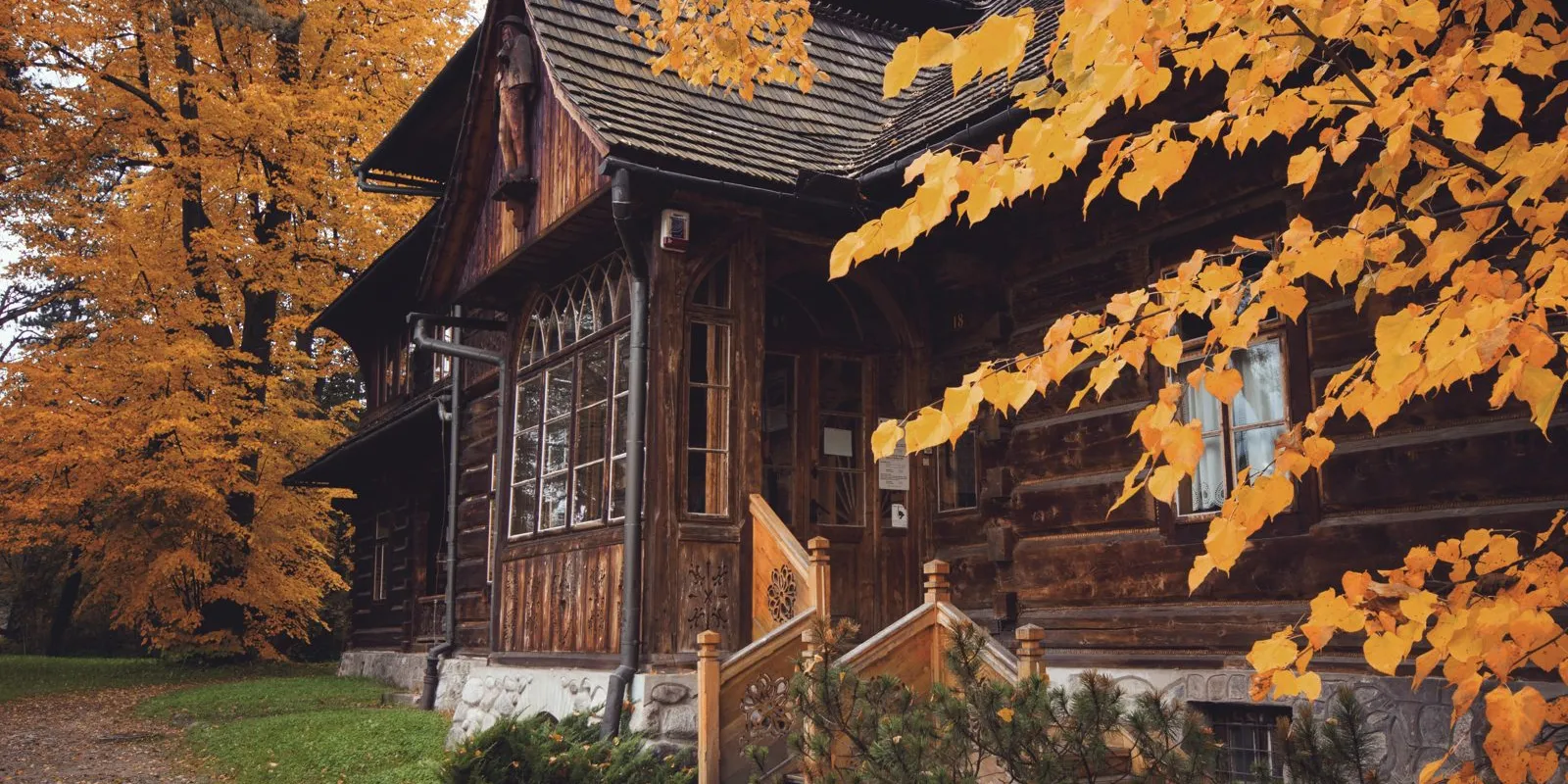
His idea was radical for the time: the art of the górale could be the basis of a national style, in a period when Poland was divided among three empires and searching for a language of its own. The first test was Villa Koliba, designed in 1892–93 and built by highlanders under his supervision. From that house the Zakopane Style was born.
What he actually left in town
Do not picture a centre entirely signed by him: Witkiewicz provided a method, and others took it up. The best-known works that carry his signature are few and easy to recognise. The most important is Villa Koliba, now the Museum of Zakopane Style, named after him. Next came the Jaszczurówka chapel, built in 1904–07, in which wooden ornament measures itself against stone and the surrounding forest.
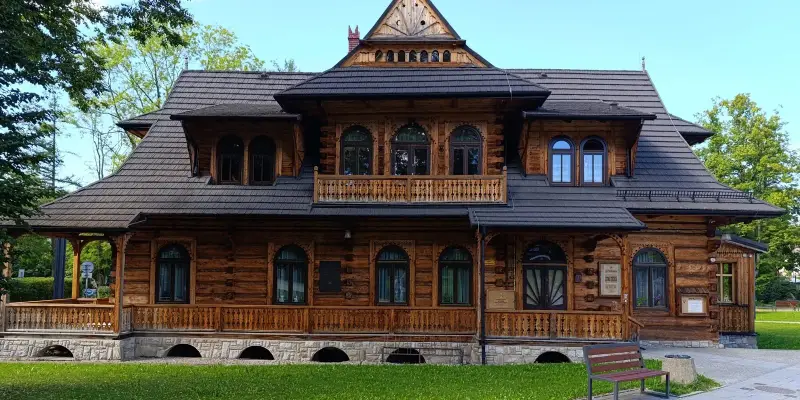
Then there is the Tatra Museum building on Krupówki, designed by him with Franciszek Mączyński handling the technical side and built between 1913 and 1924. The museum had been founded in 1889, and its collections had been growing for decades before they got a permanent home: the building that holds them is itself a piece of local architectural history.
Where to meet him today
Anyone who wants to follow the father’s traces has a natural route. You can start at the Gąsienica Sobczak Cottage, where the exhibition “Zakopane Style – Inspirations” shows the sources Witkiewicz drew on: the black chamber, the white chamber and the Dembowski ethnographic collection, assembled between 1886 and 1893. Then move to the Koliba to see the result, and finally to the Jaszczurówka chapel to see where the idea led. They are three different stops: a peasant interior, a manifesto house, a sacred building.
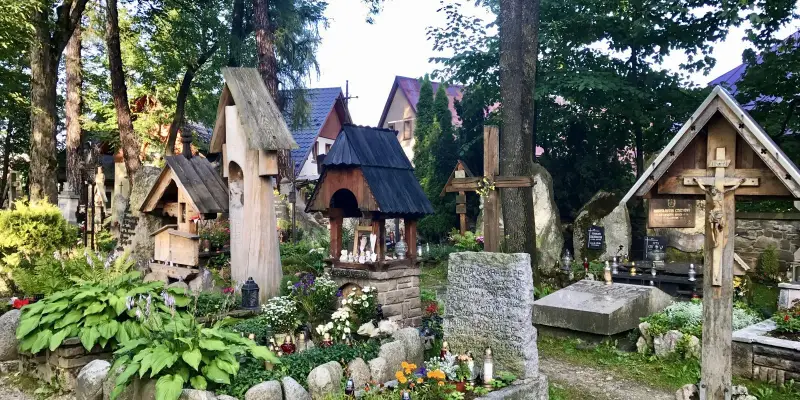
A moving addition is the Old Cemetery at Pęksowy Brzyzek, behind the wooden church. Stanisław Witkiewicz, who died in 1915, rests there, and so does the cenotaph of his son Witkacy: two stones side by side in a corner of Zakopane that quietly tells a family story of art and mountains.
Witkacy: the son, the theatre, “Pure Form”
If the father built the look of the town, the son changed its intellectual character. Witkacy was a painter, writer and playwright, and his theory of Pure Form in the theatre is still a reference point. On Krupówki, in the theatre hall of the Hotel Morskie Oko, his plays were staged in the 1920s. His tie to the stage ran deep: the great actress Helena Modrzejewska was his godmother.
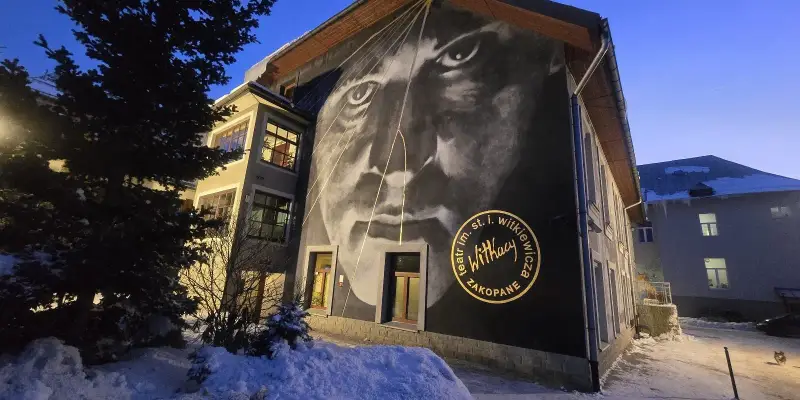
Today his memory lives in the Witkacy Theatre, founded in the 1980s by graduates of the Kraków theatre school, among them Julia Wernio and Andrzej Dziuk. Dziuk has led it from the start and directs most of its productions, which draw on Witkacy’s Zakopane texts and his idea of Pure Form. The company plays in a hall of the Hotel Chałubiński, a building that began as Dr Andrzej Chramiec’s hydrotherapy institute and later became a Red Cross sanatorium; its foyer hosts exhibitions, concerts and theatre festivals.
How to build the day, and who it is for
This theme works well as a half day of culture, especially in uncertain weather. A sensible order: the Gąsienica Sobczak cottage, the Koliba, then a walk to Jaszczurówka if the weather holds. The cemetery is short but asks for quiet, and it is best kept for the end, when your head is already full of names. The theatre is best enjoyed with a free evening: performances are in Polish, so it is worth checking in advance what is on and whether there is an option for non-Polish speakers.
Who is it for? For people who want to know why Zakopane looks like Zakopane, and who enjoy stories of artists with their contradictions. Less so for anyone seeking action: here you walk slowly, read captions and notice details. Yet a single carved beam, seen with the right eyes, is enough to show that behind the landscape there was always a hand.
Frequently asked questions
Who was Witkacy and how was he related to Stanisław Witkiewicz?
Witkacy (1885–1939) was the son of Stanisław Witkiewicz: a painter, writer and playwright known for his theory of Pure Form. The father built Zakopane’s architectural identity, the son became one of its most radical artistic faces; both are remembered at Pęksowy Brzyzek.
Are performances at the Witkacy Theatre in Polish?
Yes, the company works in Polish and its repertoire starts from Witkacy’s texts. A foreign visitor should ask in advance whether surtitles or suitable versions exist, or simply choose the foyer, which hosts exhibitions and concerts.
Did Witkiewicz design all the Zakopane Style houses?
No, he signed only a few, such as Villa Koliba, the Jaszczurówka chapel and the Tatra Museum building. The rest was the work of other designers and craftsmen who took up his language, which is why the style appears in so many variations.
Where is Witkiewicz buried in Zakopane?
At the Old Cemetery of Pęksowy Brzyzek, behind the town’s oldest wooden church. Stanisław Witkiewicz, who died in 1915, rests there, and so is the cenotaph of his son Witkacy, near the graves of many other figures from local history.