In Zakopane's old cemetery, a man left part of his plot to the parish in 1848, and that strip of land now holds the cultural history of an entire region. Next to it stands a log church with a shingled roof built in the same decade. That alone shows why the churches of Zakopane are not only places of worship: they are chapters of a story in which highlander carpenters, landowners, romantic architects and a Polish pope each left a signature.
The old log church and the cemetery of the Tatras
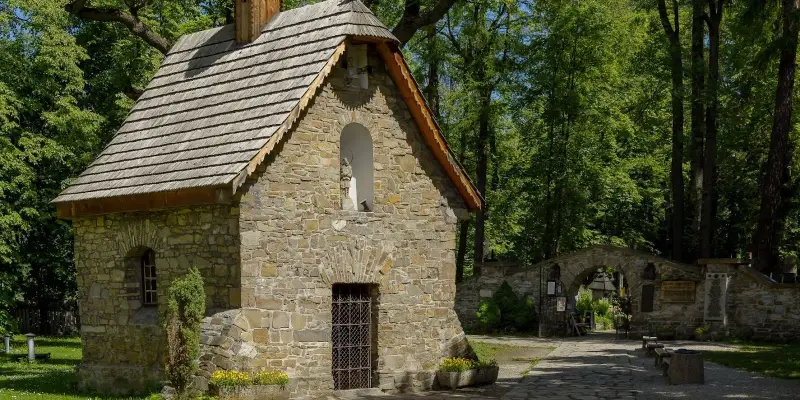
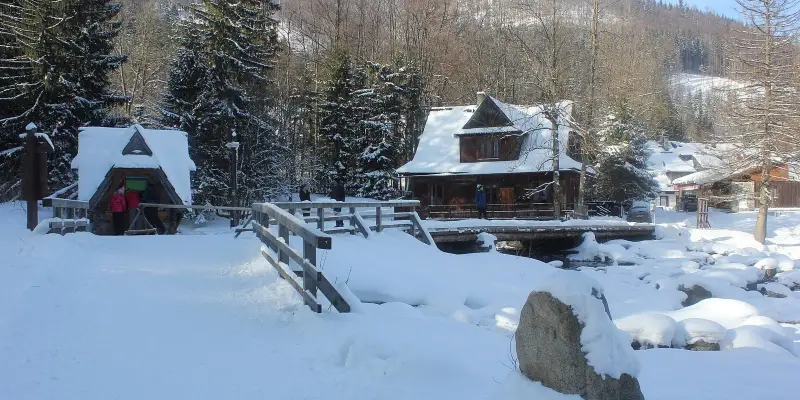
Zakopane's oldest parish church was built between 1847 and 1851, thanks to the landowners Klementyna and Edward Homola and under the guidance of the carpenter Sebastian Gąsienica Sobczak. It is a single-nave log building with three altars and a shingled roof, and inside it keeps its original paintings and saint figures. Beside it stands an older stone chapel of St Andrew, consecrated in 1801.
The best part is the graveyard behind it, Pęksowy Brzyzek, named after Jan Pęksa, who in 1848 left the eastern part of the plot to the parish. Walking among the graves is like reading an index of the Tatras: the physician Tytus Chałubiński, the highlander storyteller and fiddler Jan Krzeptowski Sabała, the writer Kornel Makuszyński, the first parish priest Father Józef Stolarczyk. Many headstones are genuine folk-art pieces; Stanisław Witkiewicz, Władysław Orkan and Kazimierz Tetmajer also rest here, and symbolic graves, such as that of General Mariusz Zaruski, mark people with no known resting place.
One piece of advice: go in slowly and quietly, and take time to read the simplest inscriptions. It is the most intimate visit in town and the best for anyone looking for an idea of Zakopane different from the shop windows of Krupówki.
Jaszczurówka: the chapel that invented a style
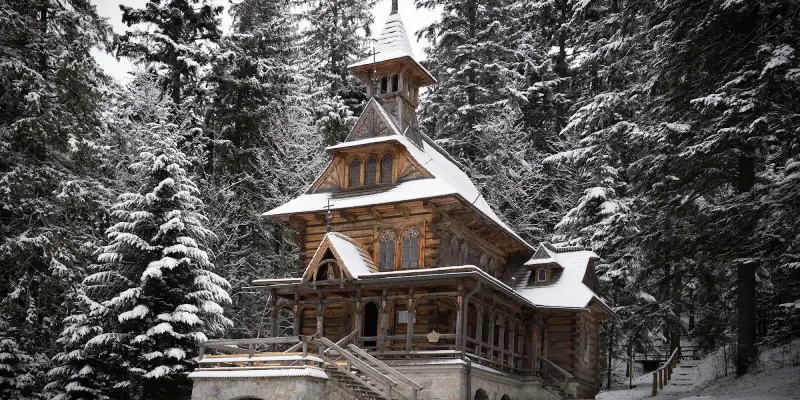
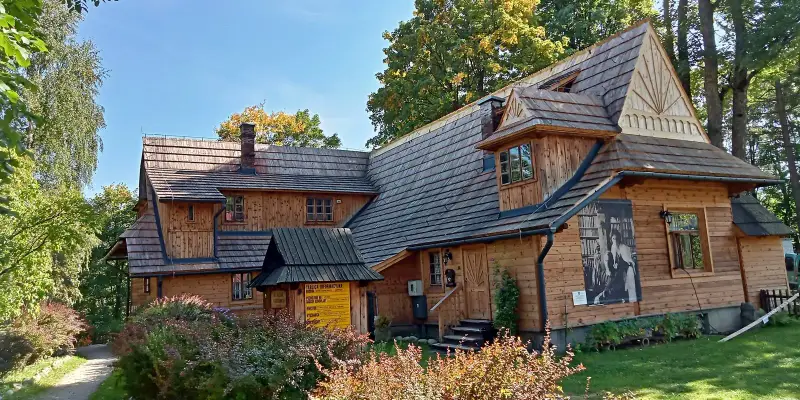
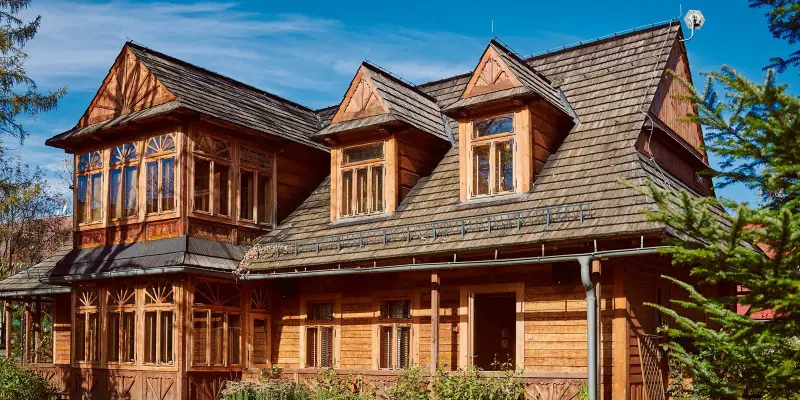
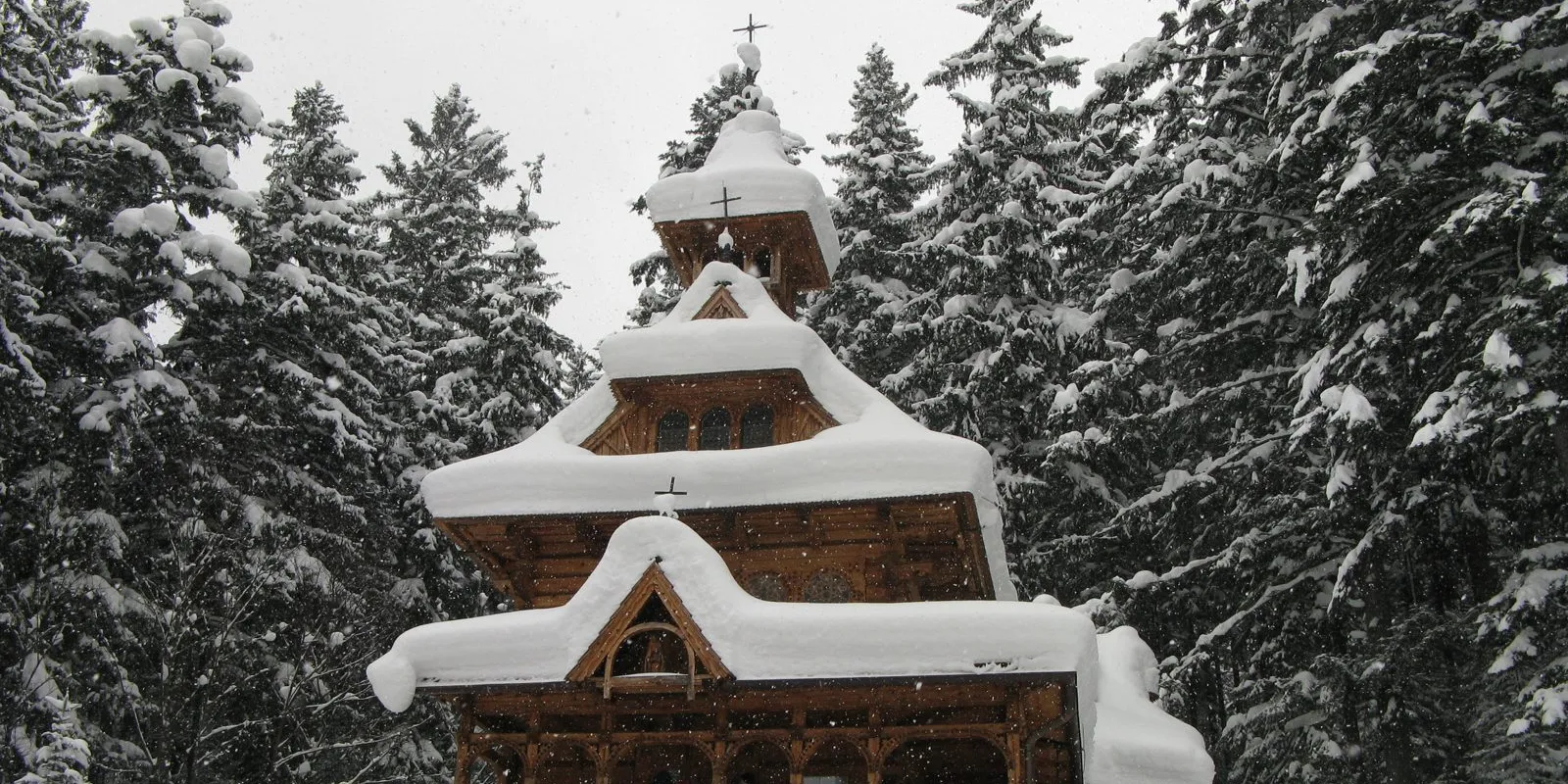
Along the road towards Morskie Oko stands the Chapel of the Sacred Heart at Jaszczurówka, one of the purest examples of the Zakopane Style. It was designed by Stanisław Witkiewicz, the man who created that style. Work began in 1904 and the chapel was consecrated in 1907. It is built of logs on a high stone base, with arcaded porches, a shingled roof and a small bell tower.
Inside, a single nave and a rectangular presbytery hold a main altar shaped like a highlander's hut. The stained-glass windows, show Our Lady of Częstochowa and Our Lady of Ostra Brama, together with the coats of arms of Poland and Lithuania. The chapel belongs to Tatra National Park, is a protected monument and is part of the Małopolska Wooden Architecture Trail. If you love timber architecture or photography, this is half an hour of rewarding looking.
The Fatima shrine: a different story
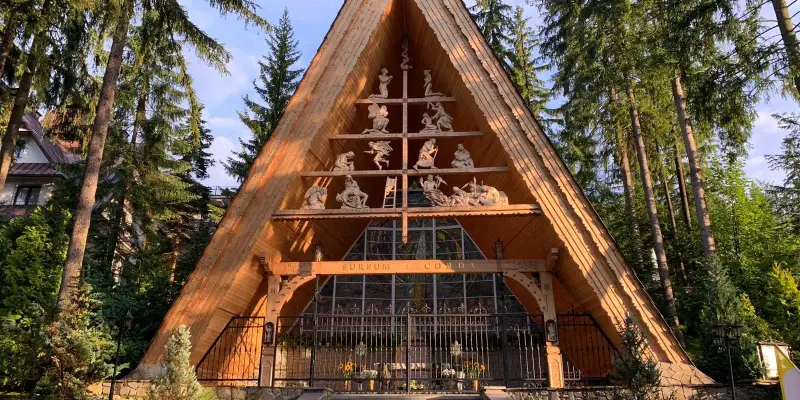
At Krzeptówki, on the south-western side of town, the National Shrine of Our Lady of Fatima is something else: not a church of highlander tradition but a votive offering for the survival of John Paul II after the assassination attempt of 13 May 1981. It was built by the highlanders themselves from donations, and consecrated by the Pope himself on 7 June 1997, during his pilgrimage to Poland. Its character is that of a large devotional shrine rather than a valley chapel.
Small signs of devotion surround the shrine: dozens of rosaries are woven into the fence. Beside the church an older Pallottine chapel holds a Fatima statue, and in the gardens stands the papal altar of the 1997 Mass. The shrine is run by the Pallottine Fathers. This is not a visit for admirers of timber; it is for those who want to understand why, for many Poles, Zakopane is also a place of memory of Karol Wojtyła.
Putting the three stops together
The circuit is short and works even in uncertain weather. A sensible order: begin with the old cemetery and the log church, then move towards Jaszczurówka, preferably on a day of good light to appreciate the shingles and decoration, and finish at Krzeptówki, where the atmosphere changes completely. With a little planning you can do it in half a day, by car, by local bus or with a good walk, depending on how much time you want to give it.
Keep in mind that these are all active places of worship: respect services, dress modestly and keep quiet during celebrations. Visiting hours vary through the week and the seasons, so it pays to check. In summer Jaszczurówka can be crowded, and the best moment to photograph it is early morning, before the visitors arrive.
The thread that links the three churches is finer than it looks: in each of them someone wanted to give form, in wood or in stone, to an idea of Zakopane. The carpenter who knew logs, the architect who dreamed of a national style, the Pope who remembered a survival: three different choices, one valley.
Frequently asked questions
Can I enter Zakopane's churches in shorts?
It is better to avoid very short clothing: covered shoulders and knees are a sign of respect expected in many Polish churches. During services tourists are tolerated but should stay discreet and quiet.
Which church in Zakopane is best for photographs?
The Jaszczurówka chapel is the most photogenic, with its porches, shingled roof and high stone base set against the forest. The best light comes early in the morning or late in the afternoon, when there are fewer people.
Who was Stanisław Witkiewicz?
He was an architect, painter and critic who invented the Zakopane Style in the late nineteenth century, drawing on the art of the Podhale highlanders. He was the father of the painter and playwright Witkacy, and he rests in the old Pęksowy Brzyzek cemetery.
Is the Fatima shrine made of wood like the other churches?
No, it is a large modern church conceived as a national shrine rather than a mountain chapel. It is worth seeing mainly for the story linked to John Paul II, not for any tradition of timber building.