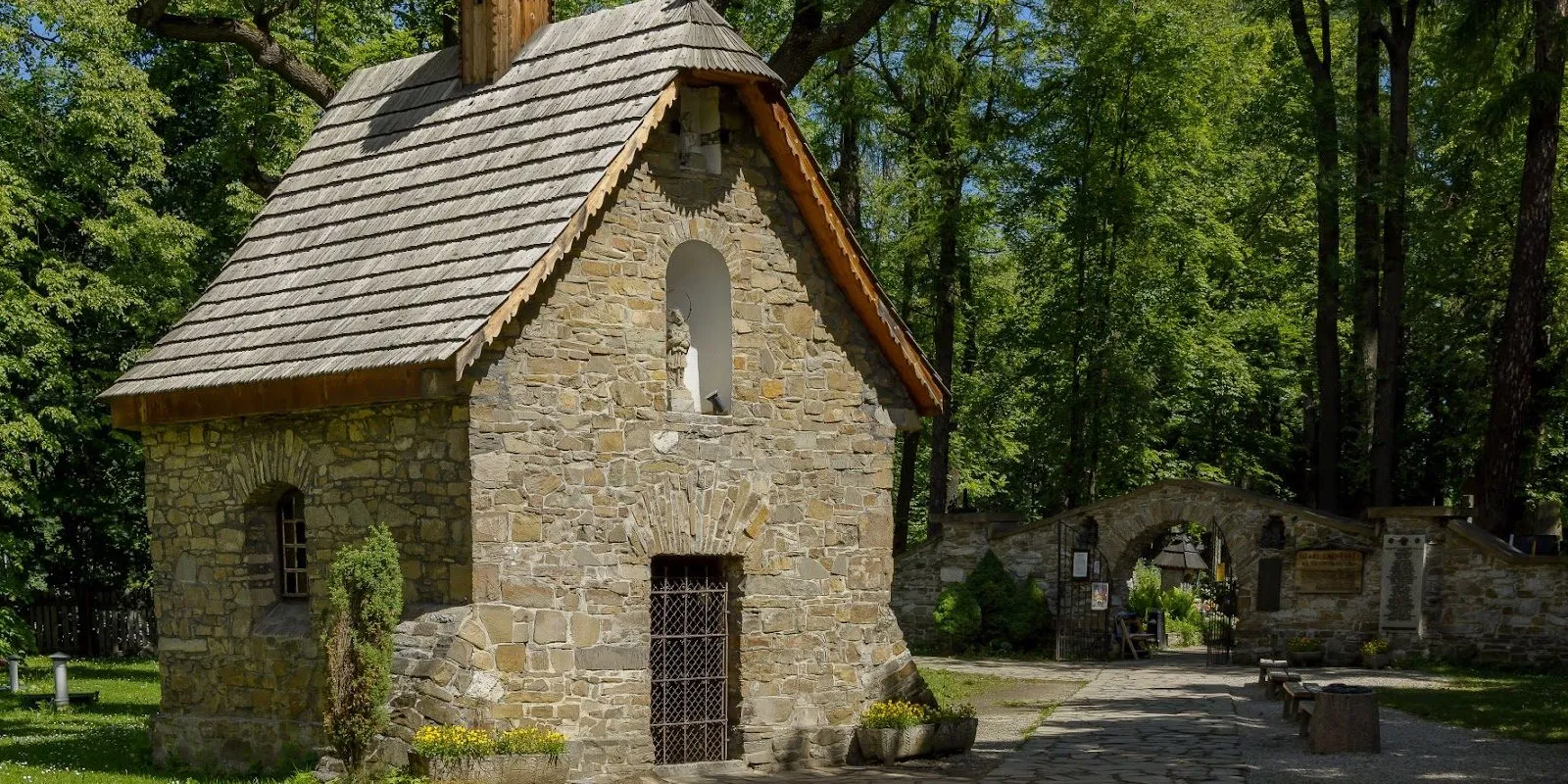
The old wooden church of St Clement and the cemetery behind it
The oldest church in Zakopane is made of logs and has a shingled roof, and behind it lies a cemetery where the story of the town can be read from the gravestones. The wooden Old Church of St Clement went up between 1847 and 1851, paid for by the local landowners Klementyna and Edward Homolacs and built under the direction of the carpenter Sebastian Gąsienica Sobczak, a highlander. The cemetery behind it, Pęksowy Brzyzek, is where Zakopane has buried the people it considers its own.
A village church built by a highlander carpenter
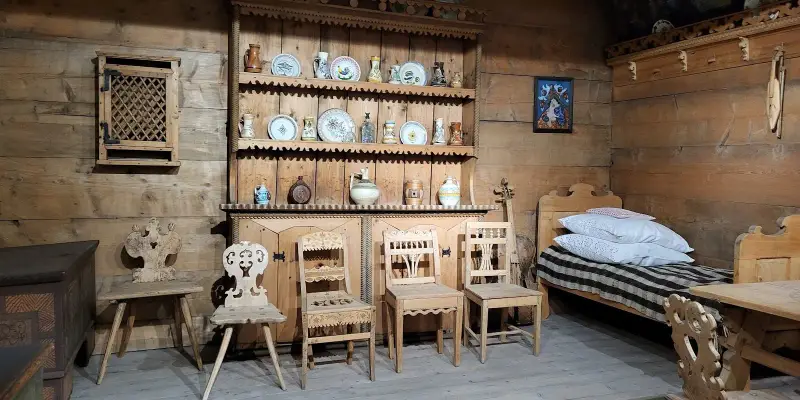
The church has a single nave and three altars, made by a folk sculptor from Gliczarów, Wojciech Kulach-Wawrzyńcok, and its roof is covered in shingles. Inside, it still holds its original paintings and figures of saints, as well as a small pulpit regarded as a masterpiece of nineteenth-century folk sculpture, which give the dark timber interior a handmade, local character that later churches in the town rarely match. The building was put up when Zakopane was still a mountain village of shepherds and ironworkers, before the health-resort era brought in doctors, painters and writers. It therefore preserves the scale and the building habits of that earlier world.
The oldest, northern part was raised in 1847 and the first Mass was celebrated there on Epiphany 1848; in 1850–51 the church was enlarged to its present shape, with the southern part and the tower, on the initiative of the first parish priest, Father Józef Stolarczyk. It was dedicated to St Clement at first; in the 1930s a copy of the painting of Our Lady of Częstochowa was placed on the main altar and the church was dedicated to her as well, with St Clement remaining the second patron.
Pęksowy Brzyzek: how the cemetery began
The cemetery is named after Jan Pęksa, who in 1848 left the eastern part of the plot to the parish. Hundreds of people rest here, and since 1931 the cemetery has been protected as a monument. When a second cemetery was opened in 1908, this one began to be called the old cemetery as well. The entrance gate was designed by Stanisław Witkiewicz, the creator of the Zakopane style, so the cemetery carries the mark of the same man who shaped the town's architecture.
The first parish priest, Father Józef Stolarczyk, who died in 1893, is buried here, as are many of the people who made the place famous in Poland.
Whom to look for among the graves
The cemetery reads like a roll call of the Tatras. The physician Tytus Chałubiński, who helped make Zakopane known as a climate resort, rests here, together with Jan Krzeptowski Sabała, the highlander storyteller and fiddler. The writers Kornel Makuszyński, Władysław Orkan and Kazimierz Tetmajer are also buried here, and so are the sculptor Władysław Hasior and the ski jumper Stanisław Marusarz. Stanisław Witkiewicz, who died in Lovran in 1915, was buried here, while the grave of his son Witkacy is symbolic. Tetmajer's ashes were brought here in 1986 from Powązki Cemetery in Warsaw.
Many of the headstones are fine pieces of folk art, carved in wood and stone, and it is worth reading them slowly. Some graves are symbolic, such as the one of General Mariusz Zaruski, whose place of burial is unknown. The poet Jan Kasprowicz was first buried here too, until in 1933 his remains were moved to the mausoleum he had chosen on Harenda.
Visiting with respect
The cemetery is a working burial ground and a place of memory, not a museum. Walk on the paths, keep your voice low, do not step on the graves and leave candles and flowers as you find them. It is especially atmospheric around 1 November, All Saints' Day, when families light candles on the graves, but it is also much busier then, so choose a quieter day if you want to look at individual monuments. The church and the cemetery stand together on ul. Kościeliska, the street that leads out of the centre toward the Dolina Kościeliska valley, so a visit pairs easily with a walk along that side of town.
Where it is
Tours and activities
-
 From €27 per person
Zakopane
Zakopane: Ski Lesson on Gubałówka Hill for beginners
★ 4.9 (87 reviews) · Free cancellation
Duration: 1 h
Guide in:
See availability Details


-
 From €22 per person
Zakopane
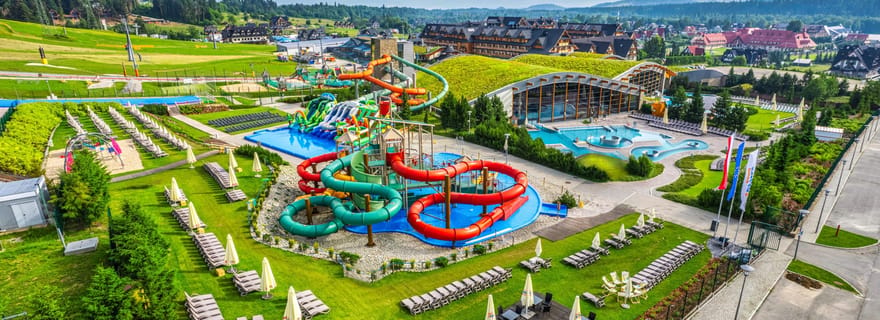
Terma Bania Aquapark Tickets in Białka Tatrzańska
★ 4.6 (132 reviews) · Free cancellation
Duration: 3h30
See availability Details -
 From €5 per person
Zakopane
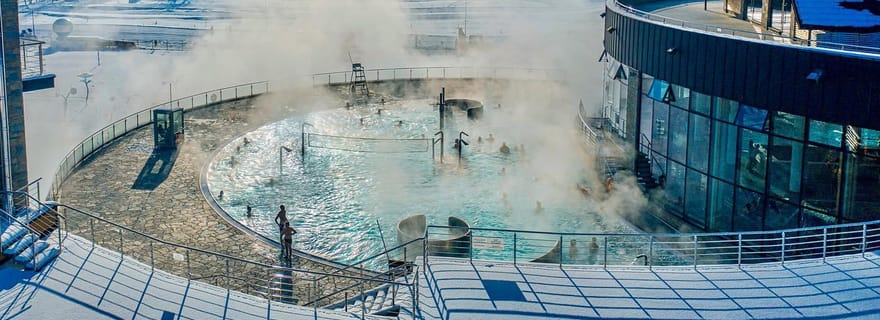
Chochołowskie Thermal Baths Entry with a Personal Host
★ 4.5 (116 reviews) · Free cancellation
Duration: 3–10 h
Guide in:
See availability Details

-
 From €81 per person
Zakopane
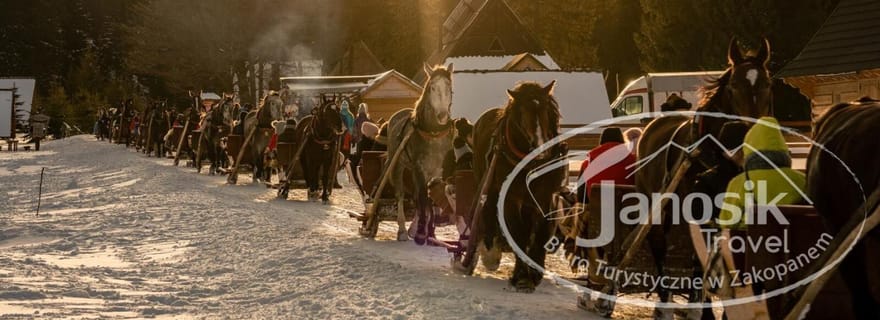
Zakopane: Chochołowska Valley Sleigh Ride with Bonfire
★ 4.4 (58 reviews) · Free cancellation
Duration: 3 h · Hotel pick-up
Guide in:
See availability Details