Ride the cable car up Kasprowy Wierch and come back down to Zakopane, and sooner or later you meet a second Kasprowicz: Jan Kasprowicz, poet, translator and university professor, who spent his last years here and lies in a granite mausoleum in the middle of a garden. Many visitors assume the mountain carries his name, or the other way round. In fact the name of the peak comes from Hala Kasprowa, the meadow at the foot of the mountain, traditionally linked to a highlander called Kasper; the two names resemble each other by accident, which is exactly why the confusion refuses to die. A more interesting truth remains: the poet chose to live, and to be buried, at the foot of those mountains.
Harenda, the poet's villa
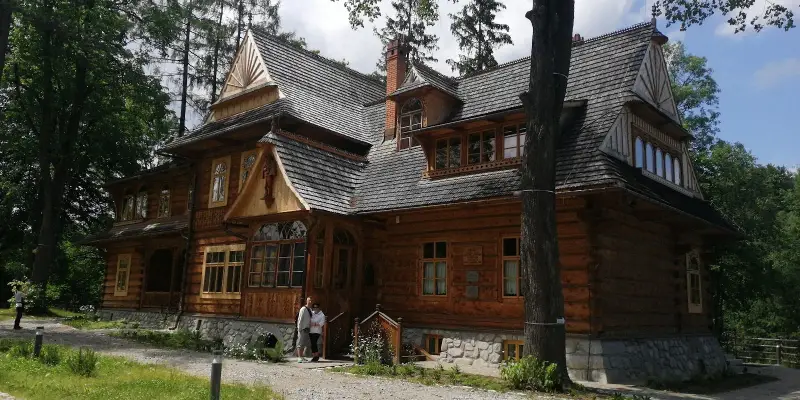
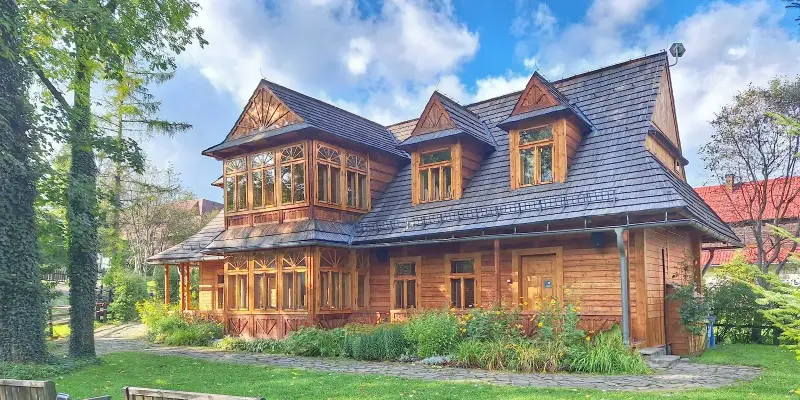
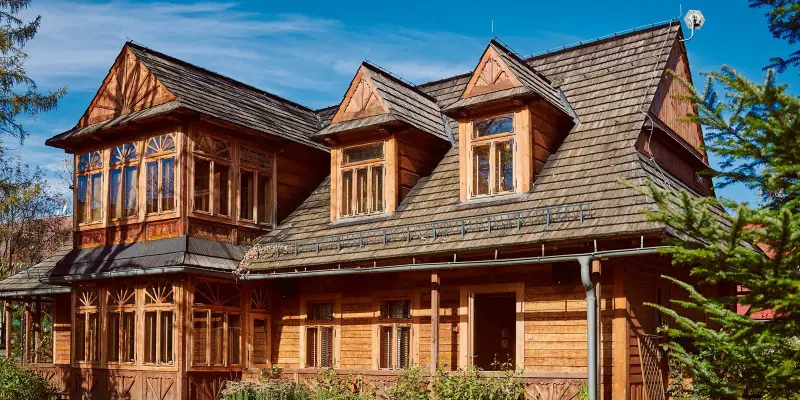
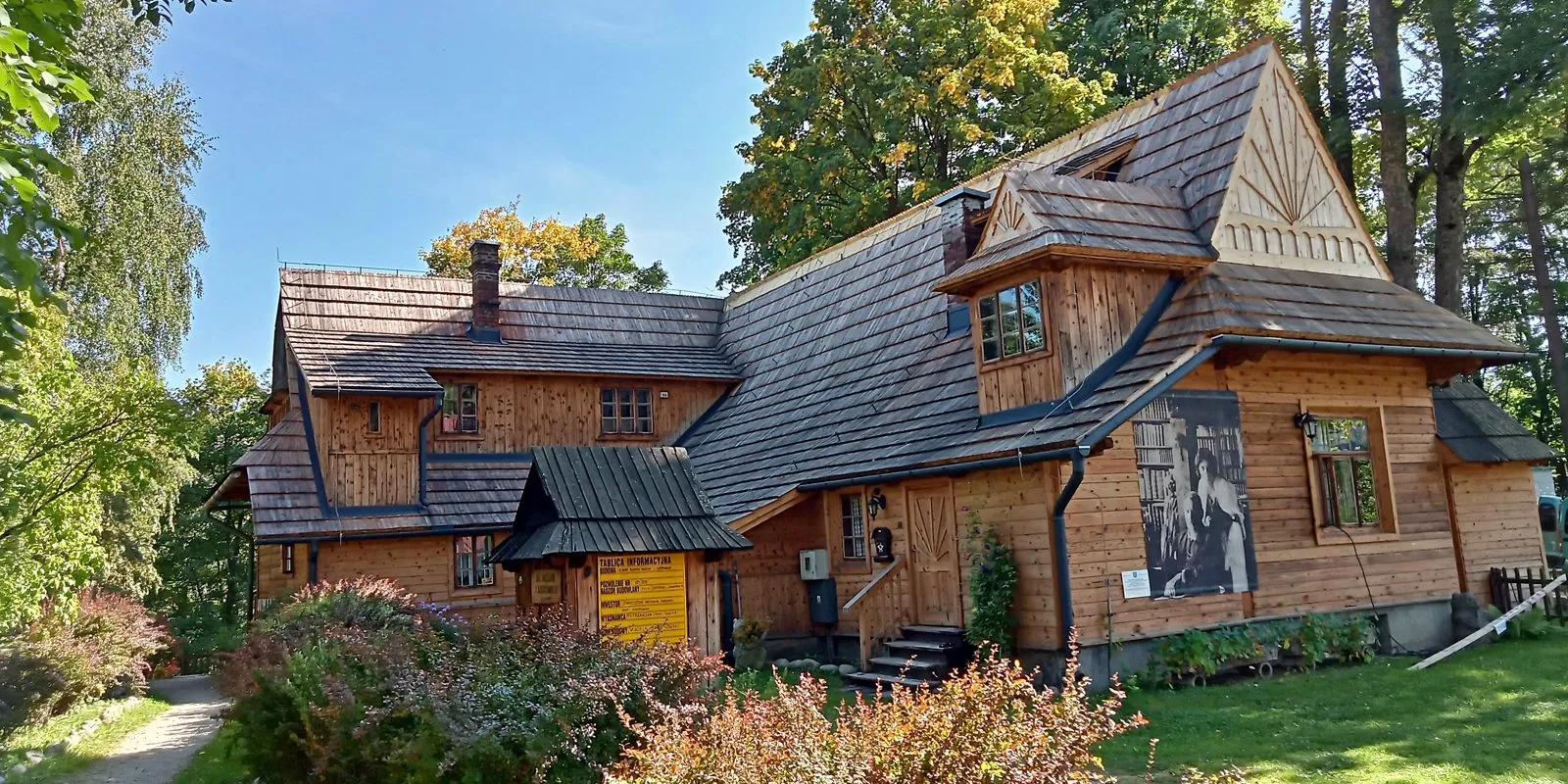
In 1923 Kasprowicz bought the Harenda villa and settled there with his wife Maria. The house had been built in 1920 as a guesthouse, sold to an English painter and then bought back by him, a story of changing hands common to many Zakopane villas, where timber architecture and the market for visitors' rooms grew side by side. Kasprowicz was already an established author, one of the names of the Young Poland movement, and he came from a peasant background, which in his case is more than an anecdote: his poetry carries the weight of earth and toil, and an almost biblical force in the Hymns.
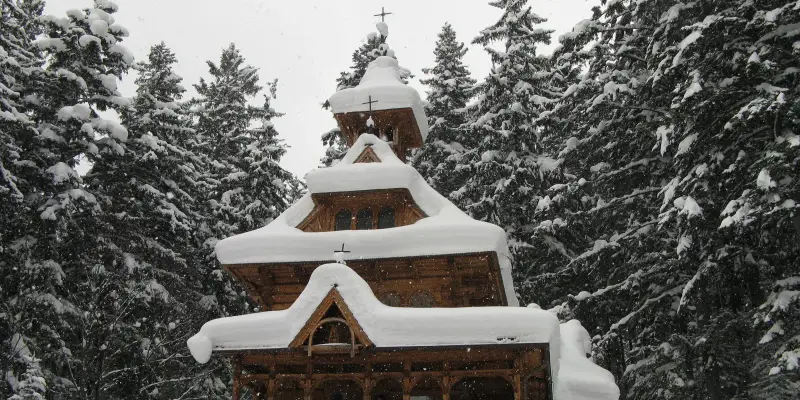
The poet died in 1926, only a few years after settling in the mountains. In the garden stands the granite mausoleum completed in 1933, where his remains rest. It is austere and quiet, without rhetoric, and deserves a stop even from people who have never read a line of him.
The museum, still as Maria left it
Since 1950 the villa has been a museum, and its particular quality is that the interiors are as Maria left them when she died in 1968. This is not a reconstruction: it is the home of two people, with furniture, books and objects chosen and kept for decades. You feel the difference at once, because the rooms do not seem staged for the public but lived in. If you love house museums, this is one of the most authentic experiences in Zakopane.
Inside there is also the Władysław Jarocki Gallery, with paintings by Jarocki (1879–1965), Kasprowicz's son-in-law: regional scenes and landscapes, often in the cold light of the Tatras. Setting the poet's words beside the son-in-law's brush shows how the family lived the place, between writing, canvas and window. The association of Kasprowicz's friends still organises literary evenings at Harenda, a detail that says how alive this house is rather than merely preserved.
Why a poet went to the mountains
Kasprowicz was not a mountain man but a lowlander and city dweller of peasant origin who grew close to the Tatras as an adult: they appear in his poetry as early as the end of the nineteenth century. In his work the Tatras appear as a physical and symbolic presence: rock, wind, isolation, the relation between a person and something larger. You need not know his poems to feel it. Spend a little time in the garden, look south, and you understand why an author who had written about pain and revolt chose this place to stop.
If you want to approach his verse before visiting, look for a translation in a language you read: his poetry loses much in transit but still keeps its tone. If you prefer to arrive unprepared, the house speaks for itself.
Kasprowy Wierch, the mountain with a similar name
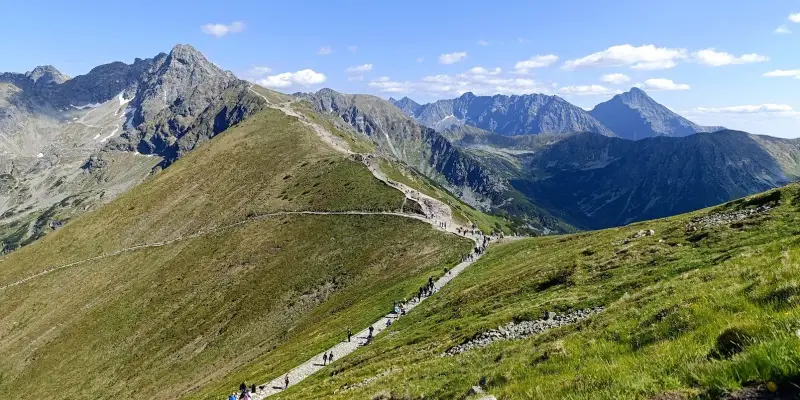
The summit of Kasprowy Wierch rises to 1,987 metres on the main Tatra ridge, exactly on the border with Slovakia: the south side drops towards the Cicha valley. From the Kuźnice area you can walk up or take the cable car, built in roughly eight months between 1935 and 1936. The meteorological observatory was completed in 1938 to a design by Aleksander and Anna Kodelski. Several trails meet here, and the red one continues beyond the top towards Świnica.
In winter the mountain becomes a ski area with two steep runs, Goryczkowa and Gąsienicowa, suited to experienced skiers. The watchword in every season is caution: the weather changes fast, and even in summer you need warm, windproof layers. Off-season and in snow, routes demand winter equipment, and dogs are not allowed on the national-park trails. Conditions change, so ask locally before setting off. In an emergency the European number is 112, and the Polish mountain rescue, TOPR, answers on 985.
Combining poetry and summit in one day
One combination that works is to split the day in two moods: the morning at Harenda, when the house is quiet and the light comes in low, and the afternoon towards Kuźnice if the weather allows a climb. Those who prefer the mountain in clear skies can reverse the order and leave the villa for when the clouds arrive. Either way, check the forecast before deciding, because a peak of almost two thousand metres does not forgive underestimation.
If you only have time for one, the rule is simple: for panoramas choose the mountain; for the human side of the town, made of books, portraits and rooms left intact, choose the villa. One done properly is better than both done in a rush.
Frequently asked questions
Is Kasprowy Wierch named after the poet Jan Kasprowicz?
No. The name of the peak comes from Hala Kasprowa, the meadow at its foot, linked to a highlander called Kasper. The resemblance to the poet's surname is a coincidence, although visitors confuse the two all the time.
Where is Jan Kasprowicz buried?
He lies in a granite mausoleum in the garden of the Harenda villa in Zakopane, completed in 1933. You see it together with the museum, with no mountain walk required, so it is an easy stop even in bad weather.
Can I take a dog up Kasprowy Wierch?
No, dogs are not allowed on the trails of the Tatra National Park, and that includes the routes leading to Kasprowy Wierch. It is better to plan other activities for your pet, for instance in areas outside the park.
What does it mean that the summit is on the border?
It means the line between Poland and Slovakia runs exactly over the 1,987-metre summit. The southern side falls towards the Cicha valley in Slovakia, while the northern side stays in Poland.