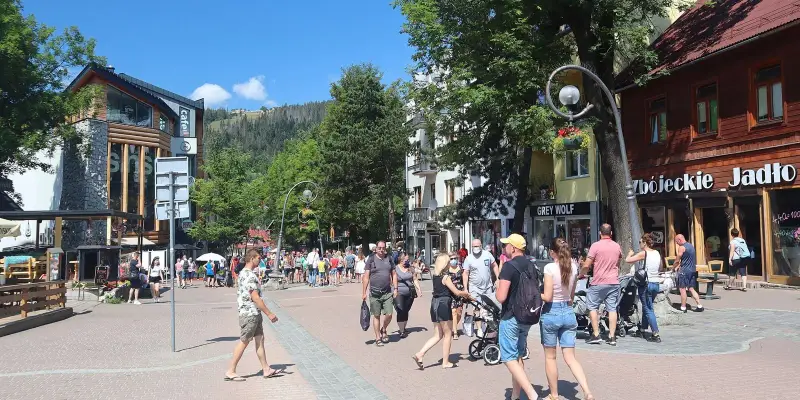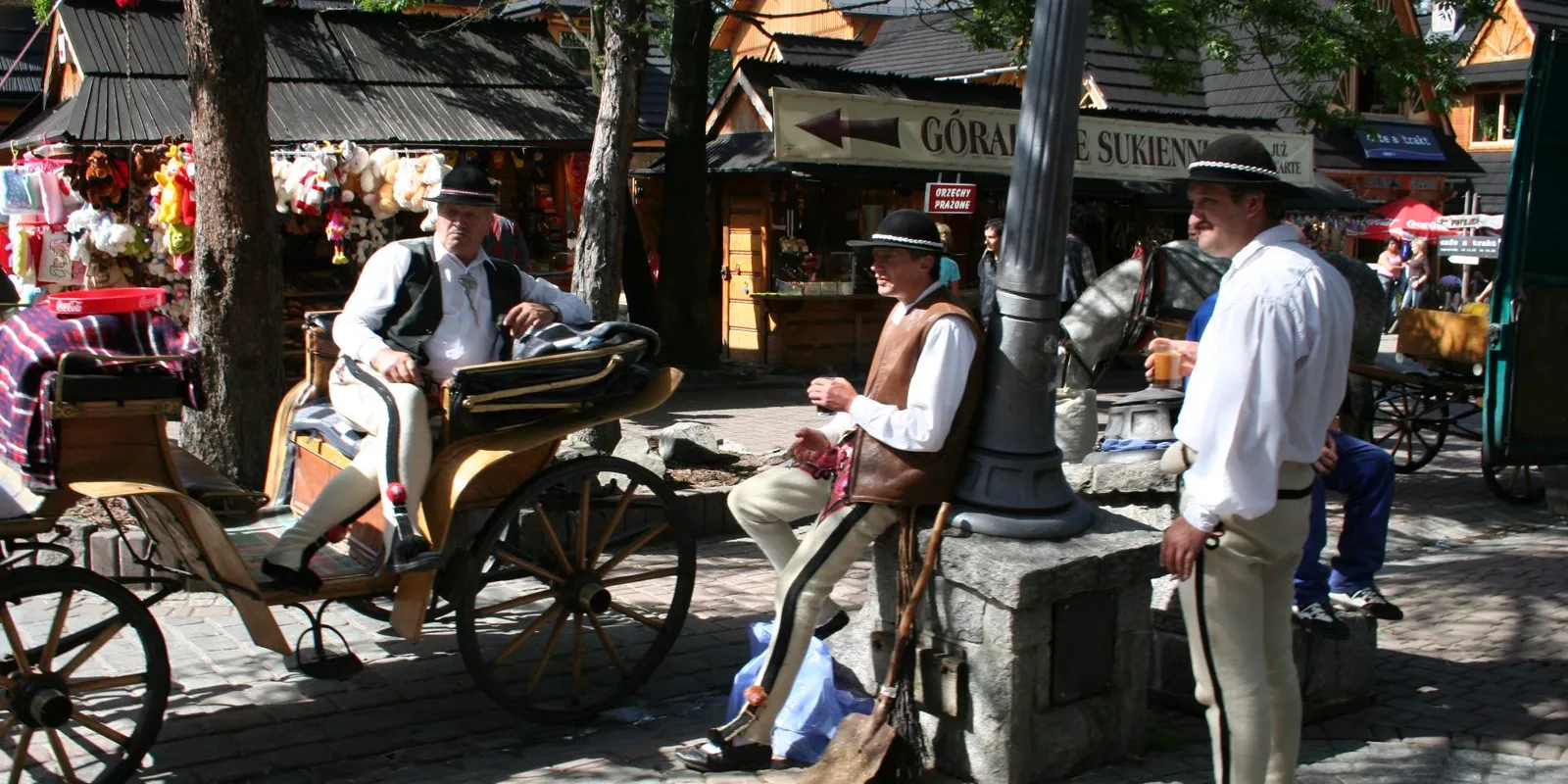
The street lamps on Krupówki lean to one side, and it is not a fault: they are shaped like a shepherd's crook, a detail of the street's redesign that stays in the memory. It is the first clue that this street, dismissed by many as a souvenir catwalk, has a more interesting story than its shop windows. Before it became Zakopane's tourist living room, Krupówki was the road serving the ironworks at Kuźnice, and its name comes from a forest clearing called Krupówki.
A road born for iron, not for tourists
Krupówki developed as the road to the Kuźnice ironworks, the metallurgical centre that put this area on the map of Galicia in the nineteenth century, long before anyone thought of tourism. It starts at the junction of Nowotarska and Kościeliska streets and climbs for just over a kilometre to Zamoyskiego street and Aleja 3 Maja. The crossing with Kościuszki street is regarded as the centre of Zakopane, and not by chance: from here you read the layout of the town, long and narrow, with the mountains as a backdrop.
Today the street is pedestrian, closed to cars and bicycles. The repaving, begun in 1992 to a design by Maciej Krawczyński and Andrzej Orłowski, mixes black basalt, grey granite and red concrete blocks: a mosaic better noticed by looking down than into shop windows. And it is by looking up, between the shops, that you catch glimpses of Gubałówka and Giewont.
What to see while you walk
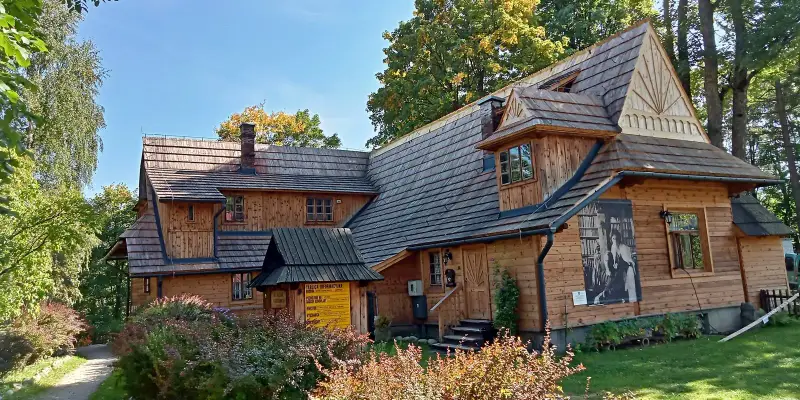
Anyone strolling Krupówki at tourist pace may miss several stops worth making. At number 10 stands the Tatra Museum, the best doorway into the mountains, the highlanders and the local style. At number 41 is the house of the Bazar Polski. Along the street is also the former Hotel Morskie Oko, tied to theatre history: here Witkacy began his stage career and the actress Helena Modrzejewska performed, an icon of nineteenth-century Poland.
The more touristy elements are all there: horse-drawn carriages, craft shops, bars with music and the statue of the White Bear, a favourite photo spot. They are part of the landscape and need not be sneered at, but they work best as background colour, not as a destination. If something looks inauthentic, it probably is; other things, such as workshops selling shingles, wool and carved wood, can surprise you.
When to go and how to use it
The street has two faces. By day, especially in high season and at weekends, it is crowded, noisy and suited to people who want movement. Early in the morning it is something else: few people, shops opening, low light on the facades. In the evening, when the bars light up, the crowds return, but in a different way, more relaxed, with friends and families wandering with no goal.
For a first contact with Zakopane the best moment is late afternoon, when the sun lengthens the shadows and the mountains at the far end become a credible backdrop. In winter, with snow, the street changes character: lights, hot drinks and heavy coats give it a postcard air that really works. In summer, avoid the middle of the day and use Krupówki as an evening walk.
How to avoid the tourist traps
The rule is simple: do not eat on the main street as a matter of principle. Places with the menu out front and staff inviting you in are the obvious choice and rarely the best. Walk a few minutes away, turn into a side street and look for restaurants where Polish is spoken and the menu is short. The same applies to souvenirs: be wary of products that look too uniform and prefer what carries the mark of a hand, such as wool, carvings or shingles.
For photos in costume or with animals, think it over; in any case watch your bag and phone, as on any busy street. With the horses, notice how they are treated: the presence of a carriage is not in itself a good reason to climb aboard. For ski slopes and cable cars, bear in mind that Krupówki is not the ideal starting point: you move elsewhere by shuttle, bus or on foot.
After Krupówki, where next
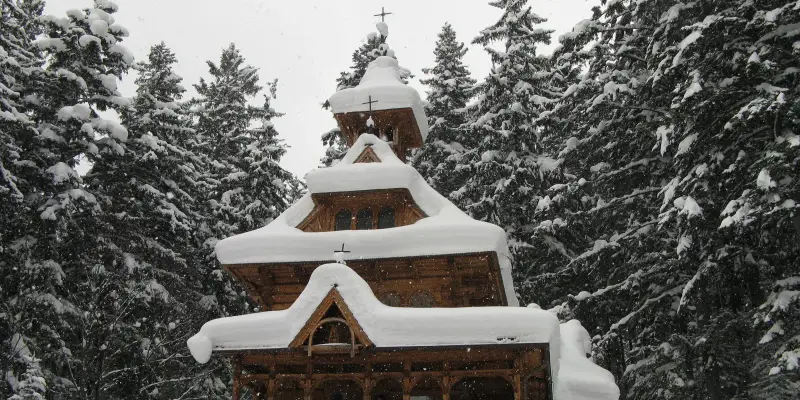
The street is a good starting point, but Zakopane does not end here. Within minutes you reach the Tatra Museum, the wooden church and the Pęksowy Brzyzek cemetery, the villas in the local style and the start of the trails to Kuźnice. If you want something hot to drink with a view, head up towards Gubałówka, where the mountains show with no buildings in between.
The honest verdict is this: Krupówki is not the real Zakopane, but it is part of its life. A road born for iron, turned into a promenade and a stage, where time spent noticing details repays more than shopping. Give it a curious first half hour, then look for the rest elsewhere.
Frequently asked questions
How long is Krupówki and where does it start?
Krupówki is just over a kilometre long. It starts at the junction of Nowotarska and Kościeliska streets and climbs to Zamoyskiego street and Aleja 3 Maja. It is an easy walk, and the crossing with Kościuszki street is considered the town centre.
Can I cycle or drive along Krupówki?
No, Krupówki is a pedestrian street, closed to cars and bicycles. Leave your vehicle in a car park on the edge of the centre and continue on foot, particularly since traffic around it is heavy in high season.
Why are the street lamps on Krupówki tilted?
They are shaped like a shepherd's crook, a detail of the redesign of the street begun in 1992. The detail echoes the pastoral culture of Podhale, and you notice it as soon as you start walking.
Is Krupówki suitable for children?
Yes, it is safe because it is pedestrian, and children enjoy the White Bear statue, the carriages and the craft shops. At peak hours the crowd can be tiring with strollers, so go in the morning or late afternoon.