Town itinerary
Houses of musicians and poets: Szymanowski, Makuszyński and Kasprowicz
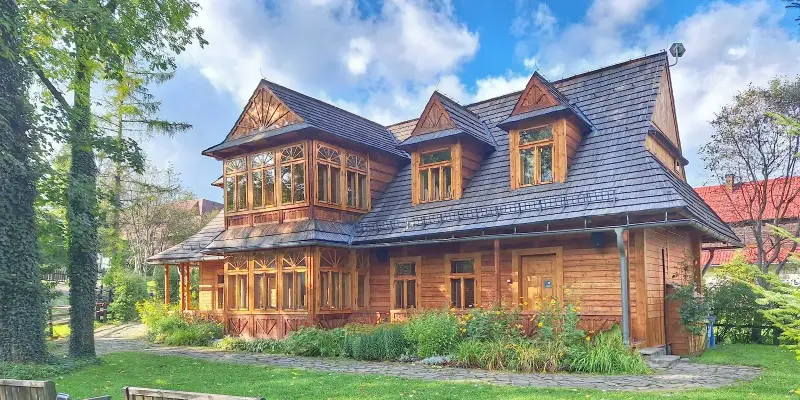
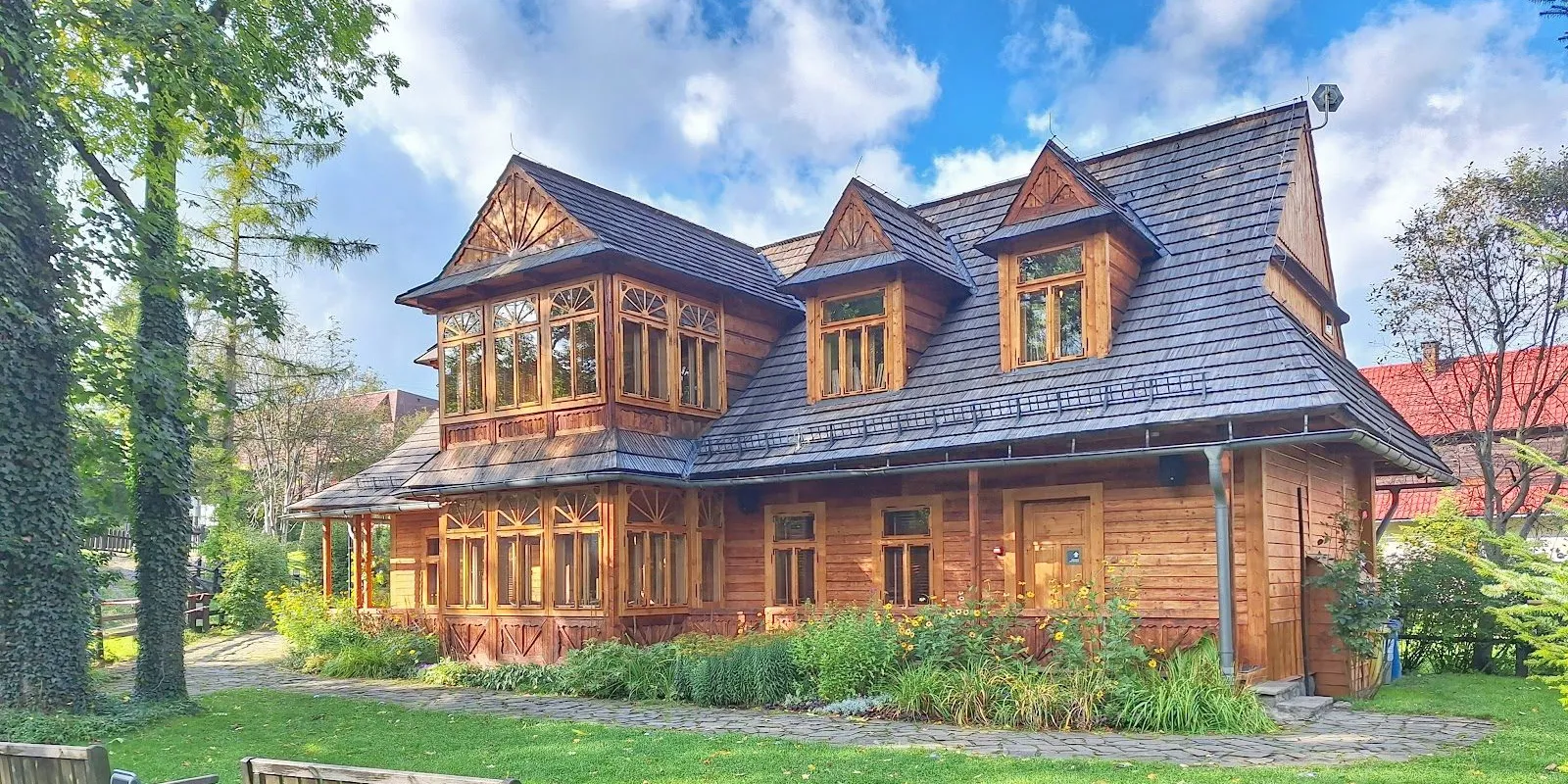
When Karol Szymanowski moved into the villa on Kasprusie street in 1930, he was already ill with tuberculosis, and he called it «a small, humble highlander’s house». That house, Villa Atma, is today the composer’s biographical museum, billed as the only one in the world. It was built in the late nineteenth century as a guesthouse for holidaymakers in the Zakopane style, originally a single-storey highlanders’ house; in 1926 the attic rooms were added, with the projecting windows that gave it its present look. The name Atma, from the Sanskrit for «soul», appeared in the 1920s. Here Szymanowski listened to the band of Bartuś Obrochta, the fiddler who opened the music of the Podhale to him: he called it primordial, «prehistoric», and refused to reduce it to a folkloric quotation. The best-known result is Harnasie, a ballet-pantomime about mountain brigands, begun in 1923 and finished in 1931. The museum shows the interiors of the 1930s with the composer’s study, his personal belongings and a portrait painted by Witkacy; a room with the piano hosts small concerts. The composer died in Lausanne on 29 March 1937.
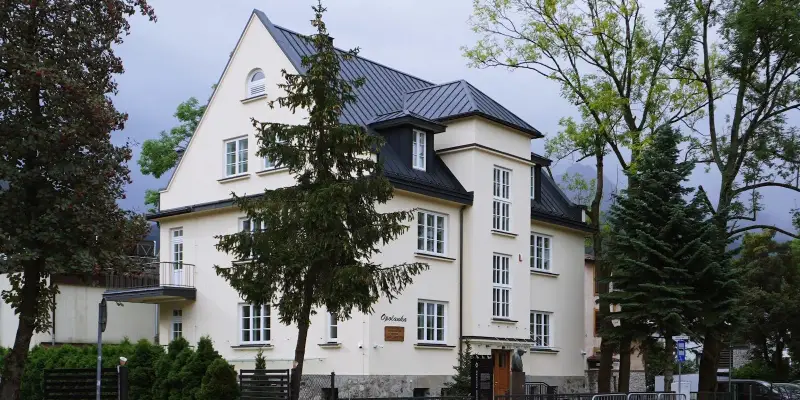
In front of the Opolanka villa stands a monument to Kornel Makuszyński next to his best-loved character, Koziołek Matołek, the little goat who sets off in search of Pacanów, where goats are said to be shod. The monument was unveiled in 1955, two years after the writer’s death, and tells you at once that you are entering the home of an author for children. Makuszyński (1884–1953) and his wife began spending holidays at the Opolanka in 1934 and settled there for good after the war. The Muzeum Kornela Makuszyńskiego w willi Opolanka was born in 1966 from collections donated by his widow, Janina Gluzińska-Makuszyńska, and is now a branch of the Tatra Museum. The address is ul. Kazimierza Przerwy-Tetmajera 15, on a street named after a poet of Young Poland. The visit revolves around two rooms, «Life and work of Kornel Makuszyński» and «Literary Zakopane», with manuscripts, readers’ letters, photographs and sketches for the illustrations of his books; the rooms still hold antique furniture and paintings by Julian Fałat, Władysław Skoczylas, Stanisław Wyspiański and Henryk Kuna.
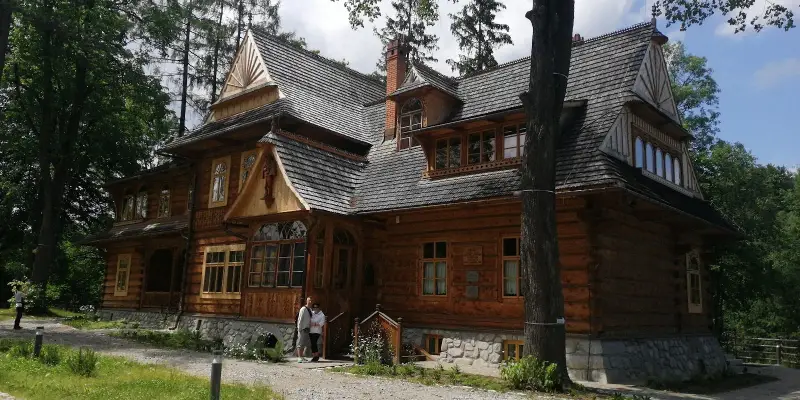
The poet Jan Kasprowicz, author of Hymny, finally chose a house on the slope of Harenda, between Zakopane and Poronin, and stayed there until his death on 1 August 1926. The villa was built in 1920 as a guesthouse, passed to an English painter, Winifred Cooper, and in 1923 was bought by Kasprowicz, who settled there with his wife Maria. He was one of the great names of Young Poland, a professor of literature at Lviv and a translator of Shakespeare; the house soon became a meeting place for writers, among them Makuszyński, Stefan Żeromski and Zofia Nałkowska. Maria looked after the house until her own death in 1968; it has been a museum since 1950, and the interiors remain as she left them. In the garden stands the granite mausoleum, designed by Karol Stryjeński, the architect of the ski jump Wielka Krokiew imienia Stanisława Marusarza, and completed in 1933; the spot, so the story goes, was chosen by the poet himself. The house also holds the gallery of paintings by his son-in-law, Władysław Jarocki.
The most natural order starts with the two villas in town: first Villa Atma, then the Opolanka, finally Harenda, away from the flow of Krupówki, halfway between Zakopane and Poronin, a short transfer and an atmosphere that is at once quieter. The three houses share several threads: two began as guesthouses for holidaymakers, Makuszyński sat among the poet’s friends on the committee that had the mausoleum built, and Witkacy painted the composer’s portrait. These are short visits, in rooms that are not large, best made without hurry. The Tatra Museum on Krupówki is a short distance from Szymanowski’s villa and pairs well with it in the same morning. It is a programme for those looking for another face of the town besides the trails, and a good plan for days when the weather over the Tatras suggests staying in town.
Good to know before you go
- The three houses belong to two institutions: Villa Atma is a branch of the Muzeum Narodowe in Kraków, the Opolanka and Harenda of the Tatra Museum. Check opening days and programme on each museum’s website before fixing the morning.
- The museum at Villa Atma gives most to those who have first listened to at least Harnasie or the Fourth Symphony; the room with the piano hosts small concerts, whose programme is worth checking.
- Harenda lies halfway between Zakopane and Poronin, away from the centre: it needs a short transfer, by taxi or public transport, and is best planned in advance.
- At the Opolanka, Koziołek Matołek is a childhood read for generations of Poles: knowing something about the author before the visit makes it more interesting even for those who have read nothing.