Forty-three people: that is how many lived in Zakopane in 1676 (counting nearby hamlets too), in a clearing of pastures at the bottom of a valley that seventeenth-century documents call Zakopisko. Out of that barely visible dot on the map grew the history of Zakopane you can read behind every shingled roof and every ski jump today: a shepherd village, then an ironworks, then a visionary doctor, and finally one of Poland’s first mountain spas. It took about two centuries, and it left traces you can still touch.
Shepherds, forests and a foundry at Kuźnice
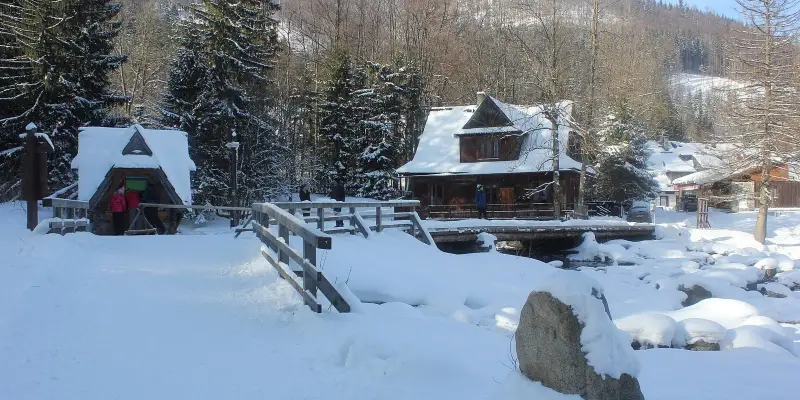
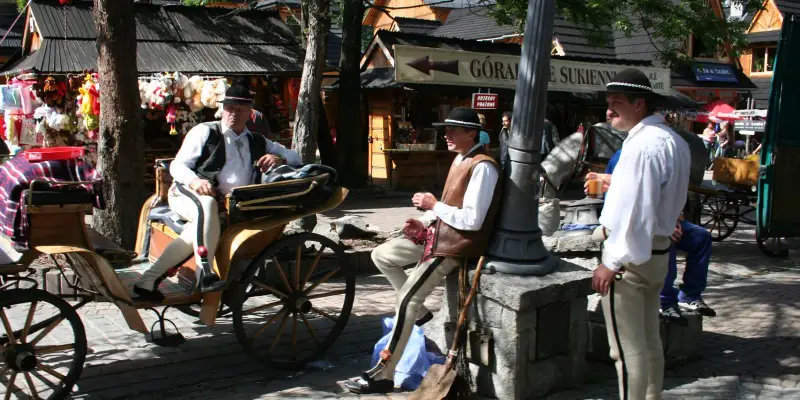
For generations life up here was that of the górale, the highlanders of Podhale: high pastures, flocks, log houses, and an economy that forest and iron made less poor than you might think. In the eighteenth century a foundry was built at Kuźnice, at the foot of the Tatras, using wood and ore from the surrounding mountains; by the nineteenth century it was the largest metallurgical centre in Galicia, the province of the Austrian Empire to which Zakopane then belonged. Visitors who think of the Tatras only as hiking scenery are often surprised: iron was really smelted here, and the smoke was not a figure of speech.
In 1824 the estate was sold to the Hungarian Homola family. The village stayed tiny and tourism in the modern sense did not yet exist: for a traveller of the time the Tatras were the edge of the known world, not a destination.
Dr Chałubiński and the making of a spa
The turning point came with medicine. Tytus Chałubiński (1820–1889), a Warsaw physician, began, from the mid-1870s, to recommend Zakopane’s air and climate to his patients. He was often accompanied by the storyteller and guide Jan Krzeptowski Sabała, a górale who knew every path and told a good tale: the pair, the doctor and the highlander, has become something close to a founding myth.
Word of mouth in the drawing rooms of Warsaw and Kraków did the rest. Around 1886 (some sources say 1885) the village was officially recognised as a health resort, among the first mountain spas in Poland. In 1889 Count Władysław Zamoyski bought the estates at auction and became one of the great backers of the area’s development.
The Tatra Society and the woodcarving school
In 1873 the Tatra Society (Towarzystwo Tatrzańskie) was founded, a club of enthusiasts that marked trails and, in time, took on everyday services such as street lighting and the post. Three years later it opened a woodcarving school, meant to give local youngsters a trade that did not depend only on pasture. It was one of the most far-sighted choices of the age: the workshop produced a generation of craftsmen able to turn folk motifs into refined decoration.
Witkiewicz and the wood that became a style
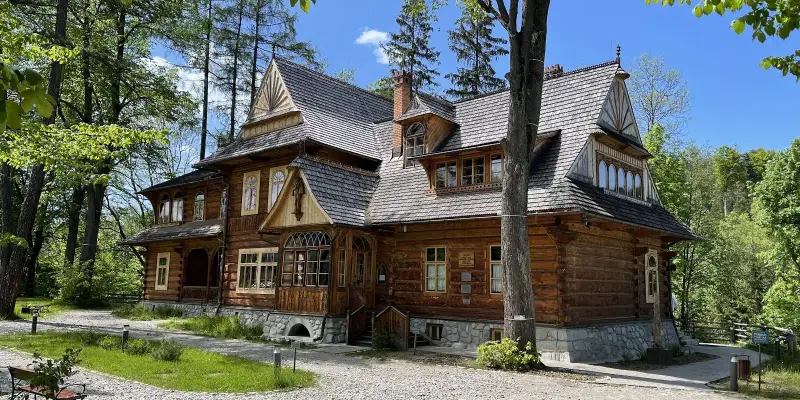
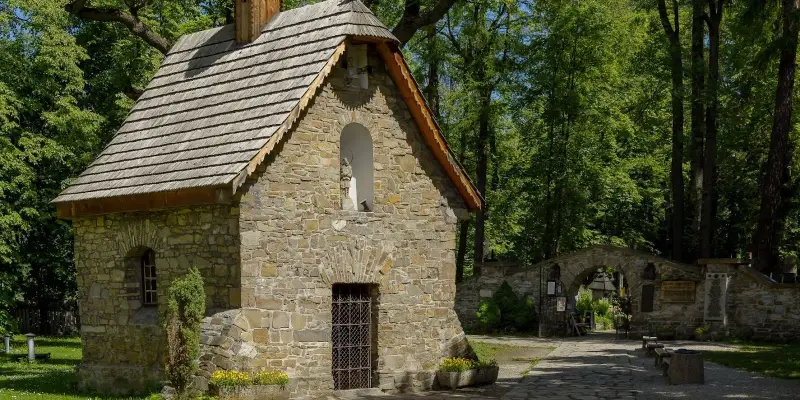
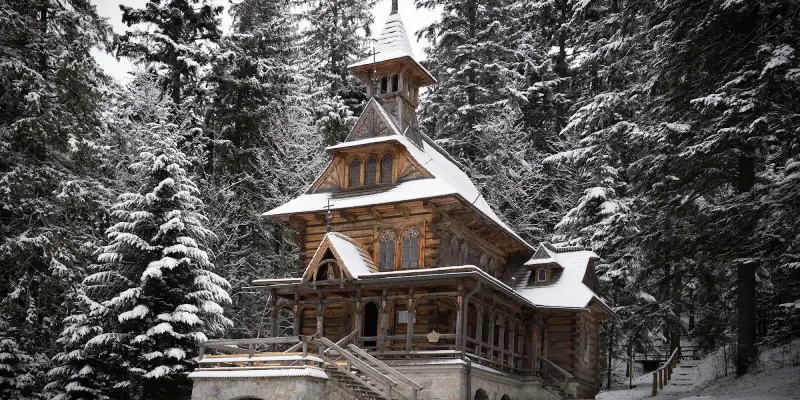
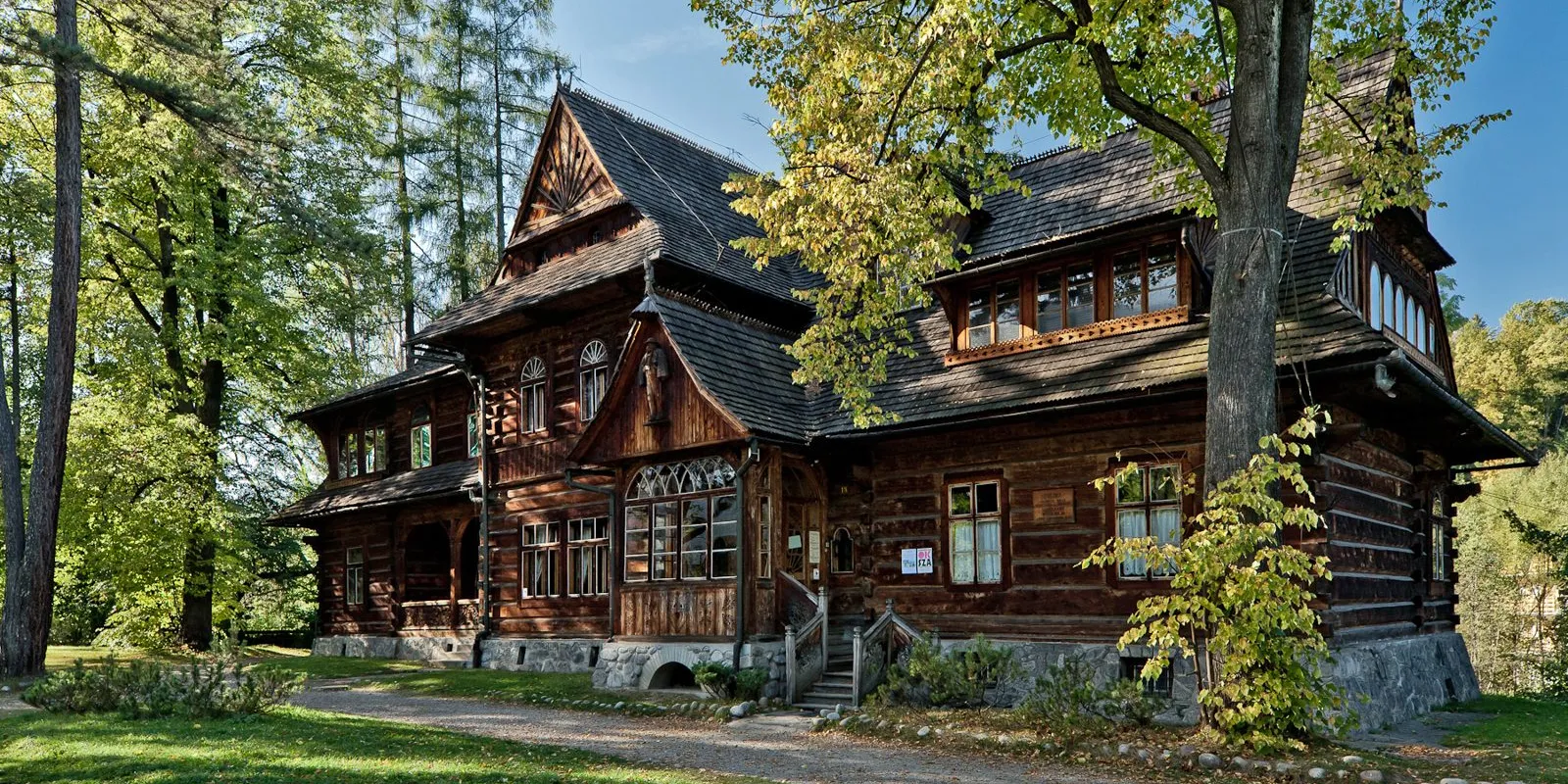
Those craftsmen found their director in Stanisław Witkiewicz (1851–1915), a painter, critic and architect. Convinced that highland folk art could become a modern architectural language, he translated it into what we now call the Zakopane Style: steep roofs, exposed beams, geometric carving, ornaments inspired by mountain flowers and crystals. The first example is Villa Koliba (1892–93), now home to the Museum of Zakopane Style; the Jaszczurówka chapel (1904–07), alone among the firs, is its most poetic version.
One useful note: the style is not a museum idea but an imprint found on many villas in the centre, in railings and friezes. With a little practice you can spot it by eye, without a guide.
The train, the skis and the town charter
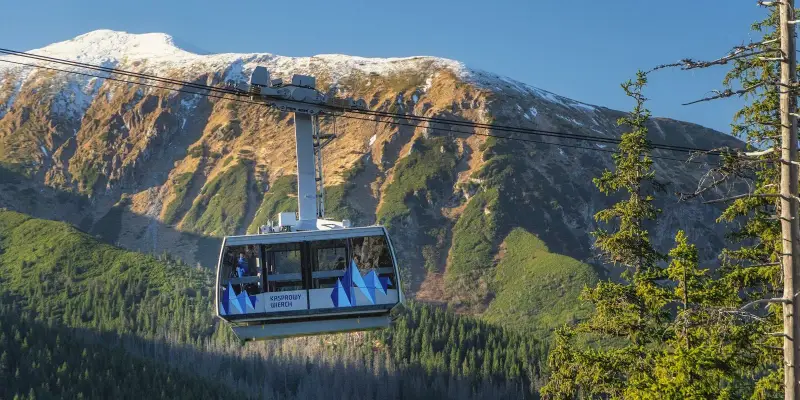
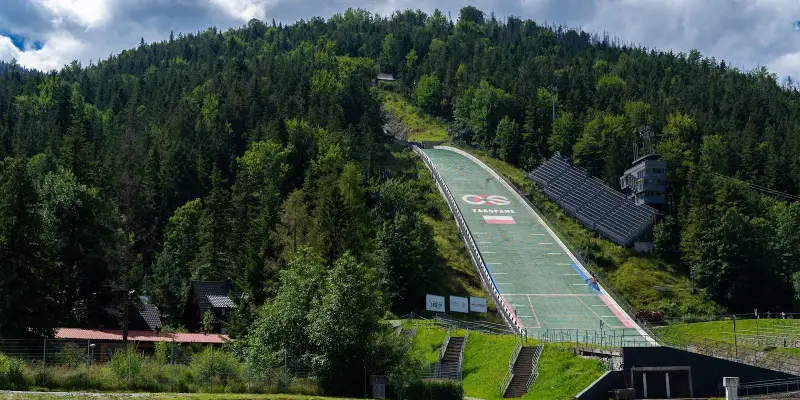
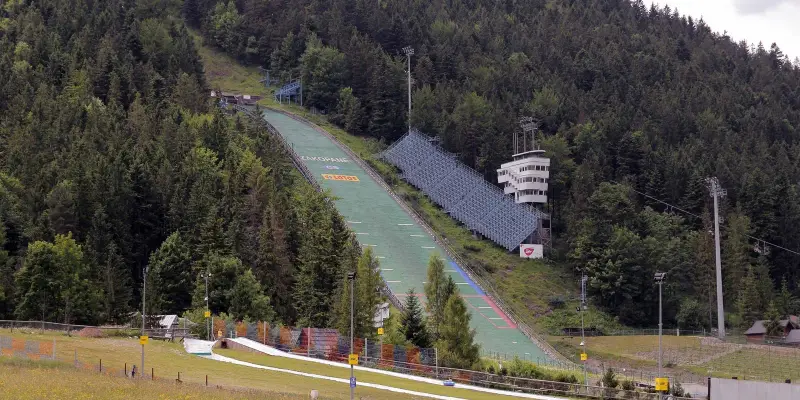
In 1899 the train from Chabówka reached Zakopane, and everything sped up. Within a few years artists, writers, doctors and climbers had turned the little town into a cultural laboratory; it was not by chance that people spoke of Poland’s “spiritual capital”. Sport completed the picture: the Wielka Krokiew ski jump dates from 1925, the Kasprowy Wierch cable car from 1936, and the town hosted the Nordic World Ski Championships in 1929 (an edition now counted as a world championship), 1939 and 1962.
In 1933 Zakopane received its town rights. Among its most debated adopted sons is the painter, writer and playwright Witkacy (Stanisław Ignacy Witkiewicz, 1885–1939), the son of Stanisław, who lived here for years and who now has a cenotaph in the Old Cemetery at Pęksowy Brzyzek.
Where to touch this history today
You can follow the thread in a single morning, in a sensible order. Start at Kuźnice, where the park with its historic buildings and the lower cable car station tell industry and tourism together; carry on to Villa Koliba to see where the style comes from; then walk to the Jaszczurówka chapel, best in low light. The old cemetery of Pęksowy Brzyzek closes the circle: carved wooden headstones, the names of guides, doctors and artists, and the symbolic grave of Witkacy. With only an hour, choose Koliba and the cemetery, which alone explain the move from village to town. If all you want is trails and views you can skip the lot, but you would miss the reason Zakopane looks the way it does.
Frequently asked questions
Why is Zakopane called the winter capital of Poland?
Because from the late nineteenth century it combined snow, sport and culture: Polish skiing developed here, the Wielka Krokiew jump was built and major events such as the Nordic World Ski Championships were held. The nickname is informal and also reflects the town’s fame as a spa and artists’ meeting place.
Who was Tytus Chałubiński and why is he remembered in Zakopane?
He was a Warsaw physician who, from the mid-1870s, promoted Zakopane’s climate as a cure. He helped found the Tatra Society and befriended the highlanders, which is why the town has a monument, a street and the regional museum named after him.
What is the Zakopane Style and where can you see it best?
It is an architectural style created by Stanisław Witkiewicz from highland forms: wood, steep roofs and carved ornament. It is best seen at Villa Koliba, now a museum, and at the Jaszczurówka chapel. Many villas in the centre show variations, often half hidden behind wooden fences.
Is it true that Zakopane once made iron?
Yes: a foundry was built at Kuźnice in the eighteenth century and by the nineteenth it was Galicia’s largest metallurgical centre. Buildings and a park remain at the foot of Kasprowy Wierch, where the cable car now starts, so industry and mountain can be seen in one place.