Polish Christmas begins with a star. On Christmas Eve in many families nobody sits down to eat until the first one appears in the sky, and a little hay goes under the tablecloth to recall the manger. In Zakopane the custom has a particular flavour, because the ritual is kept by the górale, the highlanders of Podhale, who pass it on through language, songs and costume. Spending the holidays here means being somewhere the tradition is not staged for tourists, even if tourism provides the frame.
Wigilia: the most important evening of the year
In Poland Christmas Eve, Wigilia, is more anticipated than Christmas Day itself. The supper is meatless, traditionally with twelve dishes: beetroot soup with tiny dumplings, pierogi, fish, above all carp, and sweets with poppy seeds. It starts with breaking and exchanging the opłatek, a thin wafer, with a wish for each person, and an empty seat is often left at the table for an unexpected guest.
As a visitor you will not be inside homes, but restaurants and guesthouses in the area often prepare Wigilia menus inspired by the tradition. If you want to taste it, ask well in advance: the evening tends to close early, and many places work by reservation only. Later, at midnight, many churches celebrate Midnight Mass, the Pasterka, and the town fills with people walking through snow toward lit doorways.
Krupówki in lights
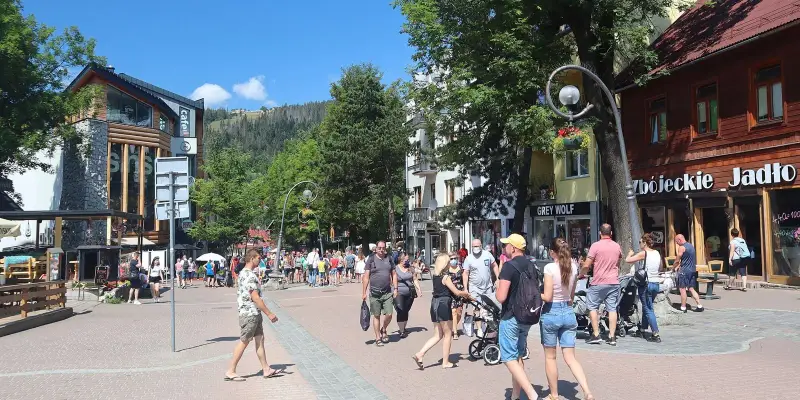
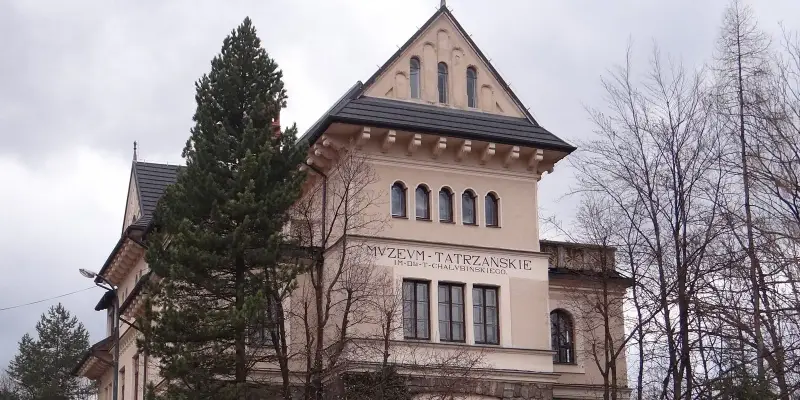
The pedestrian street through the centre, Krupówki, is a little over a kilometre long and holds the Tatra Museum, craft shops and cafés. In December it glows with lights and decorations, and the tilted street lamps shaped like shepherd's crooks look made to catch snow. Between the shops comes the smell of grilled smoked cheese and mulled wine, and the crowd has that holiday mood, slow and good-natured.
An honest tip: around Christmas and New Year the street is very crowded, especially in the evening. For some calm, walk it early in the morning or head for the side streets and higher roads, where timber houses in the Zakopane Style with snow on their roofs do the work no shop window can.
Carols, highlanders and the kulig
The holidays in Zakopane come with a soundtrack: the kolędy, Polish Christmas carols, which in Podhale are also sung in choirs and with traditional instruments, sometimes by groups in regional dress. If you hear them in a church or a restaurant, stop: it is music of open voices and mountain rhythms, very different from the repertoire you know.
Another winter tradition is the kulig, a horse-drawn sleigh ride, usually across snowy meadows, with blankets, torches and a stop around a fire with something to eat. It is not for anyone who suffers in the cold, but at night, under a dark sky and in silence, it is among the most memorable experiences of the season.
New Year's Eve: the Sylwester night
In Poland New Year's Eve is called Sylwester, and in Zakopane it is a big occasion: music and parties in venues and streets in the centre, often an open-air event too, toasts and fireworks at midnight, many of them set off by private revellers. It is the loudest night of the year, and anyone who wants to sleep should choose accommodation with that in mind, away from the centre. If you would rather be in the middle of it, prepare for cold, crowds and an open-air party atmosphere.
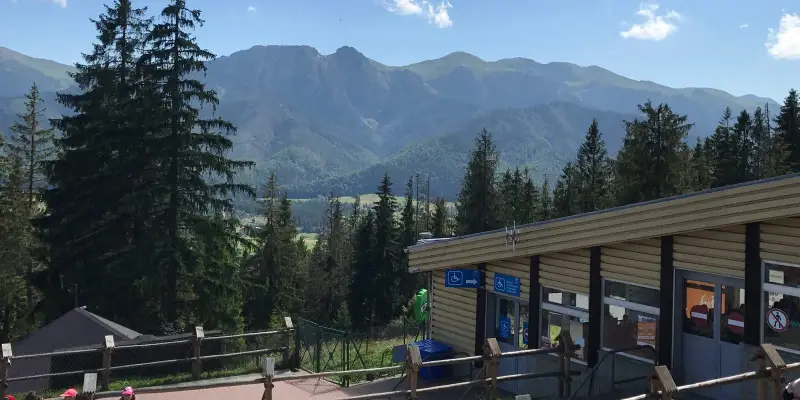
The next day the town is quiet, a good moment to head for the woods or the snow on a gentle walk, or to ski, since in winter people ski at Kasprowy Wierch and Gubałówka. For mountain hikes remember that winter conditions are serious: ask locally and do not set out without experience and suitable equipment.
Booking early, and other practicalities
The holidays are the busiest stretch of the winter. Rooms and tables sell out well in advance, and anyone who moves at the last moment finds little choice and places far from the centre. Think about transport too: roads and parking in the centre clog, and on snowy days the trip from Kraków takes longer than usual. Do not count on snow as a guarantee: the area sees snow for much of the winter, but a green Christmas with mild temperatures is not impossible.
Bring layers, shoes with anti-slip soles, gloves and a warm hat. Winter is cold and evening temperatures drop sharply, especially if you stand outside watching fireworks. And leave room in your schedule to do nothing: the charm of these days lies in the slow rhythm, the hot chocolate, a church bell and snow falling on dark timber.
Frequently asked questions
Are shops and restaurants open on Christmas Day?
Many are closed or reduce service on Christmas Eve evening and Christmas Day, when Poles stay with family. Some places in the centre stay open, but check first and stock up on supplies the day before.
Is it cold enough for snow at Christmas?
Usually, yes: Zakopane has about 179 snow days a year and January averages around minus 3 degrees. It is not a guarantee for Christmas, though. If you are counting on snow, keep a plan B for activities.
How do you get around town during the holidays?
The centre is largely pedestrian, so walking is pleasant, but traffic into town and parking are harder in these days. If you can, leave the car near your accommodation and use public transport or taxis for evening outings.
What should I bring if I am invited to a Wigilia supper?
A small gift such as sweets or flowers is always welcome. Wait for the first star and take part in sharing the opłatek. Ask hosts about allergies or habits beforehand: the menu is meatless.