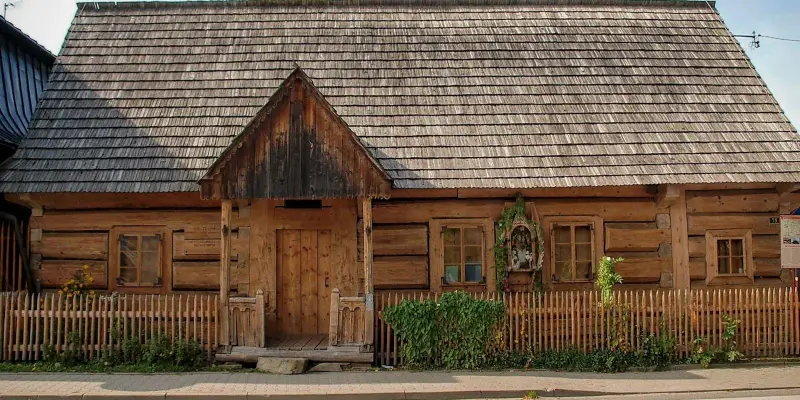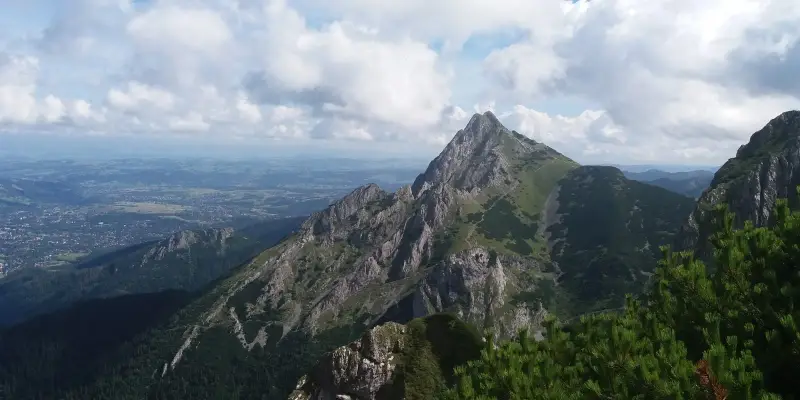
In an old log house in Chochołów, the everyday room is called the black room, because smoke has darkened it, while the room for celebrations is the white one. Two rooms, two lives: daily toil and Sunday. Podhale, the region of hills and meadows at the foot of the Tatras, is understood better from here than from the centre of Zakopane, because the surrounding villages keep the highlanders' way of living, and they also offer an excellent counterweight to the mountains: a rainy or tired day spent among wooden houses and hot water.
Chochołów, the village that looks like one wooden street
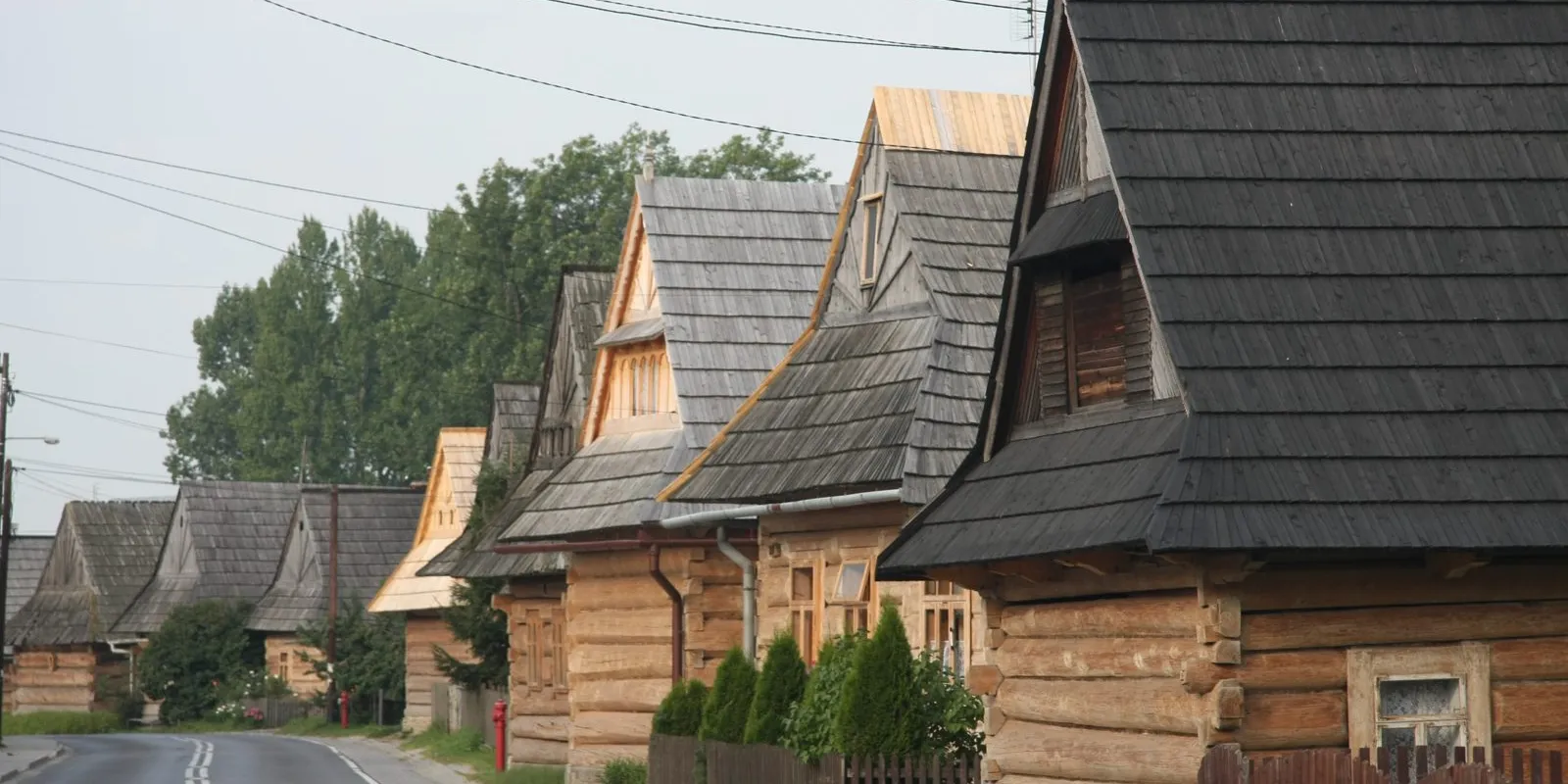
The reason to come this far is simple: Chochołów is a village where dark, low log houses line up along a single street, almost without a break, with steep roofs and small windows. It is one of the places where you can best see what the region's folk architecture looked like before the zakopiański style arrived. Anyone used to the ornate villas of Zakopane is struck by the sobriety: here the wood speaks for itself, without decoration.
Walk slowly along the road, noticing details of doors and beams, and do not expect an organised open-air museum: the houses are lived in, which is what makes the place real. A matter of courtesy: photograph the houses from the street and do not step into the yards.
The 1846 uprising and the museum in the Bafia house
Chochołów also has a history few tourists know. On the evening of 21 February 1846 a group of insurgents, organised by the teacher and organist Jan Kanty Andrusikiewicz and the priest Leopold Kmietowicz, seized the village customs post and its weapons, then attacked other posts along the border. On 23 February the revolt was crushed with the help of guards and local highlanders, and more than a hundred participants were jailed, to be freed soon after, with the Spring of Nations in 1848.
The memory is kept by the Chochołów Uprising Museum, opened in 1978 in a log cottage that belonged to the wealthy farmer Jan Bafia, where the conspirators held their council before the revolt, and run by the Tatra Museum. The visit pairs the story of events with an ethnographic reconstruction of a nineteenth-century peasant home, with the black and white rooms already mentioned. It is a small museum, visited quickly and without strain, and it is best read as an introduction to local culture rather than a box to tick.
Bukowina Tatrzańska and the thermal baths
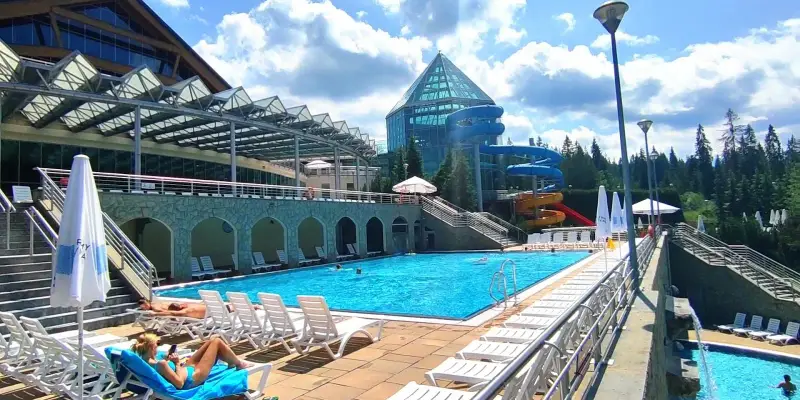
On the opposite side of Zakopane, to the north-east, lies Bukowina Tatrzańska, a village scattered across a plateau with a wide view of the Tatras. Here stands the Terma Bukovina spa complex, which draws on thermal water rising from about 2,400 metres below the north-western slope of Wysoki Wierch. It is a sulphate-sodium-calcium water, hot enough to fill outdoor pools even in the coldest months.
The complex goes beyond simple pools: there are water slides, an indoor pool and a sauna area. The best part is bathing outdoors with the Tatras in front of you, especially in winter, when the air is cold and the water hot. Anyone seeking a break after days on the trails will find the right place here; anyone after silence and solitude should know that on weekends and holidays the complex can be crowded.
How to combine the villages in a day
A common mistake is trying to fit Chochołów and Bukowina into the same day. They lie in opposite directions from Zakopane, and without a car the transfers risk eating half the day. Better to give one morning to Chochołów and its museum, and an afternoon of another day to the baths.
With a car, Podhale suits a loop trip, with stops in small villages where you meet wooden churches and stalls of smoked cheese. Without one, ask about local buses and minibuses: they exist, but frequency varies and the return needs planning in good time. If you are in the area in spring on Palm Sunday, Chochołów has a tradition of carrying large decorated palms in procession: it cannot always be guaranteed that you will see it, but it is a good reason to choose that period.
Who it is for, and who it is not
The Podhale villages are perfect for lovers of folk culture, for families and for anyone who wants a day of rest from the mountains. They suit less those seeking spectacular scenery or sport: here you do not climb to high altitude, and the beauty lies in detail, in dark wood, in pasture, in the slow tone of the day.
One thing is certain: after a day like this, the return to Zakopane, with evening settling on the line of the Tatras, tastes different.
Frequently asked questions
How long do I need to visit Chochołów?
A morning or a couple of hours is enough: time to walk the main street and see the small museum. Add a stop for lunch with traditional highlander dishes before heading back to Zakopane.
Can I visit Chochołów without a car?
Yes, buses and minibuses run from Zakopane, but timetables and frequency change with the seasons. Check the return before setting out, especially on public holidays, when services may be less frequent.
What should I bring to the Bukowina thermal baths?
Swimwear, flip-flops and a towel are the essentials, and a bathrobe helps when moving between the outdoor pools. Sauna areas usually have specific rules about clothing, so ask at reception.
Are the thermal baths suitable for children?
Yes, there are slides and pools designed for younger visitors. The hottest water and the saunas have age and time limits, which should be respected and checked on site.