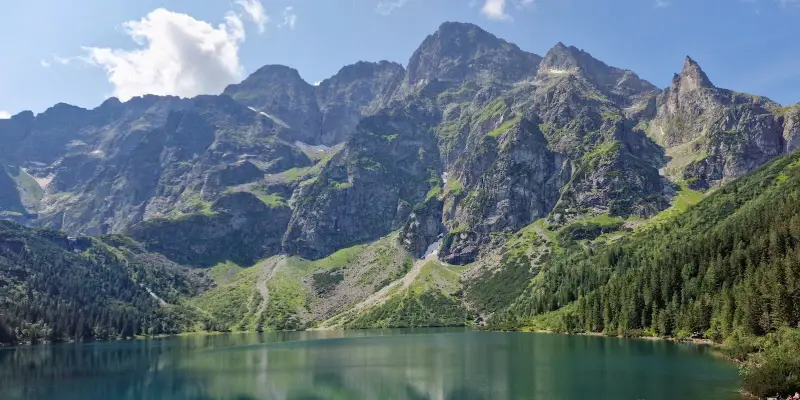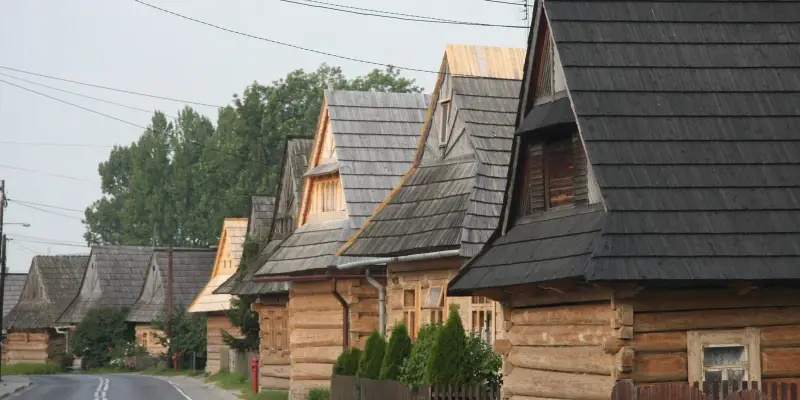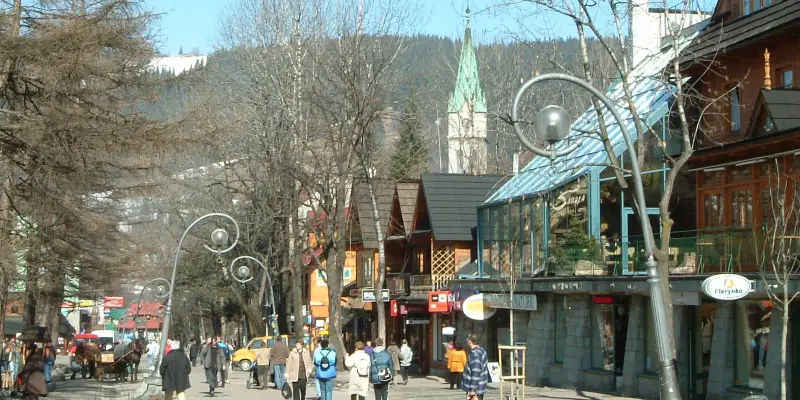
The Tatra marmot owes its Polish name, świstak, to the verb meaning to whistle: when an eagle or a hiker too close looks like a threat, it lets out a shrill whistle that sets the whole colony's ears up. For anyone walking at altitude it is one of the most memorable sounds. Tatra National Park, which embraces most of the Polish side of the range, is made of moments like this: small signs of a nature that keeps species and flowers found nowhere else.
A park with precise boundaries and a long history
The park has existed since 1955 and covers just over 21,000 hectares, more than half of them under strict protection, where human intervention is kept to a minimum. Its headquarters are at Kuźnice, in Zakopane. Since 1992, together with the Slovak national park TANAP, it has formed a UNESCO biosphere reserve: nature knows no border, and marmots and chamois do live on both slopes.
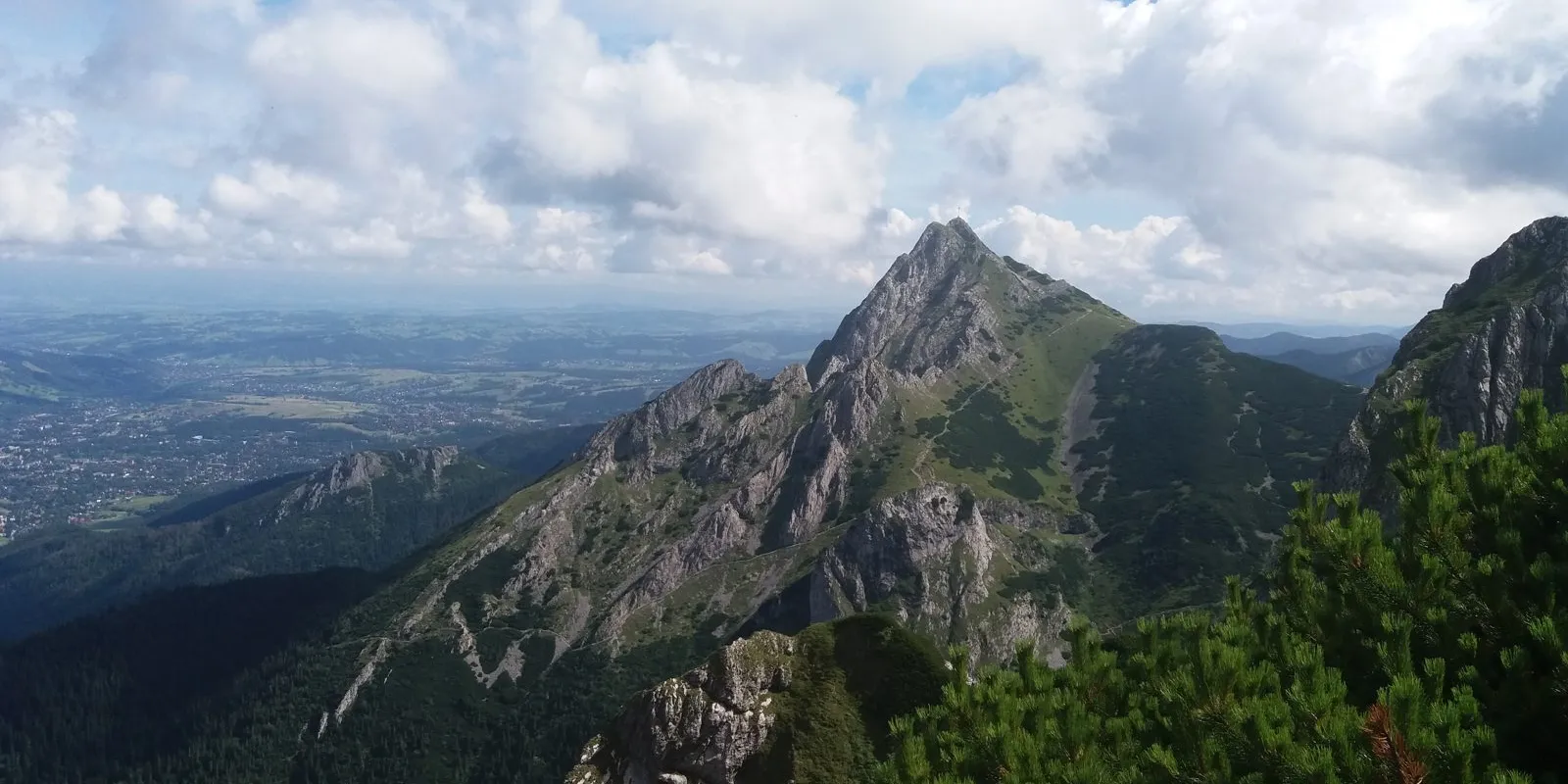
Two numbers help you get oriented: about 270 kilometres of marked trails and hundreds of caves, only a few of them open to visitors. The rest is rock, forest and alpine meadow, with an invisible line between the woods and the zone above, where trees give way to something else.
Marmot and chamois: the two residents you should not miss
The Tatra marmot and the Tatra chamois are subspecies that evolved here, and in Poland they live nowhere else. The marmot is met on grassy slopes above the treeline and has an easily recognised behaviour: it stands on a boulder, keeps watch, whistles. The chamois is seen higher up among the rocks, often only from far away, because it is wary and fast.
One rule applies to both: do not approach and do not feed. Human food harms animals and accustoms them to people, and an accustomed animal becomes a problem for everyone. A pair of binoculars is the best ally of anyone who wants to watch without disturbing.
The bear, with caution
The brown bear also lives in the Tatras, but it is a shy animal and an encounter is a rare possibility, especially on busy trails by day. There is no reason for fear, but it helps to know the common-sense rule: talk at a normal volume as you walk, never leave rubbish or food unattended, and if you see one, do not approach and back away calmly without running. This is why the park insists on one point: carry your rubbish with you, because there are no bins along the trails.
Crocuses, dwarf pine and Tatra flowers
In spring, in the meadows of the wider valleys such as Chochołowska, crocuses bloom in expanses that look like purple carpets, a spectacle that draws many visitors. Higher up, above the forest, dwarf pine dominates, a twisted, tenacious shrub that forms a dense belt and protects slopes from avalanches and erosion. Rare plants grow here too, which botanists seek out precisely because they are rare.
The rule is the same as for animals: pick nothing. In a national park picking a flower or removing a stone is forbidden, and for a rare plant it takes little to wipe out a whole population.
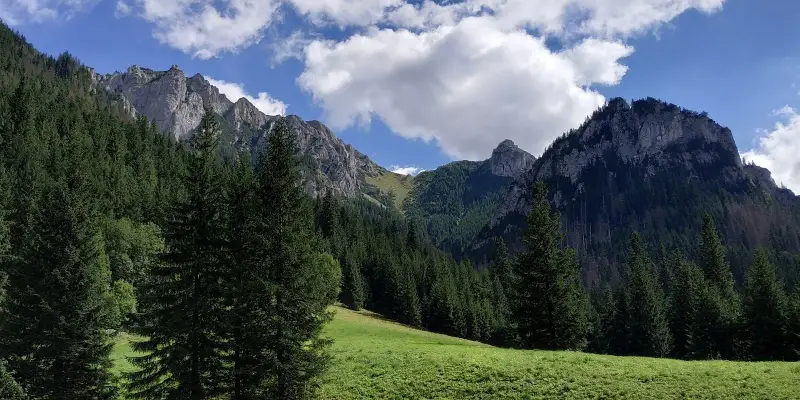
The Kościeliska valley: the park in miniature
If you want a taste of everything, the Kościeliska valley is the best choice. It is about 9 kilometres long and the second-largest valley of the Polish Tatras after Chochołowska. Along the floor you pass Polana Pisana, a clearing with tables and benches where the horse carts stop, and further on the hut at Hala Ornak. Here you can visit accessible caves such as Mroźna, Smocza Jama, Mylna, Raptawicka and Obłazkowa, and the Wąwóz Kraków gorge, walked on a one-way yellow trail.
Cars and bicycles are not allowed in the valley: you walk or, in summer, take a cart. For the caves bring a torch and suitable shoes. If it rains or snows, conditions change, so ask locally before setting out.
Rules to know before you go
The park's rules are not a list of prohibitions for their own sake; they protect what you came to see. You must keep to the marked trails, and camping, fires, drones and swimming in lakes and streams are banned. Dogs are generally banned: the exceptions, on a lead, are a few routes such as the Droga pod Reglami and the floor of the Chochołowska valley, and it is wise to check beforehand. In winter proper equipment and avalanche awareness are essential. In an emergency call 112 or the mountain rescue TOPR on 985.
The right question, in the end, is not what to see but how to look: slowly, quietly, with binoculars, leaving behind nothing but footprints.
Frequently asked questions
When can you see marmots in the Tatras?
Marmots are seen in summer on grassy slopes above the treeline, often standing on a boulder. In winter they hibernate, so they cannot be seen. Binoculars help you watch them from a distance without disturbing them.
What are the marmot and chamois called in Polish?
The marmot is świstak tatrzański and the chamois is kozica tatrzańska. Knowing both names helps with signs, guides and park information, and when searching for details on the species while preparing a hike.
What is the best time of day to see wildlife?
Usually early morning and late afternoon, when trails are quieter and animals more active. Walking slowly and quietly with binoculars greatly improves the chance of a sighting without disturbing them.
Can the park be visited in winter?
Yes, the park stays accessible in winter, but trails change character: higher up you need snow equipment and attention to the avalanche bulletin. In the Kościeliska valley, horse-drawn sleighs replace the carts in winter.