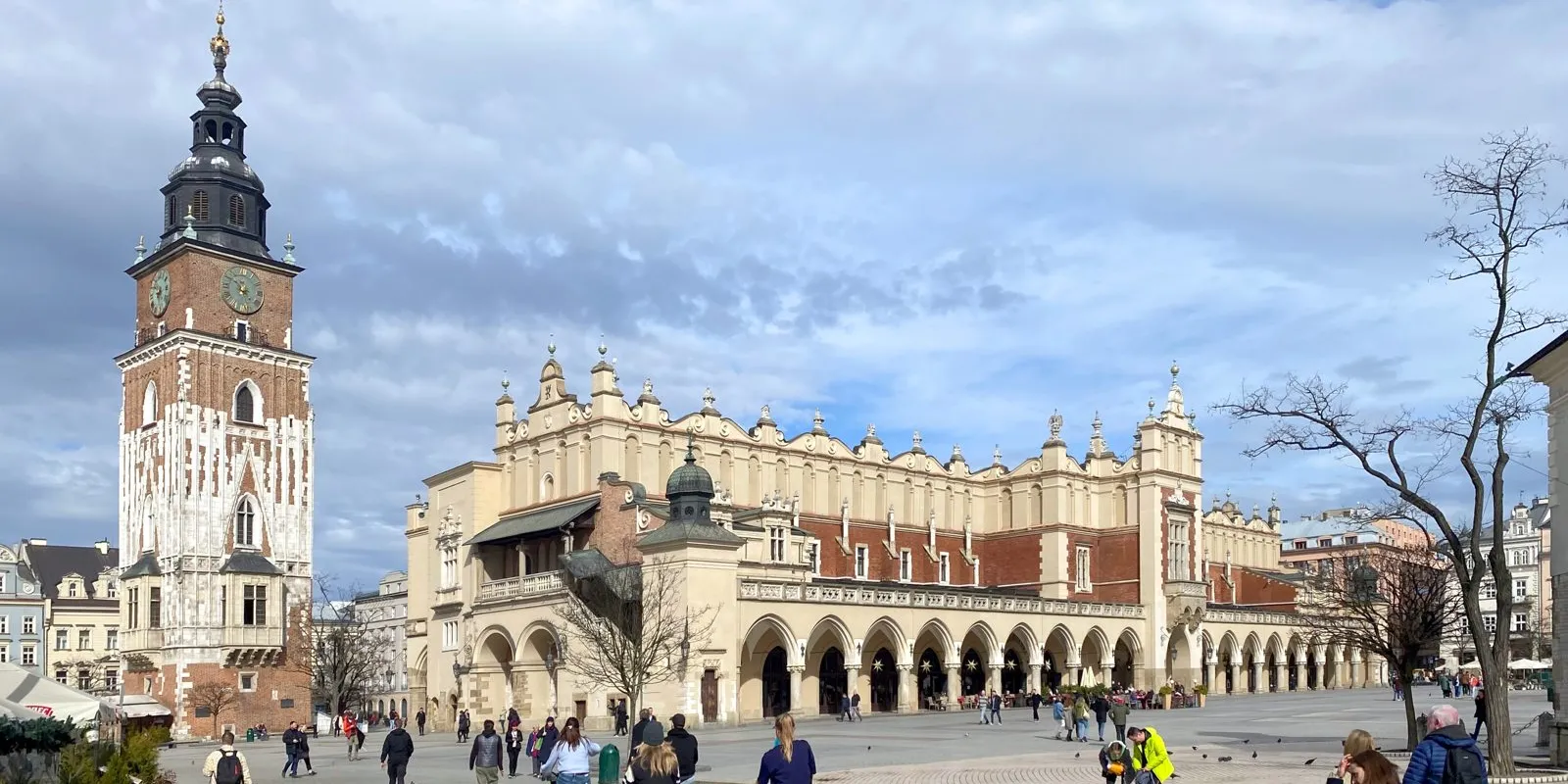
From the tower of St Mary's Basilica in Kraków a trumpeter plays a melody every hour that breaks off mid-phrase, in memory of a medieval legend about an enemy arrow. Anyone listening from the square has no idea that a few hours of road to the south another town is preparing a very different show: a wooden town at the foot of a wall of rock. Kraków and Zakopane are the two most natural poles of a trip to southern Poland, and they work precisely because they are so unlike each other.
How to split your days between the two
The most useful rule is also the simplest: do not treat Zakopane as a day trip from Kraków unless you are really short of time. The round trip eats a sizeable part of the day, and in the mountains the weather decides a lot: if the first day is cloudy, you have no margin to wait for clear skies.
A proportion that holds up well is two or three days in Kraków and three days in Zakopane. Kraków needs time for the Main Square, for Wawel hill with its castle and cathedral, and for the Kazimierz district, where the atmosphere is quite different. In Zakopane three days are enough for a climb to altitude, a valley and a more relaxed day between the centre and its surroundings. If you only have four days in total, two for each is an honest choice, as long as you accept that you give something up in the mountains.
Train, bus or car: choosing how to travel
The railway link has existed for a long time: the train from Chabówka reached Zakopane on 1 October 1899, and the line is still an option today, although it is often slower than the bus. Buses and minibuses between Kraków and Zakopane are very popular and are usually the most practical choice without a car, since they arrive in the centre with no changes. Always check up-to-date timetables before leaving, because they shift with the seasons.
If you have a car, the advantage is freedom to stop along the way, for example in one of the Podhale villages. The drawback is the main road, the so-called «zakopianka»: at weekends and in holiday periods it is often congested, and hours in a queue can cancel the gain in comfort. If you can choose, avoid leaving Kraków on a Friday evening or returning on a Sunday afternoon.
A route that holds together: from the square to the mountains
An order that works is to start in Kraków and finish in Zakopane. You begin with city sights while you are fresh and end with nature, which demands more energy and feels like breathing out after days of stone. The reverse order only makes sense if you fly into Kraków and want to close the trip with cultural visits.
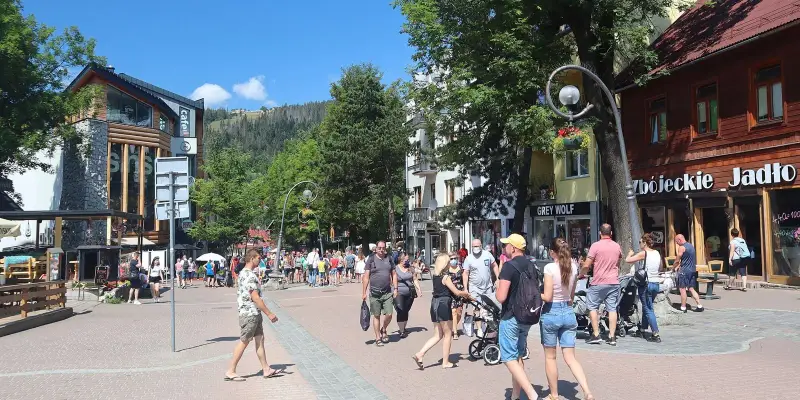
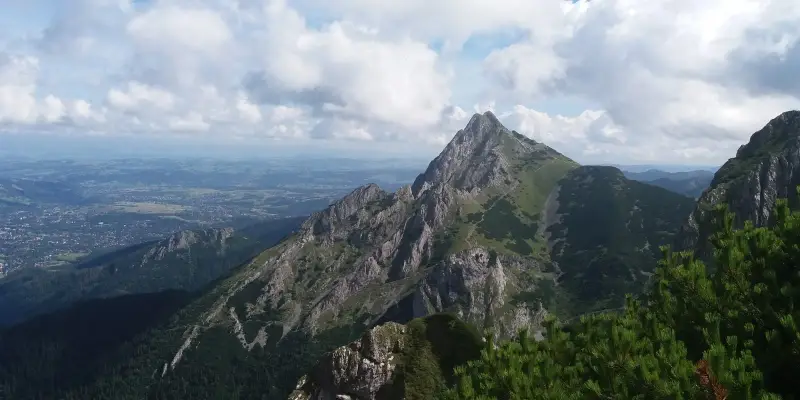
In Zakopane, first of all, walk along Krupówki, the pedestrian street that climbs for just over a kilometre towards the centre: you find shops, restaurants and horse-drawn carriages, but also historic buildings such as the home of the Tatra Museum. Then head for the mountains, by cable car or on foot: Kasprowy Wierch, at 1,987 metres, is the classic choice, provided the sky is clear.
What to skip so you do not rush
The main risk of a trip like this is wanting to see everything. Some sacrifices are reasonable: in Kraków you can drop one of the smaller museums if the day shortens, and in Zakopane you can avoid a long queue at a crowded spot by choosing a lesser-known valley. The area around Kraków, such as the Wieliczka salt mine, is also interesting but takes an extra half day: include it only if you have time to spare.
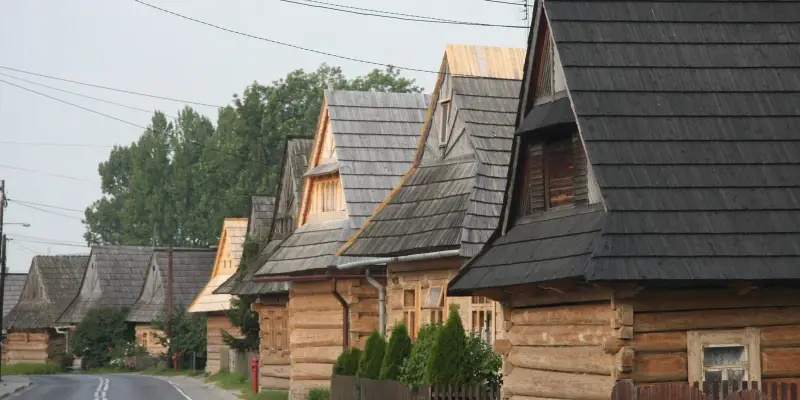
A candid note on central Zakopane: in peak periods Krupówki is very crowded and commercial. That is no reason to skip it, but a reason to enjoy it differently: early morning or late afternoon, and then slip into the side streets, where the villas in zakopiański style are easier to see.
What to pack for two different worlds
The climate difference between the two cities is real. In Kraków city clothes will do; in Zakopane you need a windproof jacket even in summer, because weather at altitude changes fast. Comfortable shoes suited to trails are the only real extra bulk. If you travel in winter, expect cold and snow in both places, but more intensely in the mountains.
When the road climbs and Kraków vanishes from the mirror, the Tatras appear suddenly on the horizon, and the best thing is not to have seen them already in photographs.
Frequently asked questions
How far is Zakopane from Kraków?
Zakopane lies south of Kraków, a few hours away by road, with times that vary greatly according to traffic and season. At weekends and in holiday periods the journey can take noticeably longer than on weekdays.
Do I need a car once I am in Zakopane?
Usually not: the centre is walkable and local buses and minibuses serve the valleys and trailheads. A car mainly helps for the more distant Podhale villages, and in any case several roads towards the valleys are closed to private vehicles.
Can I fly directly to Zakopane?
Zakopane has no airport: you fly into Kraków, the nearest international airport, and continue by bus, train or car. It is the combination most foreign travellers use and it makes joining the two stops easy.
When is the best time for this combined trip?
It depends on what you want. Summer offers high trails and long days; winter brings snow and skiing in Zakopane while Kraków has a cosy mood. Spring and autumn have fewer crowds but less stable mountain weather.