The valley that starts at the last houses of Zakopane is named after sheep. Dolina Strążyska comes from the dialect word «strąga», the narrow pen where shepherds once milked their flocks. The pens are gone, and in their place a path leaves the town road, climbs into a gorge of beech and fir, and ends against the cliffs of Giewont. It is the easiest real mountain walk you can do from town without a bus or a cable car, and one of the shortest valleys in the Tatra Mountains: with half a day free, you can reach the Siklawica waterfall and still be back in Zakopane for lunch.
A valley carved by a fault, minutes from the centre
The valley opens at about 900 metres, exactly where the town's Strążyska street turns into a trail, and it runs for roughly three kilometres. It was not shaped by a glacier in the classic U-shape: it follows a tectonic fault, a fracture in the rock that water then widened over the centuries. That is why it is narrow, steep-sided and shady, and why the end of it feels like a corridor leading straight to a wall. The earliest documents that mention the valley date from 1605, while the access road was built in the 1890s, when Zakopane was turning from a highlanders' village into a health resort.
The convenience has a cost worth knowing about: about one in every sixteen visitors to the Polish Tatras has passed through this valley. On fine days, especially in summer and at weekends, the path is a procession of families, tour groups and spotless boots. That is no reason to skip it, but it is a good reason to choose your timing carefully.
The red trail up to Polana Strążyska
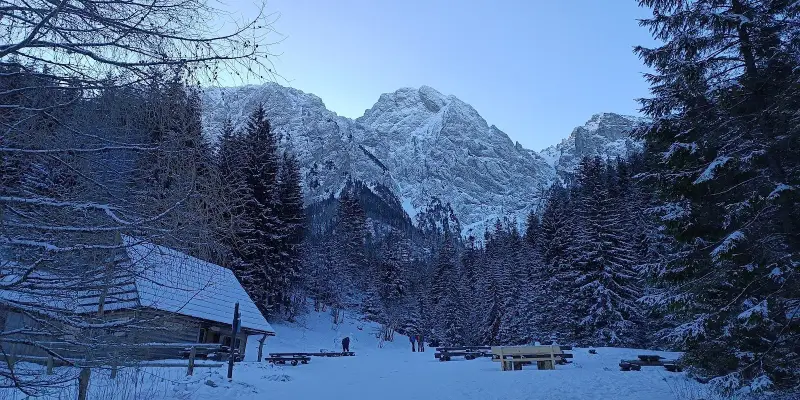
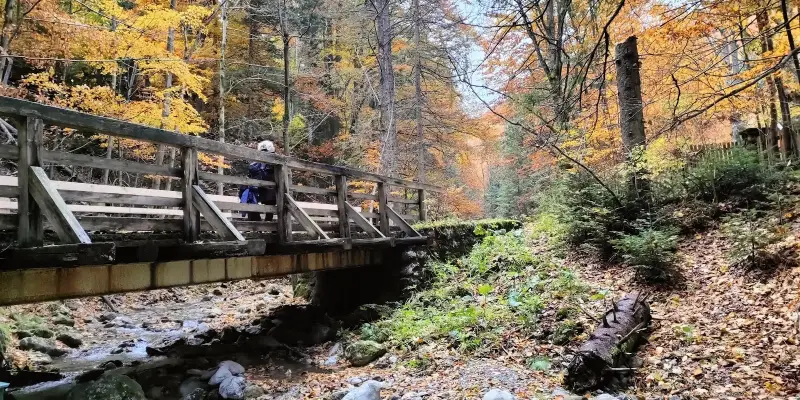
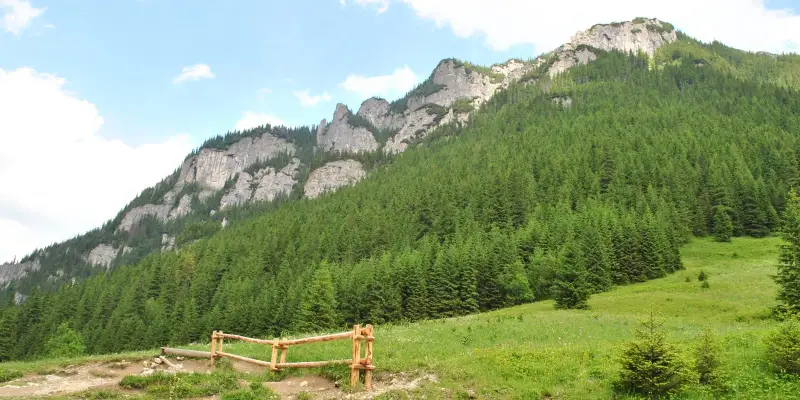
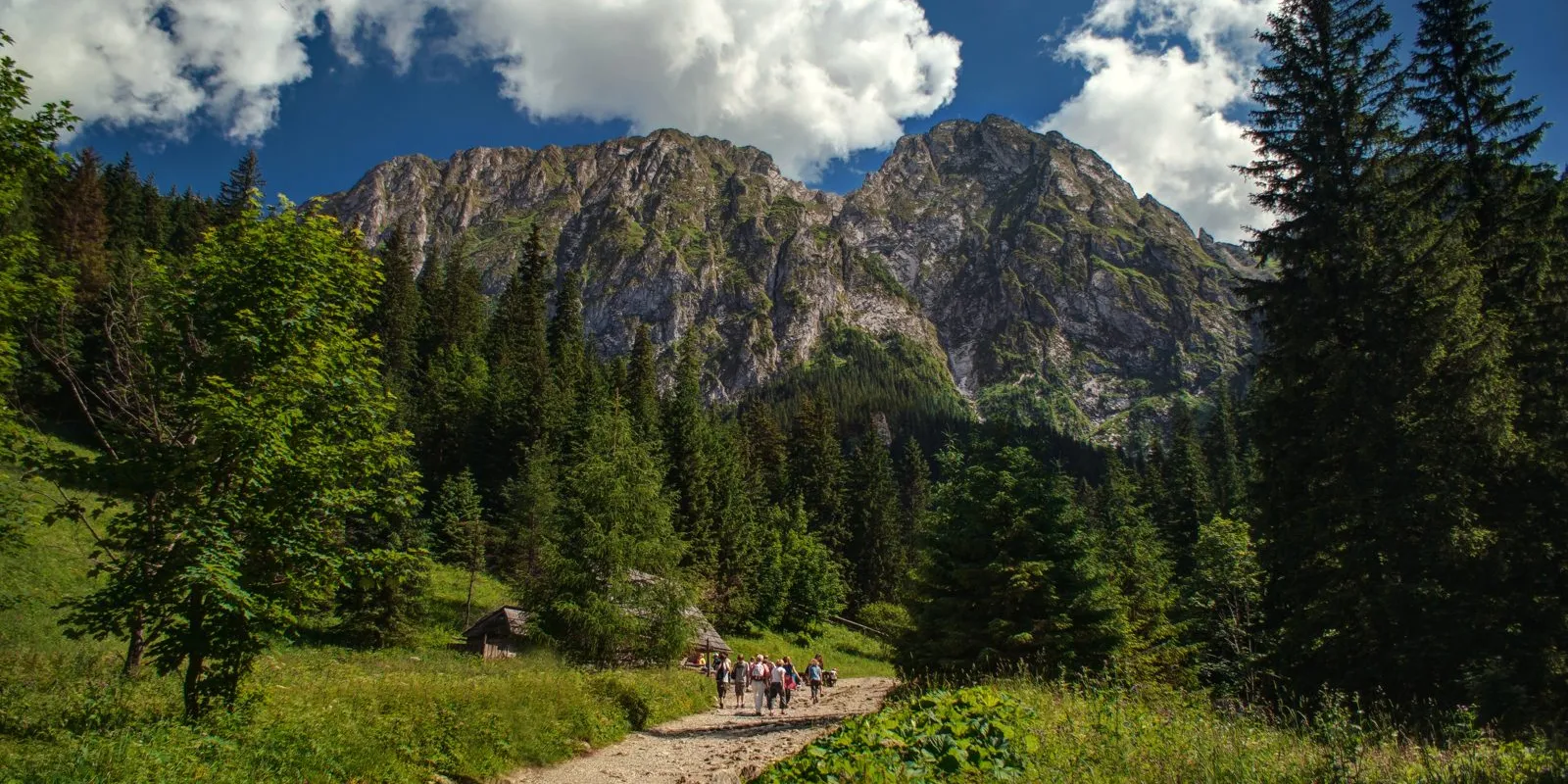
The first stretch follows the red trail, wide and well worn, and takes about forty minutes uphill to the Polana Strążyska clearing. You walk beside the stream, between slopes of old beech and fir forest that the national park has left to grow with very little interference, and among the limestone rocks some rare lime-loving plants cling on. In spring the undergrowth is bright green, in autumn the valley becomes a copper-coloured tunnel, and in winter ice makes the trail a very different proposition.
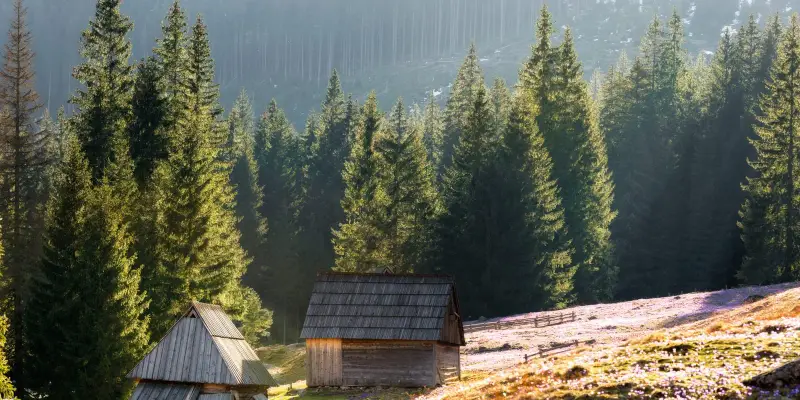
The clearing is where the valley widens and the scale of the landscape changes. There are two shepherds' huts, a kiosk and a big boulder nicknamed Sfinks, which children climb with more enthusiasm than their parents. Since 1961 the glade has belonged to the national park and grazing has ended: the meadow is still open, but the old farmyard atmosphere has given way to an organised rest stop. The trails to the waterfall and to Giewont start here, and it is the right place to decide how far to go.
Siklawica: the waterfall named after a bigger sister
From the clearing a short yellow trail leads to Siklawica, about fifteen minutes there and back. The name is a diminutive of the great Siklawa in the Dolina Pięciu Stawów Polskich, and the waterfall was once also called Siczawa or Siklawa. It lies below the north face of Giewont, where the Strążyski Potok stream drops in two almost vertical leaps between walls tilted at about eighty degrees. Between the two steps, water and debris have drilled a pothole into the rock ledge.
Do not expect a monumental cascade: its strength is the setting, the contrast between the coolness of the forest and the dark wall above. The flow changes a lot: it is stronger in spring, when the snow melts, and after thunderstorms, while in a dry spell it can shrink to a thread. The ground around it is often wet and slippery, in rain and in ice, so wear shoes with a proper sole and not city sneakers.
When to go and how to plan it
The most useful advice is also the simplest: start early. In the morning the valley is quiet, the light filters down from above and you meet more people coming down than going up. On a summer afternoon the same trail can feel like a high street on a slope. If you dislike crowds, pick a grey day, when the damp forest has a charm of its own, provided you have a waterproof jacket and suitable shoes.
Keep the park rule in mind: walking at night is not allowed, and in every season you stay on marked trails. The rules can change, so it is worth checking the park's website. Plan your return with a margin, especially in autumn when the days shorten quickly. Bring water and an extra layer: in the shaded gorge it is noticeably cooler than in town. Trail conditions change with the season and the weather, so for ice, snow or works it is wise to ask locally before setting off.
Beyond the waterfall: Giewont, but with judgement
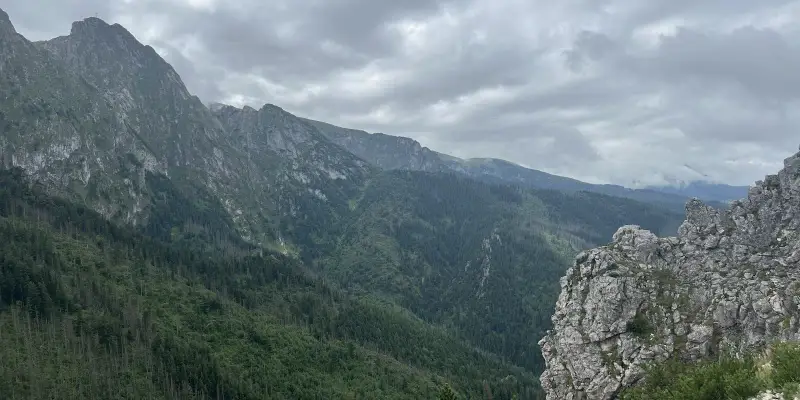
From Polana Strążyska many people think of carrying on towards Giewont, the emblem mountain with the big cross on its summit. That climb still takes well over two hours from the clearing, and it is a different story: a real mountain route with steep, rocky sections and a summit that is very crowded in fine weather and dangerous in thunderstorms. It is not the natural continuation of a stroll in trainers. If you are not equipped, or have started late, stop at the waterfall and count the day as a success.
The Strążyska also works very well as a first taste: for anyone arriving in Zakopane with no mountain experience it is a way to gauge your pace, to see how steep the Tatras really are and to decide whether a longer hike suits you. For those after solitude and summits, the valley is an appetiser, not the main course: further on, in other valleys, the trails become quieter and more demanding.
End the day by going back down the same path, with knees asking for a little respect on the polished stones. Giewont stays in the background, the town appears between the trees, and the valley, which has changed mood several times in a single morning, goes back to being a name on a signpost.
Frequently asked questions
Is the Strążyska Valley suitable for children?
Yes, it is generally one of the best valleys for families, because the path is wide and the climb is gradual. Good-soled shoes are still needed, especially for the last stretch to the waterfall, which can be wet. Younger children usually enjoy the Sfinks boulder in the clearing and the stream beside the path.
Can I take my dog to the Strążyska Valley?
No, dogs are not allowed on the trails of the Tatra National Park, and the Strążyska is no exception. The ban protects wildlife. If you are travelling with a dog, check in advance where it is permitted and plan an alternative outside the park.
How do I get to the start of the trail from Zakopane?
The trail begins at the end of Strążyska street, which climbs from the town centre towards the Tatras and becomes a path at about 900 metres. You can walk there from the centre on a gently rising road, or take a short drive or local bus, bearing in mind that nearby parking fills early.
Can I swim in the stream or under the waterfall?
No, swimming is banned in all the lakes and streams of the national park, including the Strążyski Potok and the Siklawica area. The ban protects the environment, but also visitors: wet rocks are very slippery, and mountain water is icy in every season.