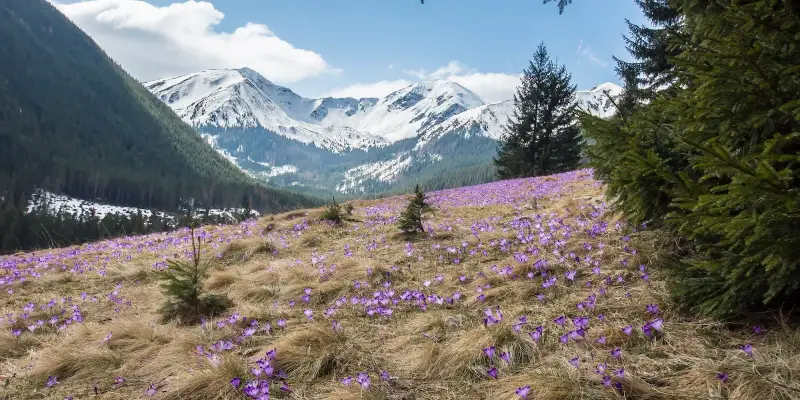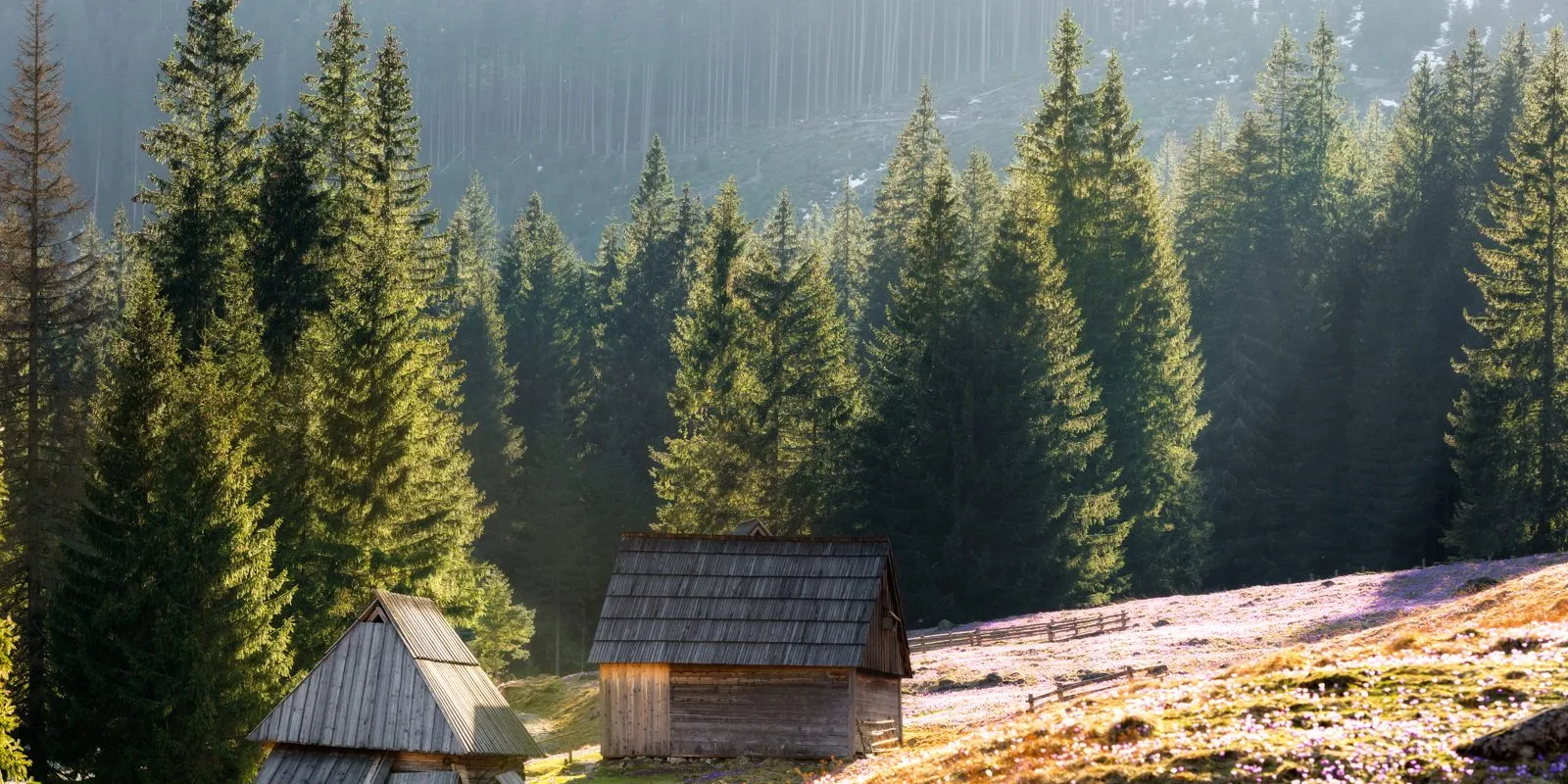
In 1930 this valley was worked by 70 shepherds with about 4,000 sheep, and from the sixteenth century until the second half of the nineteenth iron was mined here too. Today the shepherds' clearings remain, the iron is a memory, and each spring it is the crocus that takes care of the meadows. The Chochołowska Valley, in the Western Tatras, is the longest and largest valley on the Polish side: about 10 km long and over 35 km². In April and May its meadows turn violet and white, and anyone crossing it then realises they are walking through a postcard that needs no filters.
Why the meadows turn violet in April and May
The crocuses of the Chochołowska bloom in spring, as soon as snow retreats from the meadows. The exact moment varies from year to year, and the advice is always the same: trust what the current conditions say rather than the calendar, and ask on the spot. A week early or late changes everything, and you may find only the first scattered flowers or a peak already fading.
The phenomenon is so loved that on the best days a great many people arrive, and the valley, though broad and welcoming, still feels full. For some peace go early in the morning or on a weekday. Remember the most important rule: stay on the trails. The flowers are delicate, and trampling them for a photo spoils what others come to see.
A long valley, essentially flat
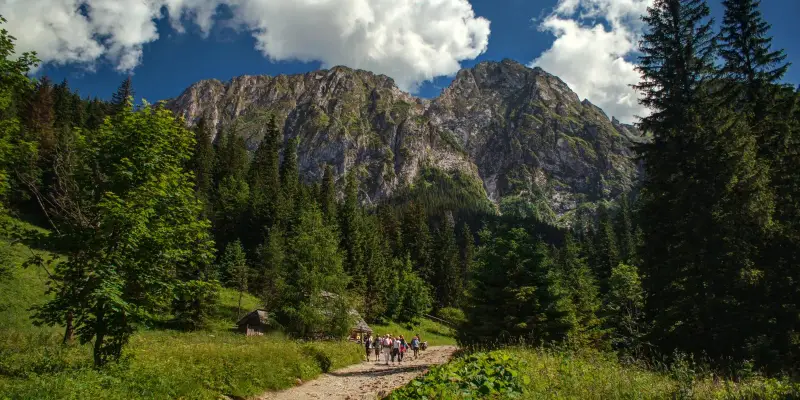
The main route is the green trail along the valley floor. From Siwa Polana to Polana Chochołowska it takes about 2 h 10 min on foot. There is no steep climb to face and the effort is mostly distance, so it is one of the best outings for people who like walking without scrambling. If you prefer a bicycle, find out on the spot how and where it is allowed along the valley floor.
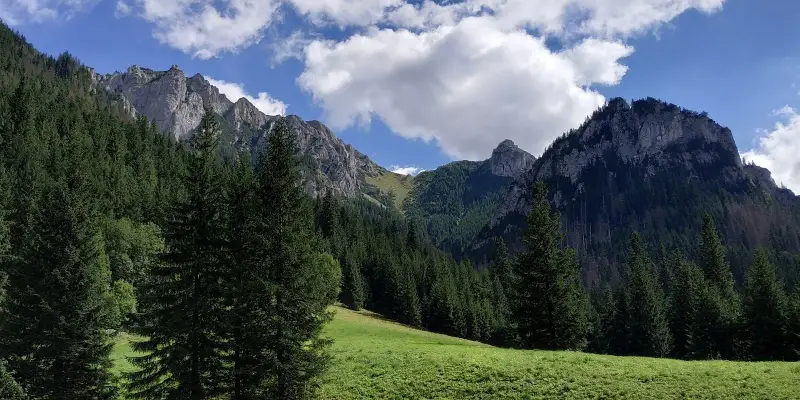
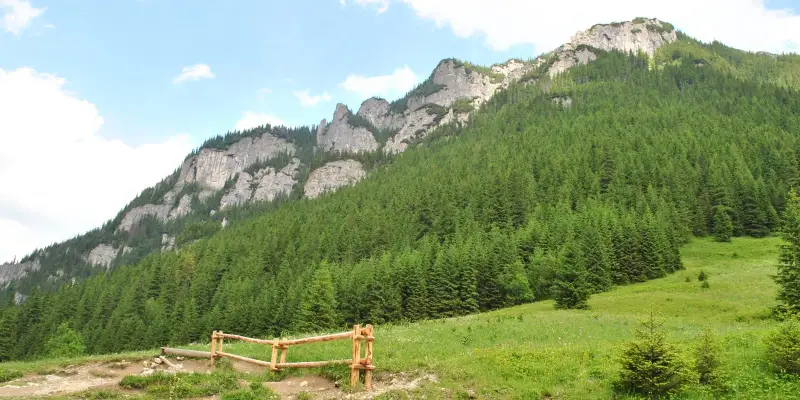
At the bottom the valley is a gorge of sedimentary rock with two narrows, the Niżnia and Wyżnia Brama Chochołowska, two natural gates separating the first stretch from the meadows. About two thirds of the valley are covered by spruce, and it is this forest, together with the open meadows, that gives the walk a different rhythm from others: shade, space, shade, space.
Polana Chochołowska and the hut
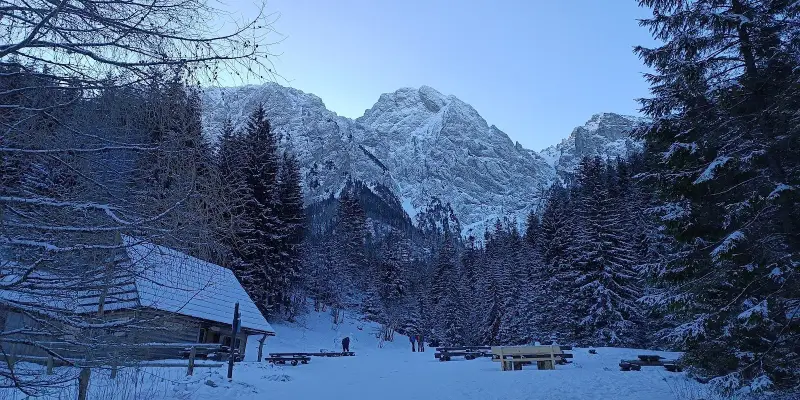
The natural destination is Polana Chochołowska, the large clearing where the PTTK hut stands. The present building was put up between 1951 and 1953 to replace the one destroyed by the Germans in January 1945: a sentence that says much about the history of these places, where war left its marks even in the mountains.
The clearing is the right place to stop, eat and look at the peaks. Those who get this far usually lie back on the grass, in spring among the crocuses, and think about the return without hurry. Plan the day with a good margin: in the park you must not walk at night, so a delay on the way up is paid for on the way down.
Beyond the clearing: the upper branches
From the clearing more demanding routes branch off, such as the red trail towards Trzydniowiański Wierch and the Dolina Jarząbcza. Higher up the valley splits into three branches, including the Dolina Starorobociańska and the Dolina Jarząbcza, and the contrast with the valley floor is sharp: here you are really in the mountains, with climbs and weather to consider. For those without experience, it is better to stop at the clearing; for those with it, ask on the spot about conditions and start early.
Who it is for, who it is not
The Chochołowska is for those seeking a relaxed day: families with children used to walking, couples, photographers, anyone who wants to see the Tatras without a real climb. It suits less those who want summits and open views in the first stretch, because the valley opens up only after the forest and the peaks stay in the background for a long time. It also disappoints anyone who arrives on the peak bloom weekend expecting the valley to themselves.
In the end, the combination of space and history wins: a valley that fed flocks, mined iron, lost a hut in the war and is born again in violet every year. It needs no great feats to stay in the mind, only a clear day and a good choice of moment.
Frequently asked questions
When do the crocuses bloom in the Chochołowska Valley?
They bloom in spring, usually between April and May, but the exact moment changes each year with snow and climate. Ask on the spot shortly before going to know whether the meadows are already in colour.
Do you need a full day for the valley?
A generous half day is enough for the clearing: about 2 h 10 min each way, or a little less coming back, plus a stop. If you add a side branch, count on a full day and start early.
Is it worth going if the crocuses have not bloomed yet?
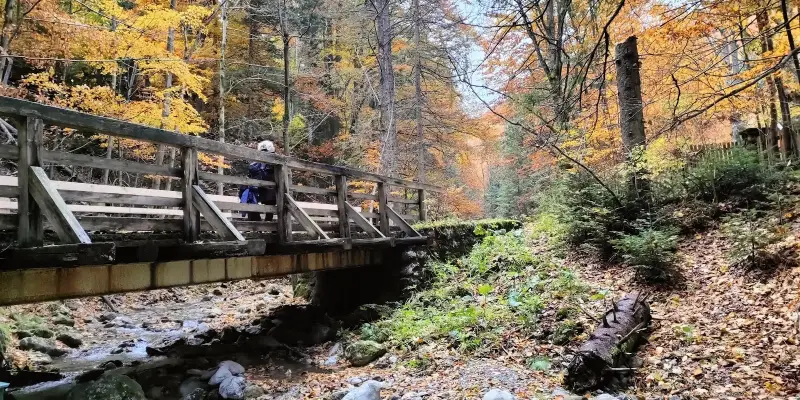
Yes, because the spruce forest, the gorge with its two narrows and the hut on the clearing are fine in any season. The valley floor is pleasant in summer and autumn too, with fewer flower-hunters and more calm.
How does it differ from the Kościeliska Valley?
The Chochołowska is longer and broader, with open meadows and spring blooms, while the Kościeliska is known for its caves and the Kraków Gorge. Both are in the Western Tatras, and many people choose one per day.