Poland has belonged to the European Union for more than twenty years, yet at a kiosk on Krupówki the euro will not get you far: the country pays in złoty (PLN), its own national currency, which it has not replaced with the euro. It is the first practical surprise for anyone arriving from Kraków or abroad, and it is worth sorting out before you reach town. The rest is easy: in Zakopane you can pay by card almost everywhere, and cash is needed in only a few well-defined situations.
Złoty, not euros: what to expect
The złoty is divided into groszy, and small coins vanish into the bottom of a pocket as anywhere. A few shops or tourist-facing places quote prices in euros as well, but they are the exception, and the exchange rate used is the owner's choice and often not a kind one. The safest rule is this: always pay in złoty, by card or in cash, and do the sums yourself. The day's rate is on the website of the Polish central bank (NBP) or in any converter app; there is no point memorising figures that change daily.
For a short stay a small stash of cash is enough: the card does the rest, and carrying a thick wad of notes serves no purpose.
Cards and contactless: the everyday choice
In restaurants, supermarkets, guesthouses and most shops people pay by card and contactless, even for a coffee or an ice cream, and a phone works just like a card. Visa and Mastercard are accepted without trouble. Locals also use BLIK, a mobile payment system built for Polish bank accounts: you do not need it, but it explains why almost nobody asks to be paid in cash.
One habit to adopt right away: when the terminal or the cash machine asks whether to charge you in złoty or in your home currency, always choose the złoty. The conversion offered on the spot, usually called dynamic currency conversion, is usually worse than the one your own bank would apply. It holds for shops, restaurants and withdrawals alike.
When you really do need cash
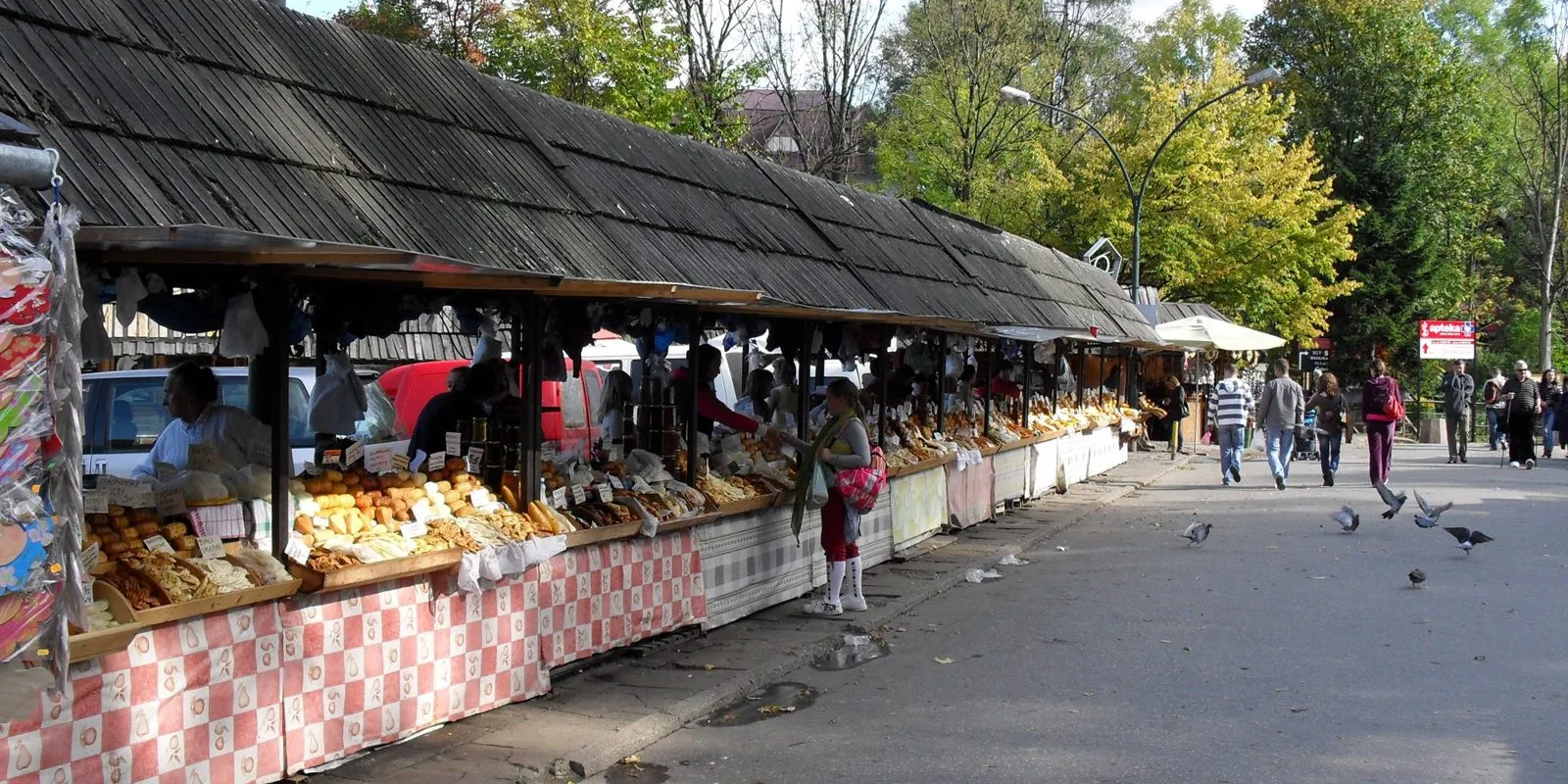
There are moments when notes and coins in your pocket are useful. At mountain huts and refreshment points far from the valley the signal can drop, the terminal may not work and some places may take cash only: asking in advance, and going up with some cash, is plain common sense rather than a hard rule. The same applies to small market stalls, to producers selling cheese or honey at the edge of a road, and to the odd paid car park or toilet along the trails.
Smaller services, such as a local taxi ride or a thank-you to whoever carries your bags at the guesthouse, also tend to go in cash. The practical approach is to withdraw a modest sum when you arrive and top up only if needed: this is not a place where you risk running out of cash machines.
ATMs and currency exchange: where it pays and where it does not
Cash machines (in Polish bankomat) are easy to find in the centre and on the main streets. Withdrawing with your own debit card is usually cheaper than exchanging notes, but fees depend on your bank and the network, so it is worth asking before you leave. Some independent machines, not tied to a bank, charge their own fees and offer the conversion mentioned above: decline the conversion and read the screen carefully before confirming.
If you do have banknotes to change, exchange offices (kantor) are everywhere, and that is precisely why they differ so much. As a general precaution, avoid the exchange counters on the most touristy streets and always compare the buying and selling rates on display: the gap between them is where the margin hides. Whenever you can, skip the exchange altogether and use your card.
Tipping: how it works in Poland
A tip is not compulsory but it is customary, especially in restaurants, where people usually leave a small percentage of the bill if the service was good. Check the bill first: in some places service may already be included, in which case nothing more is needed. When paying by card, say the total you want charged, tip included, before the waiter brings the terminal; once the bill is settled, leave cash on the table.
For a counter coffee or a short ride, rounding up is enough. In sit-down cafés, at a guesthouse for breakfast or for a mountain guide, a thank-you in cash is always welcome without anyone expecting it as of right. One last note: with a group, say at once whether you are paying together or separately, because splitting a bill on the terminal afterwards is slower.
Frequently asked questions
Can I pay in euros in Zakopane?
Generally no: the official currency is the złoty and nearly every business accepts only that. If someone does take euros, the owner sets the rate, which is usually unfavourable. It is better to pay by card in złoty or to withdraw a small amount of local currency on arrival.
Should I tell my bank before I travel?
It is wise to check your card's terms before the trip: fees for payments abroad, daily withdrawal limits and online security. Some banks let you switch on use abroad from their app. Always carry a second card, ideally on a different network, in case one is blocked or lost.
What do I do if my card is lost or stolen?
Block it at once through your bank's helpline or app, then report the theft to the local police, who give you the paperwork your insurer will want. Writing down the blocking number before you leave, and keeping it apart from your wallet, saves precious time.
Do you tip hotel staff and taxi drivers?
There is no fixed rule: in lodgings tipping is discretionary, perhaps a few coins for whoever carries luggage or for a particularly careful clean, and for taxis rounding up the fare is enough. Restaurants have the strongest tipping habit, while in cafés and kiosks you simply round up.