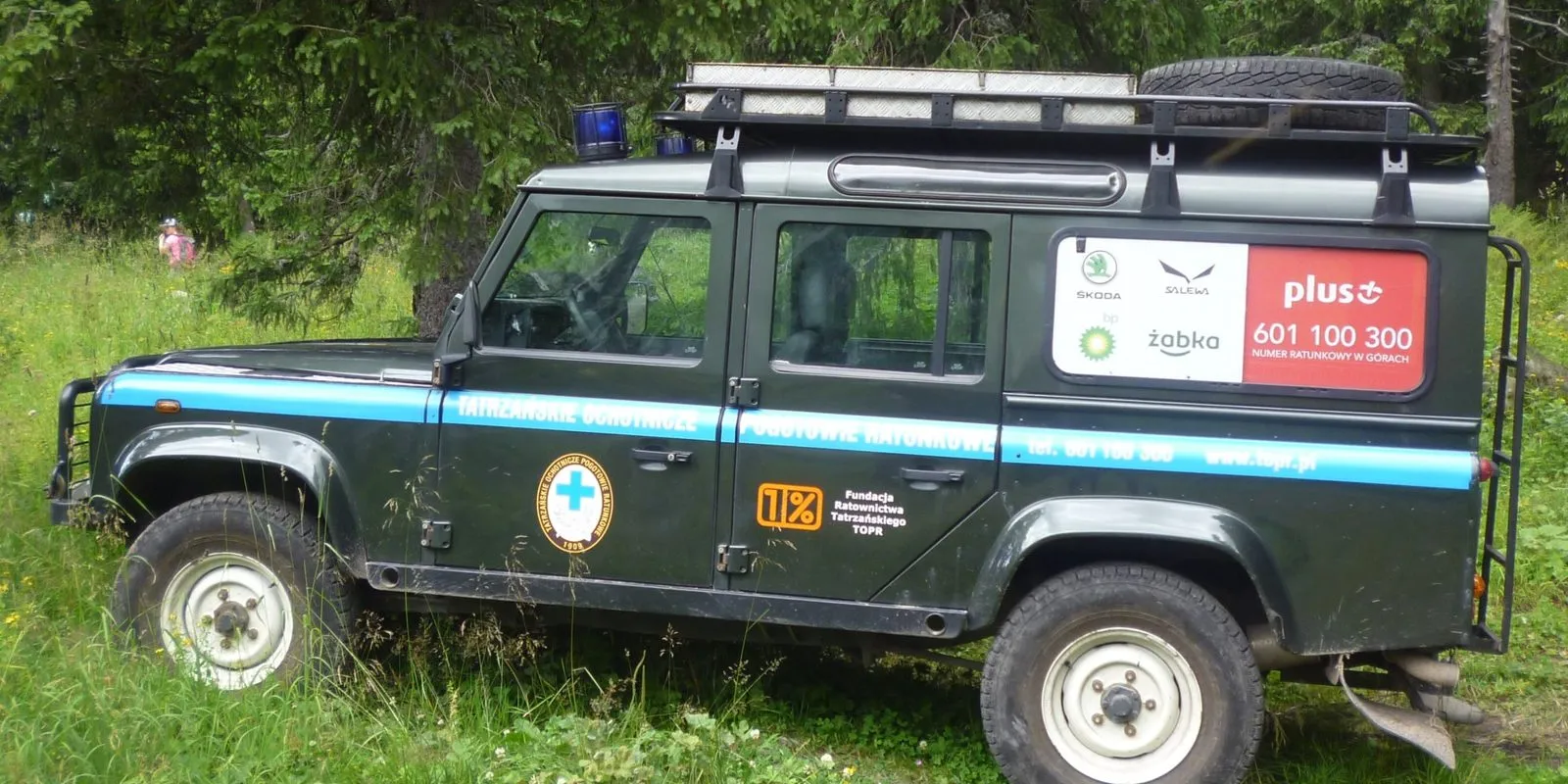
The Tatra mountain rescue has a number with only three digits: 985, and as a rule it can be dialled only from Polish networks. It is the kind of detail nobody thinks to look up before leaving home, and it deserves to be known by heart, like 112. For a holiday between Zakopane and the valleys a little preparation is enough, made of documents, insurance and a few mountain habits, so that you do not have to improvise when you need a doctor or a pharmacist.
The numbers to know, in town and up high
In any emergency, anywhere in the European Union, you dial 112: it is free, it answers even from a foreign SIM, and it routes the call to the right service. In the mountains there is a direct line to the Polish mountain rescue service, TOPR: the short number 985 from Polish networks, or +48 601 100 300, which also works with a foreign phone. Save them in your contacts before you climb, together with the name of the place where you started.
Add to that the free RATUNEK app, recommended by Poland's mountain rescue services: it lets you call for help and share your exact position. It works only where there is network and GPS coverage, so it does not replace caution, but it removes the uncertainty over “where am I” that complicates so many rescues.
The European Health Insurance Card: what it covers and what it does not
For EU citizens, the European Health Insurance Card (EHIC, called TEAM in Italy) entitles you to medically necessary care during a temporary stay, on the same terms as insured Polish residents. It works only in public facilities, or in private ones that have a contract with the Polish national health system: always ask, before being seen, whether the provider accepts the card.
It is not travel insurance. As a rule it does not cover repatriation, private treatment or lost belongings. It is worth reading the official conditions of your own health system before departure, and carrying the card even for a day trip.
Travel insurance and the mountains: read it before you go
Anyone walking in the Tatras or skiing should check that their travel policy explicitly covers the activities they will do: high-altitude hiking, skiing, any recovery in the mountains and medical transport. Conditions vary hugely between policies, and an exclusion for “mountaineering” or above a certain altitude can make the cover useless at the critical moment. No generic advice will do here: read the conditions, calmly, at home.
In practice, keep the insurer's emergency line and a digital copy of the policy within reach. Anyone travelling with children or a chronic condition should ask plainly whether ongoing treatment is included.
Pharmacies and emergency care: finding your way
A pharmacy is called an apteka in Polish and is recognisable by a sign with a cross, often green. There are several along the central streets of Zakopane, and the pharmacist can suggest remedies for common complaints such as a sore throat, minor burns or an upset stomach. The same medicine can be sold with a prescription in one country and without in another, so carry the original packs of what you take regularly and, if you can, a note with the active ingredient.
For a serious problem, the town hospital has an emergency department, the normal destination after an injury on the slopes or at the foot of a trail. For something less urgent you can ask your accommodation where to find a general doctor. If you are unsure how serious something is, call 112 rather than wait.
What to put in your bag and your suitcase
- Photo ID and the European Health Insurance Card
- A copy of the policy and the insurer's number
- Personal medication in its original packaging, with a written list
- A small mountain first-aid kit: blister plasters, a bandage, sun protection
Up high, habits matter more than equipment: enough water, a warm layer even in summer, a well-charged phone, and the habit of telling someone where you are going. It is enough to remember that a walk cut short in time almost always avoids a rescue call.
Frequently asked questions
What is a pharmacy called in Polish and how do I spot one?
It is called an apteka. The sign usually carries a cross, often green, and the pharmacies in the centre are well marked. Some stay open at night on a rota: if you need a medicine out of hours, ask at your accommodation or check the notice in the window to see which is on duty.
Can I use an Italian or other EU prescription in Poland?
In principle yes: in the EU, a prescription issued by a doctor in one country is valid in the others. In practice the medicine may not be sold there or may go by another name, so bring the prescription showing the active ingredient and, if possible, the original pack. If in doubt, the pharmacist will suggest an alternative.
Is the emergency department the place for every problem?
No, it is for real emergencies: injuries, severe pain, breathing difficulty. For a milder complaint a general doctor, even a private one, is the better choice; keep the receipt for your insurer. If unsure, 112 will help you work out which service to call.
What should I say when I call mountain rescue?
Say who you are, where you are, how many people there are and what happened, speaking slowly. Stay reachable by phone and save the battery. If you used the RATUNEK app, your position is sent automatically, but repeat it aloud anyway: a second check does no harm.