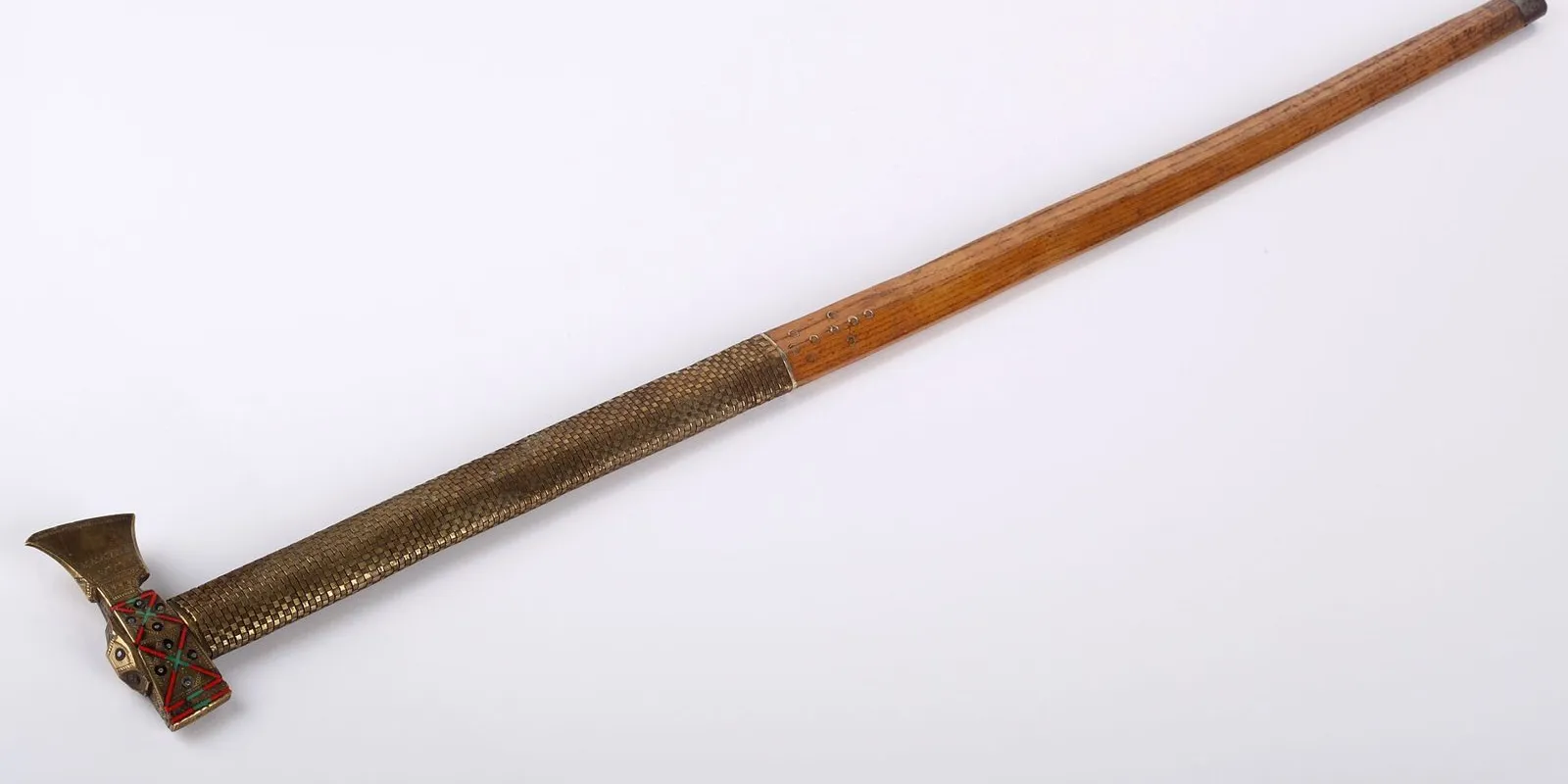
A Podhale shepherd would climb to the high pastures with a ciupaga in hand: an axe on a long wooden shaft that served as a walking stick on steep slopes and as a small tool when needed. Today it is the souvenir that says "highlander" more loudly than any other, and also the one where it pays to be least naive.
The ciupaga: original versus copy
Born as a working tool, in the nineteenth century the ciupaga became above all a mark of status for the górale, with ever more decorated blades and shafts: the old hand-decorated examples are museum pieces. The ones on the stalls along Krupówki, the pedestrian street about a kilometre long, are generally mass-produced. There is nothing wrong with buying one as a keepsake, provided you know what you are taking home. If you want something with a real link to the tradition, look at the quality of the engraving and the weight of the wood, and ask who made it: a genuine craftsperson will gladly answer and explain the motifs.
Highland dress, piece by piece
Traditional dress offers other things to look for, each with its own name. The serdak is the leather waistcoat; the kierpce are the leather moccasins mountain people wore on their feet; the cucha is the cloak of woollen broadcloth; the parzenice are the embroidered motifs that decorate trousers of the same cloth. To see what the originals look like, and to understand how they differ from the stall imitations, the best visit is the Muzeum Tatrzańskie, which has been collecting folk costumes since it opened in 1889. With that yardstick in your eye, the stalls become much easier to read.
Wood, ceramics and the rest of the crafts
Among the most successful objects are carved wooden pieces, such as small caskets and shelves, and hand-painted ceramics. The test is always the same: handmade work shows small irregularities, moulded work does not. Be wary of items that are all identical, of "Zakopane" printed on things that could come from anywhere, and of anything with no story to tell. If you are on a modest budget, go for small but honest things, a carved spoon or a little box, rather than one big doubtful piece.
Oscypek, to eat and to carry home
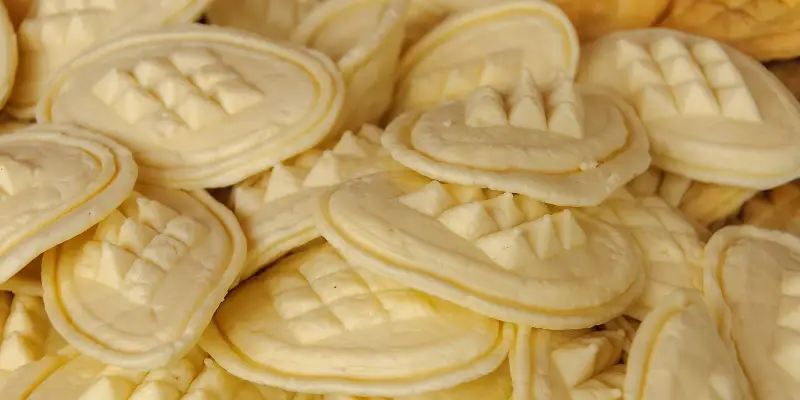
The edible souvenir par excellence is oscypek, a smoked sheep's-milk cheese shaped like a spindle, made by hand in the bacówki (shepherds' huts) of certain Podhale communes. Since 2008 it has carried the European PDO mark, which requires at least 60% sheep's milk; a smaller relative, the redykołka, has been PDO since 2009. The weak point is the tourist stall: not everything sold along Krupówki is certified, so always read the label. Look for the PDO label on the packaging, or buy directly at the bacówki around the town, where the cheese is really made. There is also its fresh sibling, bundz, soft and delicate, and bryndza, salty and creamy, two tastes that tell of the same pastures.
One last practical tip: before buying any cheese to take on a journey, think about transport, because smoked cheese keeps well but has a decided smell.