The weather station at Zakopane sits at 855 metres and describes a place where winter is the rule, not the exception: snow lies on the ground on roughly 179 days a year and the average maximum snow depth reaches about 98 cm in March. Yet the figure that surprises people planning a trip is a different one: the wettest month is July, at 191.6 mm, not midwinter. The climate is humid continental, with 1,145 mm of precipitation a year and a mean annual temperature of 6.2 °C.
Summer: long days, afternoon thunderstorms
In July and August the mean is about 15.7 °C, with highs averaging 21 °C: a T-shirt on Krupówki, a sweater in the evening. The record high is 32.8 °C (8 August 2013), so heatwaves are rare but not impossible. Summer's problem is rain, which often arrives as an afternoon thunderstorm. TOPR advises starting early so as to be back in Zakopane by early afternoon, and turning back as soon as you hear thunder. Rescuers also warn that storms can come in the morning and even at night: a dawn start helps but is not enough, so check forecasts from several sources and aim for a hut before the sky closes. In the pack: a waterproof jacket, a fleece, a rain cover for the bag.
Autumn and winter: real cold, and snow up high
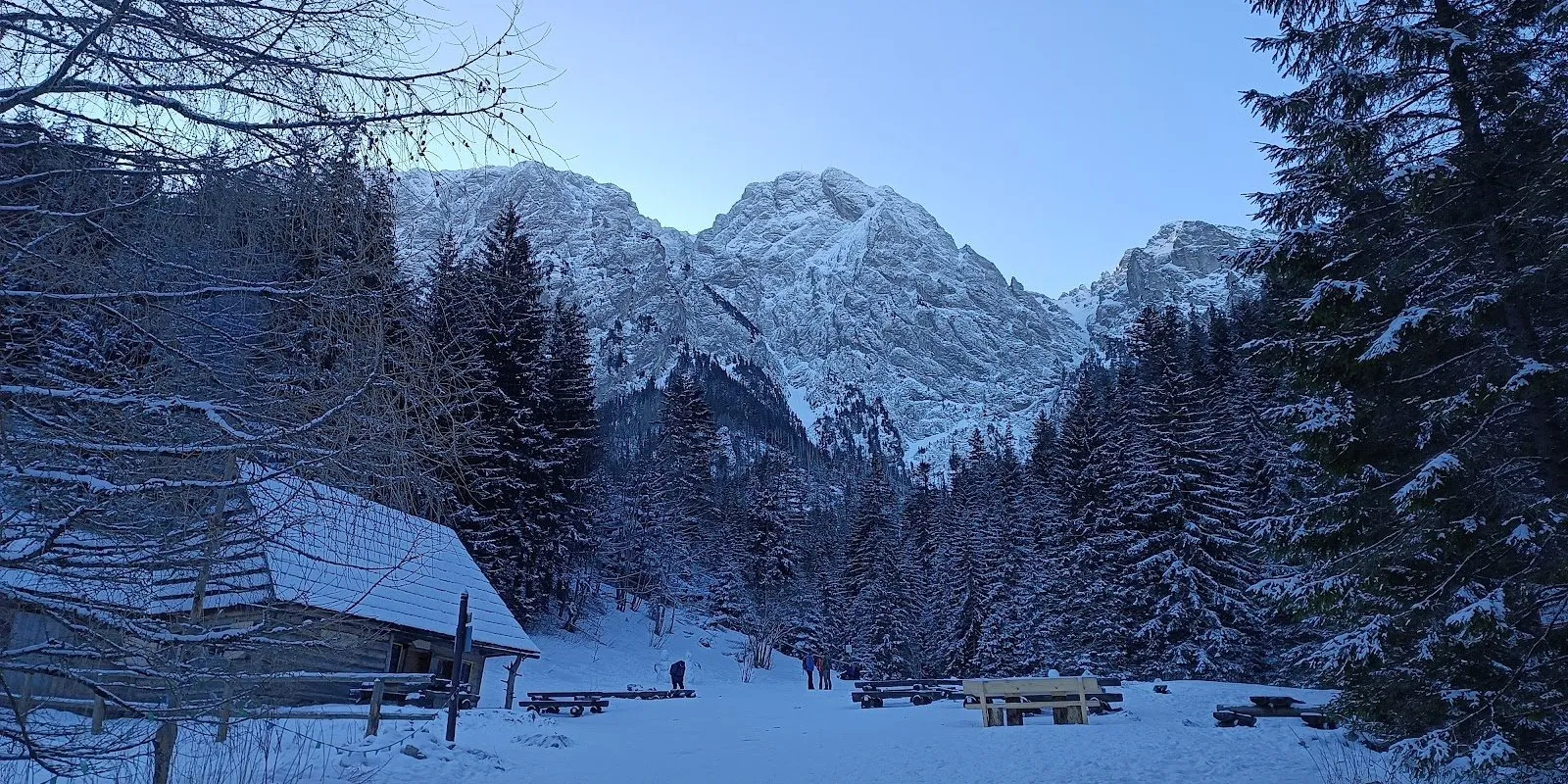
In January the mean is −3.3 °C, with highs of 1.1 and lows of −7.0: days often stay below freezing or only just above. The record low is −34.1 °C (1 February 1956). Autumn is the transition, and you see it at altitude: rescuers' reports describe winter conditions in the high Tatras, with snow and ice on the trails, while the valley is still autumnal. Below the treeline snow melts first and leaves icy patches. From 1 December to 15 May, some sections of the Polish trails are also closed for safety and nature protection (three sections, including Dolina Pięciu Stawów Polskich – Morskie Oko via Świstówka Roztocka): check the park's website. Above the treeline you need crampons, an ice axe and a helmet, and the skill to use them: rescuers say so plainly. In the valleys, boots with a good tread, thermal layers, gloves and a hat are enough.
Spring: thaw and crocuses
Spring is the season of the crocuses (krokusy): from late March (in some years until late April) whole meadows turn purple in Dolina Chochołowska, and also at Kalatówki, in Dolina Kościeliska and Dolina Olczyska. The exact timing varies from year to year, and the PTTK hut on Polana Chochołowska posts a «raport krokusowy» on Facebook. Crocuses are protected: do not pick or trample them, and stay on the path. On peak weekends expect queues and full car parks, so arrive very early. The thaw makes the ground muddy and slippery; higher up, hard snow and wind-packed snow in gullies and under walls stay dangerous well into spring, and TOPR flags them as critical spots. In the bag: waterproof boots, gaiters, trekking poles.
The «halny» wind
Then there is the halny, the foehn wind that comes down off the mountains: warm and dry, it brings a sudden rise in temperature and, in winter, a thaw. Gusts above 100 km/h are not exceptional; the Kasprowy Wierch cable car stops when the wind passes its safety limit, even with gusts well below 100 km/h, and at the summit gusts of up to about 140 km/h have been reported in the fiercest episodes. On halny days avoid ridges and forests (trees come down), forget the cable car and have a plan B in the valley: the Tatra Museum or the thermal baths are a better bet than an exposed trail.
In a mountain emergency: 112 or TOPR 985.