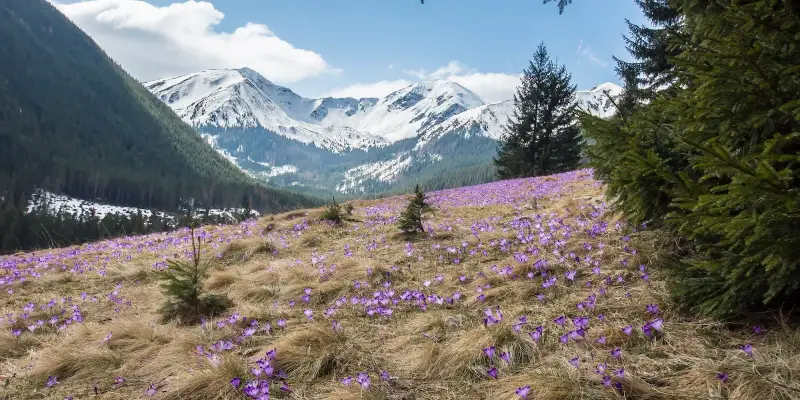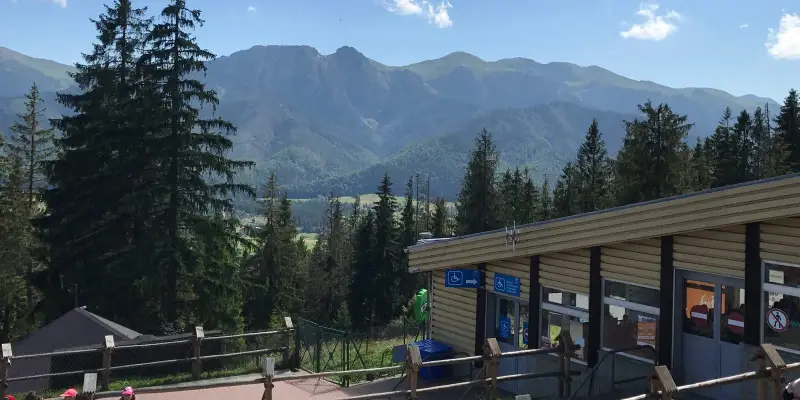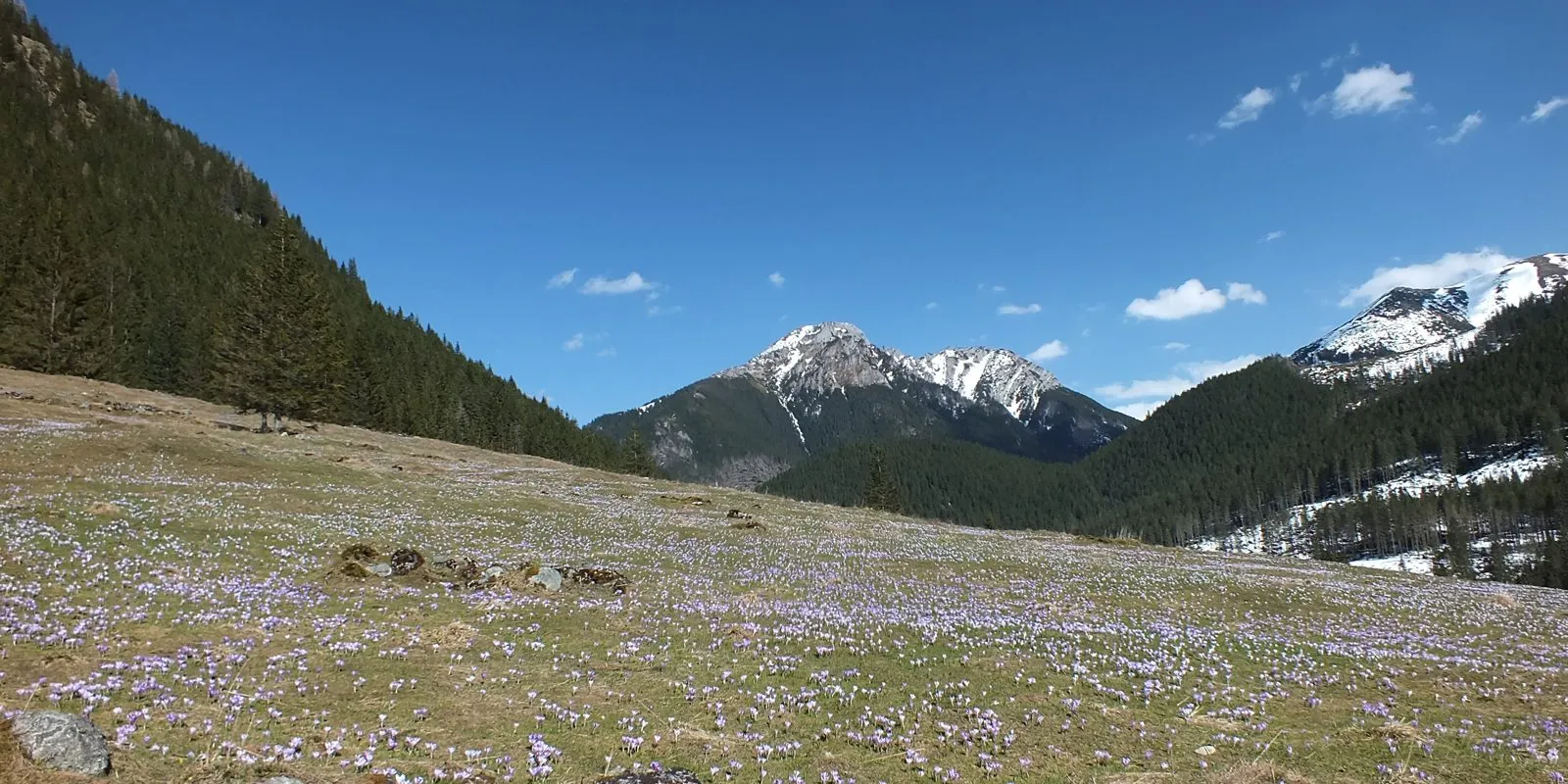
In 1930, seventy shepherds tended some four thousand sheep in Dolina Chochołowska. Today the longest and largest valley on the Polish side of the Tatras, about 10 km long and over 35 square kilometres, is known for crocuses: in spring the meadows fill with a carpet of purple and white that draws walkers who want to avoid the summer numbers. It shows that the shoulder seasons in Zakopane have a clear character of their own. They are not a fallback: they are another mountain.
Why choose spring or autumn
The main advantage is thinner crowds. In mid-summer and around Christmas the best-known trails fill up, car parks are full and queues form everywhere. In the shoulder seasons the same places are calmer, and you walk at a different pace. The light is better too: the air is clearer, contrasts sharper, and photographers notice at once.
The drawbacks are real and worth stating. The weather changes quickly, some seasonal services may be reduced or closed, and at altitude snow can linger into late spring and return early in autumn. Anyone hoping for a summer out of season risks disappointment. Come expecting varied days, with sun, wind and some rain.
Spring: crocuses, melting snow and mud
Spring in Zakopane arrives in waves. In the valleys the snow melts and meadows colour up, while higher up winter can hold on for a long time. The crocuses in Dolina Chochołowska are the symbol of the season: the green trail along the valley floor, from Siwa Polana to Polana Chochołowska, takes roughly two hours ten minutes on foot and involves little climbing, so it suits many walkers. On the clearing stands the PTTK shelter built in 1951–1953 to replace the one the Germans burned in January 1945.
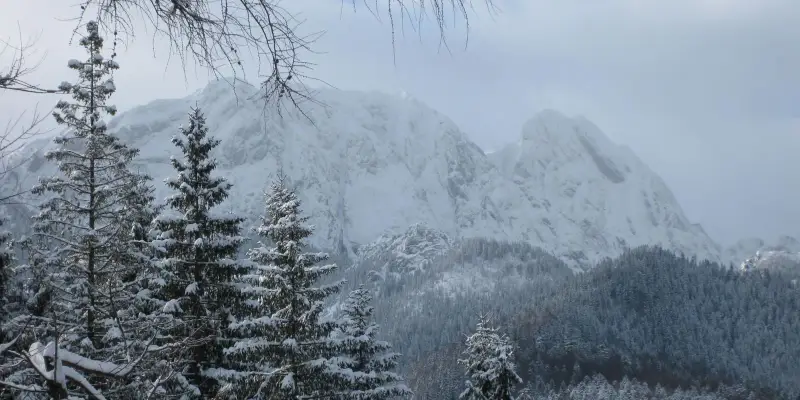
An honest warning: spring has its awkward side. Paths can be muddy, shaded stretches icy, and high-altitude routes may be closed or impassable because of snow and avalanche risk. Always ask locally about conditions and stay on marked trails, with no camping. Remember too that the park does not allow walking the trails at night, from dusk to dawn, all year round, and that exact hours can change, so check the park's website before you set out.
Autumn: colour, clear air and short days
For many people autumn is the best season. Spruce forests mix with the yellow of beeches and, higher up, larches, meadows turn gold, and settled days offer exceptional visibility: when the sky is clear, the peaks seem closer. The temperature is pleasant in the valley and cool at altitude, and the low light gives the landscape an almost painterly quality.
The flip side is the short day: plan your return with a wide margin, because sunset comes early and darkness in the mountains is serious. As the season advances, cloud and rain become more frequent and first snow can appear at height. Bring warm layers, light gloves and a headlamp even if you expect to be back early.
Morskie Oko without the crush
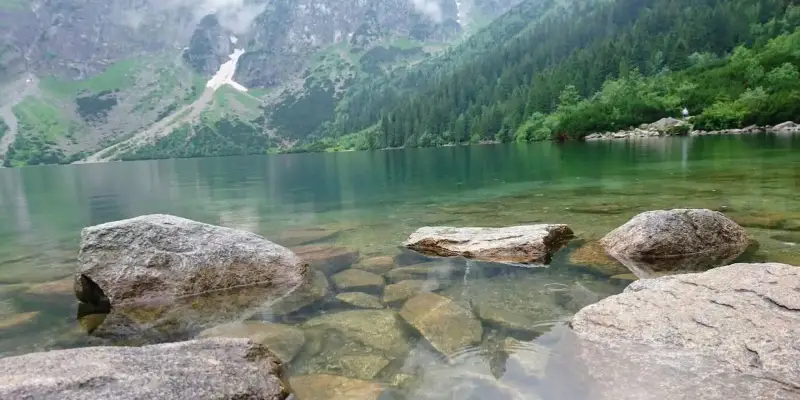
The lake Morskie Oko is among the best-known places in the Tatras, at 1,395 m beneath the Mięguszowiecki peaks, with about 35 hectares of surface and up to 50.8 m of depth. On fine summer days it is very crowded. In spring and autumn you can go with fewer people, and the lake takes on a quieter character. It is reached from Palenica Białczańska by an 8.5 km asphalt road closed to private cars, on foot along the red trail, and circling the lake takes about fifty minutes. Start in the morning even in the shoulder seasons, because on sunny days the queues return fast.
Do not forget that swimming in the park's lakes and streams is forbidden, and that at altitude conditions may call for winter equipment well beyond the summer season.
Building the trip
For a shoulder-season holiday the best strategy is flexibility: keep a plan A outdoors and a plan B indoors, among museums, baths and cafés. Check the forecast the evening before and save longer hikes for settled days. If you hope for better rates and availability than August, check locally, but do not count on everything being open: some venues and services cut back.
If you have to choose between the two, spring is for those who love new green and flowering meadows; autumn for those who want clarity and colour. In both cases you get a quieter Zakopane in which the landscape is the main character again.
Frequently asked questions
When do the crocuses bloom in Dolina Chochołowska?
They bloom in spring as the snow melts on the valley floor, but the exact timing changes every year with the season. Ask locally or check local information before you go, so you do not arrive too early or too late.
How cold does it get in autumn in Zakopane?
Temperatures drop fast after summer and evenings turn cool early. Snow can appear at altitude. Dress in layers and bring gloves and a hat even on sunny days.
Are trails open in spring and autumn?
It depends on altitude and conditions: valley trails are generally walkable, while high ones may be closed or need winter gear. Always check locally and, in an emergency, call 112 or the TOPR mountain rescue.
Why is Morskie Oko called the Eye of the Sea?
The name comes from a translation from German; earlier the lake appears in sources as Biały Staw and as Rybie Jezioro, the fish lake, because it is one of the few Tatra lakes with naturally occurring trout. On the moraine above the shore stands the PTTK hut named after Stanisław Staszic.