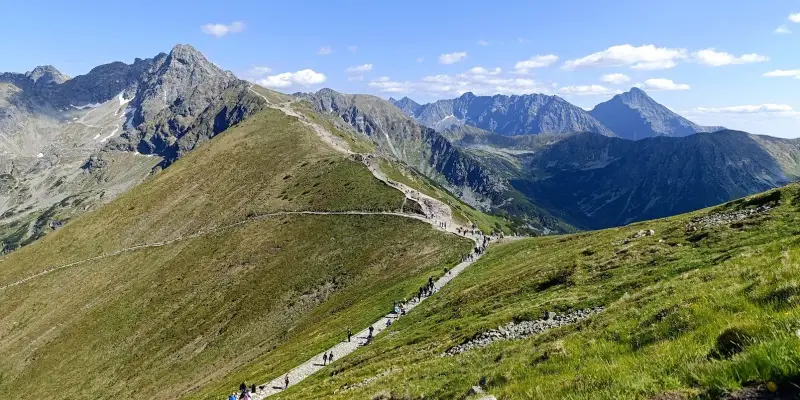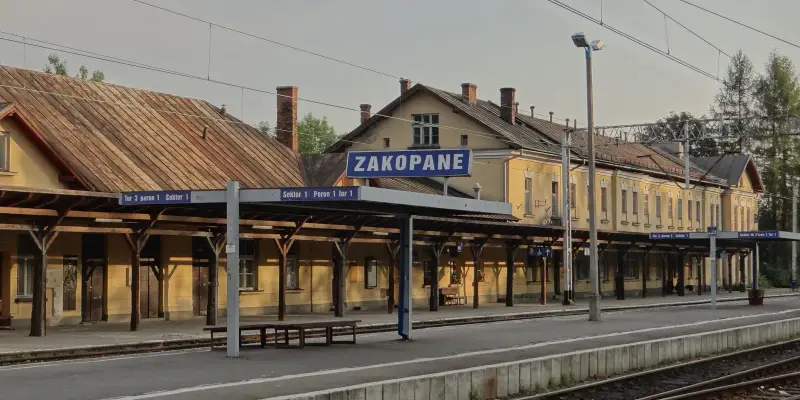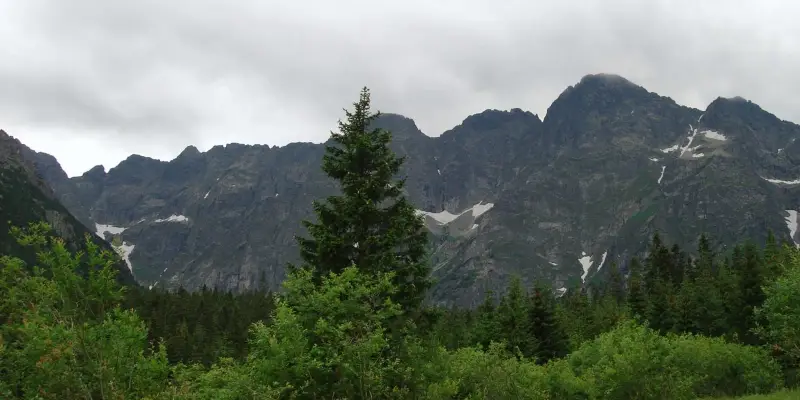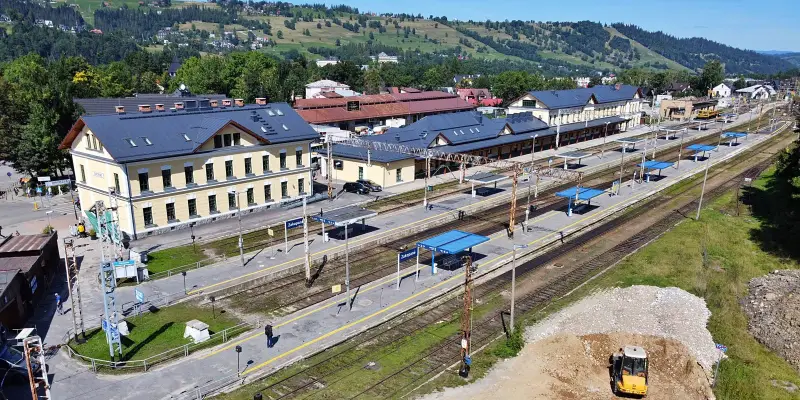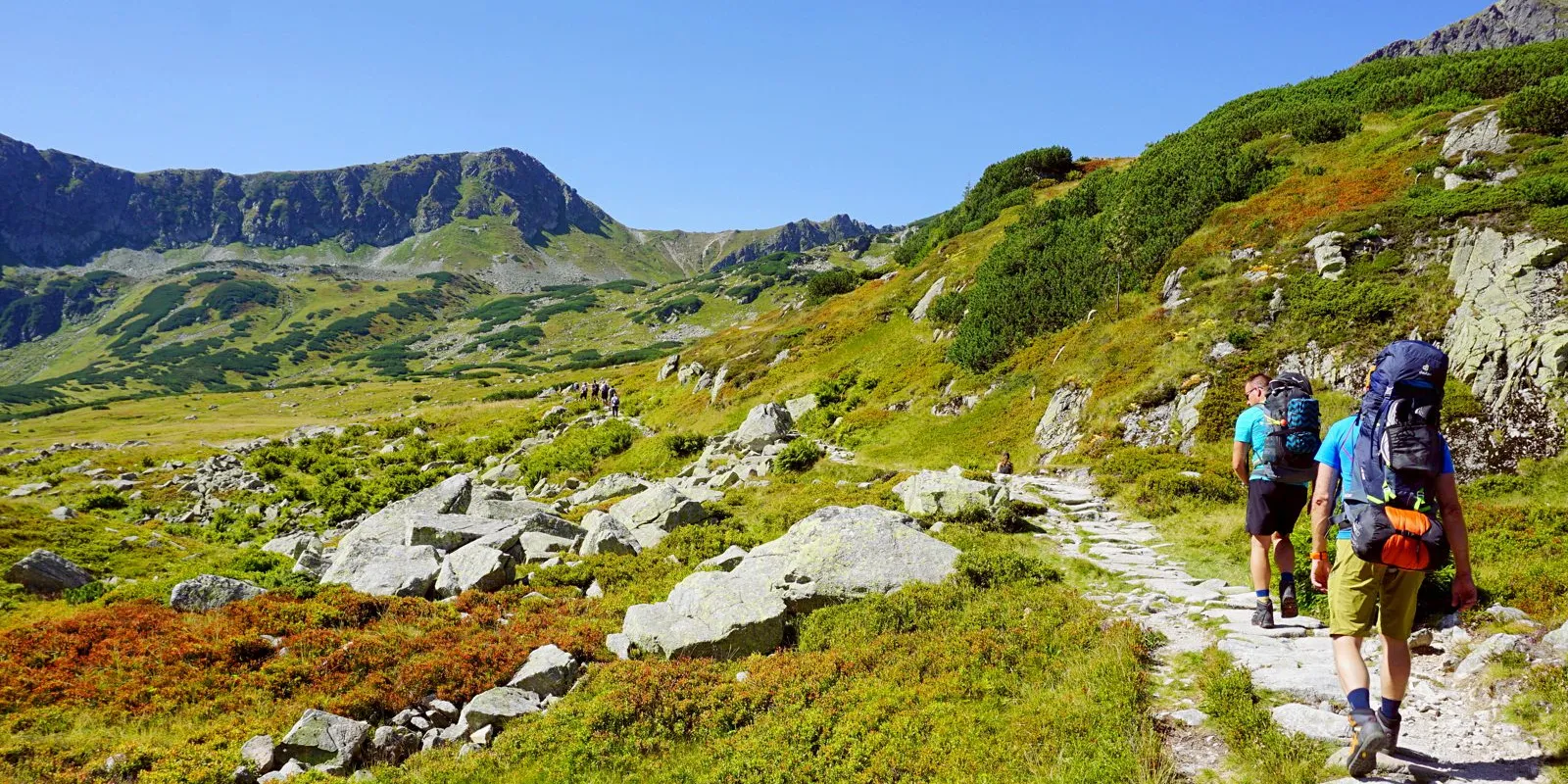
On top of Kasprowy Wierch, at 1,987 metres, stands a meteorological observatory, and it is not there for decoration: on the Tatra ridge the weather turns quickly, and someone who left Zakopane in a T-shirt can end up in a gale with numb fingers. Packing for Zakopane means preparing two trips in one: a small wooden-and-shopfront town at the foot of the mountains, and the real mountains a short drive away. The answer to almost everything, in every season, is layers.
The three-layer rule, all year round
The idea is simple: a quick-drying base layer against the skin, a warm middle layer (fleece or similar) and a jacket that stops wind and rain. Heavy cotton is the wrong choice, because once it is soaked with sweat it stays cold. With three thin layers you adjust by adding and removing; with one thick sweater you either sweat or shiver. On Kasprowy Wierch, even in summer, warm, windproof layers are advisable, and they belong in your daypack even when the valley is bright with sun.
One tip that sounds obvious and is not: bring a proper waterproof jacket, not a thin city shell. Afternoon thunderstorms are a classic of Tatra summers, and cold rain at altitude is a different animal from a lowland drizzle.
Footwear: the place not to economise
If you plan even a half-day walk, you want hiking shoes with a lugged sole, ideally ankle-high and already broken in. Many Tatra paths are paved with uneven stone and roots, and in trainers your feet send the bill on the first descent. For strolling along Krupówki and around town, comfortable shoes are enough; but in winter the pavement can be icy, so even there a sole with good grip is wise.
Trekking poles are not mandatory, but they take a lot of strain off the knees on the way down, so bring them if you are used to them. In winter and out of season, with snow on the ground, high routes demand proper winter equipment: crampons, an ice axe and the skill to use them cannot be improvised, and conditions should be checked on the spot before setting out.
Summer: strong sun, cool evenings
Summer days in Zakopane can be mild, but evenings cool off fast, and it is cold at altitude even in July. Pack light long trousers and a pair of shorts, a long-sleeved shirt, a fleece and the waterproof. The sun bites harder up high than you would expect: a hat and sunscreen are needed even under thin cloud, and sunglasses are no luxury among pale rock and lingering snow patches. A reusable water bottle beats a pile of plastic ones: you do not find water at every bend of the trail, so set off full.
A 20-30 litre daypack is enough for a day. Inside: spare layers, something to eat (nuts, sandwiches, fruit), a few blister plasters, and a headlamp if you might come back late. Swimming gear is for the thermal pools, not for the lakes: swimming in the national park's lakes and streams is forbidden.
Winter: serious cold, perfectly manageable
Here the conversation changes. You want a thermal base layer, a warm fleece, a down or insulated jacket, windproof trousers, warm gloves (two pairs is better, one as a spare), a hat covering the ears and a neck gaiter. Technical wool socks do more for comfort than anything else. Insulated winter boots and a dry spare pair of socks are the difference between a great day and one you remember badly. Anyone riding the cable car to Kasprowy Wierch should remember that on top the wind makes it feel much colder: the cabin gives shelter, the terrace does not.
For skiers: ski clothing, helmet and goggles; equipment can also be found locally. The runs on Kasprowy Wierch, Goryczkowa and Gąsienicowa, are steep and suited to experienced skiers, so judge your level honestly before going up. Do not forget lip balm, moisturiser and sunscreen even in winter, because snow reflects the light.
Spring and autumn: the double-suitcase seasons
These are the months when most people get it wrong, because a day can start in sunshine and end in snow at not very high altitudes. Think of a mixed suitcase: waterproof, fleece, light gloves and a hat next to a summer shirt. Trails are often muddy or icy in patches, so waterproof shoes are worth having, and for anyone heading high there is a chance winter equipment will be needed. Asking about conditions before you set out is the smartest move of all.
In town: what helps, what to leave at home
- A folding umbrella or a hooded jacket for summer showers
- A little cash for kiosks, next to your card
- Photo ID and your European health insurance card
- A power bank, because cold and photos drain a phone quickly
Leave the giant hard-shell suitcase at home: you will walk a lot in Zakopane, and in winter the pavements are no friend of wheels. A soft bag with some empty space for what you buy is better.
Frequently asked questions
Do I need trekking poles in Zakopane?
They are not mandatory, but they help a lot on descents, when knees suffer on stone and natural steps. If you do not own any, do not buy them just for the trip: for easy walks good shoes are enough. In winter they can pair with microspikes if conditions call for it.
What electrical sockets are used in Poland?
Poland uses the European Type C and E sockets at 230 V, so travellers from most of Europe need no adapter, while UK and US visitors do. Bring a power bank anyway: in the mountains, with cold and photos, a phone drains faster than usual.
Can I swim in the Tatra lakes?
No, swimming in the national park's lakes and streams is forbidden. If you want a dip after a walk, the thermal pools in town are the place. Bring swimwear, flip-flops and a towel.
Should I carry food for a hike?
Yes, at least something easy to eat, like nuts or sandwiches, and above all water. Mountain huts serve food, but hours and availability vary; a reserve in your pack means you will not be hungry on a long day.