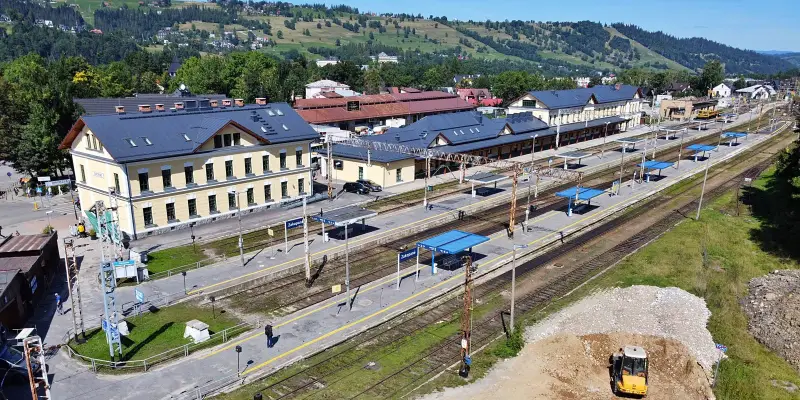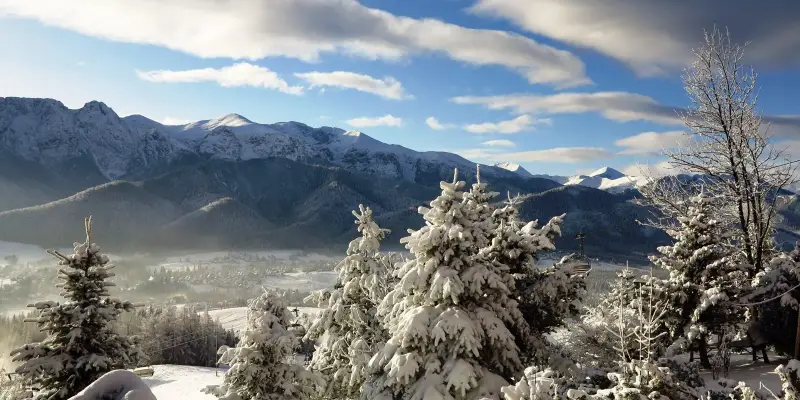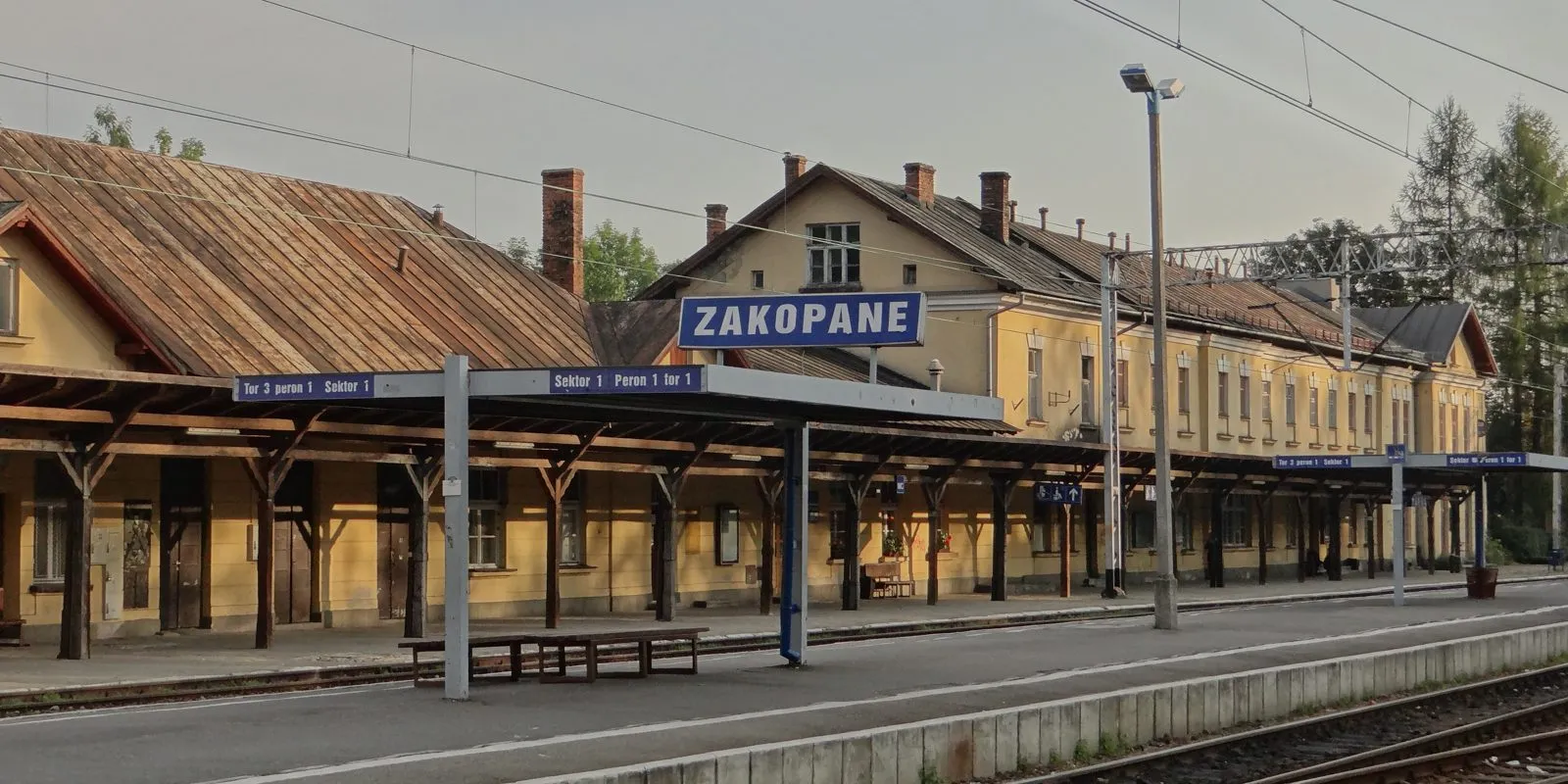
Anyone leaving Warsaw for Zakopane crosses half of Poland to end where the railway can climb no further. The terminus of line 99, at 835 metres, is the second-highest railway station in the country, and reaching it from the capital is a small journey within the journey: plains, hills, then Podhale and, when the sky is clear, the line of the Tatras. The journey from Warsaw to Zakopane is long, and that is exactly why it deserves careful choosing. There are three main ways: train, coach and car, with the option of breaking the trip in Kraków.
The train: the comfortable choice for non-drivers
The train is the most relaxed answer for a trip this long: you sit, you read, you watch the landscape, and you step off near the centre, because Zakopane's station is the terminus. The route often passes through Kraków and, in its final part, Chabówka, before the last climb into town. Depending on the period there are direct services or one change; timetables, duration and train type vary from season to season, so check the official schedules a few days before leaving. The drawback is time: this is not a half-day outing, and the train is rarely the quickest mode. It suits people who want to arrive rested and with luggage, less so those in a hurry.
The coach: direct and no changes
There are also long-distance coach services that run from the capital to Zakopane without changes, arriving at the bus station, close to the railway and the centre. For travellers with little luggage who dislike connections it is the most straightforward choice. The flaw is the same as for any road transport: the final stretch, on the road that climbs to the Tatras, can slow down a lot at weekends and in holiday periods. So the margin in your plan matters more than the theoretical duration: better to arrive the evening before than with an hour to spare for your lodging check-in.
The car: freedom costs hours of road
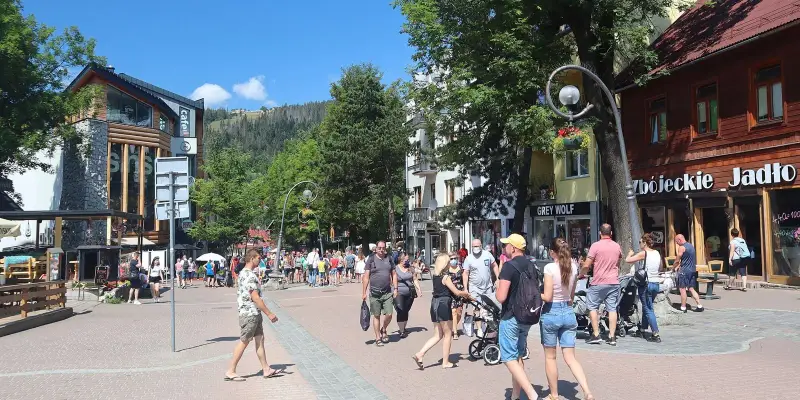
A car gives freedom, and the route follows the main roads toward Kraków and then the Zakopianka, the national road into town, often busy at peaks. It is the right choice for families or anyone wanting to explore the surroundings over the next days, but it demands one thing: break the trip if you start late. Driving all day means arriving tired and possibly losing the first afternoon. In town, parking in the centre is difficult, Krupówki is pedestrian and closed to cars and bicycles, and nearly everything is done on foot. For Morskie Oko, take precautions: the 8.5 km asphalt road from Palenica Białczańska is closed to private vehicles, and parking at Palenica Białczańska or Łysa Polana needs a Tatra National Park (TPN) e-ticket; vehicles over eight metres cannot enter. Order of arrival decides where you park, so arrive early.
A night in Kraków: breaking the journey
Zakopane has no airport: the reference gateway is Kraków, and that is where people arriving from farther away land. The direct train from Warsaw also runs through Kraków, so stopping a night in the old town does not lengthen the route: you get off, have dinner, and set out in the morning with a whole Zakopane day ahead. It makes most sense in high season, when seats on direct trains sell out, and for anyone leaving the capital late. From Kraków you continue by train, coach or shuttle, and the last stretch is far easier to manage than after a full day on the road. Check current connections between the city and the station or bus station, because they change often, and leave a wide margin between one vehicle and the next.
Which to choose, in practice
For most travellers the train remains the most balanced choice: arrival in the centre, no driving stress, a journey that is part of the experience. The coach wins when you want to avoid changes; the car, when the plan includes many places outside town; a useful trick is to split the trip with a stop in Kraków, which breaks the long day and lets you reach Zakopane with the morning ahead of you.
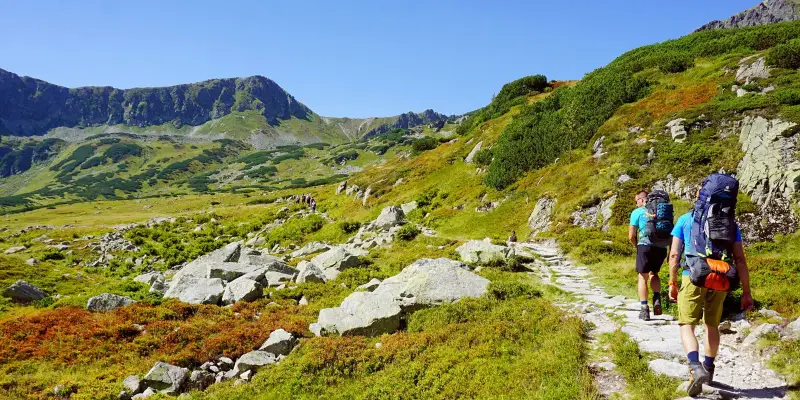
Once there, the centre and Kuźnice are reachable on foot: from Kuźnice, at about a thousand metres, the Kasprowy Wierch cable car departs, 1.9 kilometres and about forty minutes from the John Paul II roundabout. For the lake you can use the park's seasonal e-buses on the Zakopane–Włosienica and Palenica Białczańska–Włosienica routes.
Frequently asked questions
How long does the journey from Warsaw to Zakopane take?
It is a long travel day, many hours by any mode, and the duration changes with the period, the type of train and traffic. Avoid planning activities for the day of arrival and check the official schedules shortly before leaving.
Can I do Warsaw to Zakopane and back in one day?
It is not advisable: the trip takes most of the day in each direction, and in peak periods it can stretch further. Stay at least one night, and preferably two, to have a day in the mountains.
Is it worth stopping in Kraków on the way?
Yes, if you have time: Kraków lies on the route of trains and roads, and a night there splits the trip. From Kraków you reach Zakopane by train, coach or shuttle, with the last stretch easier to manage.
Do I need a ticket for Tatra car parks if I drive?
To park at Palenica Białczańska or Łysa Polana, the starting points for Morskie Oko, you need a national park e-ticket. Get it in advance; it covers parking only, not entry to the park.