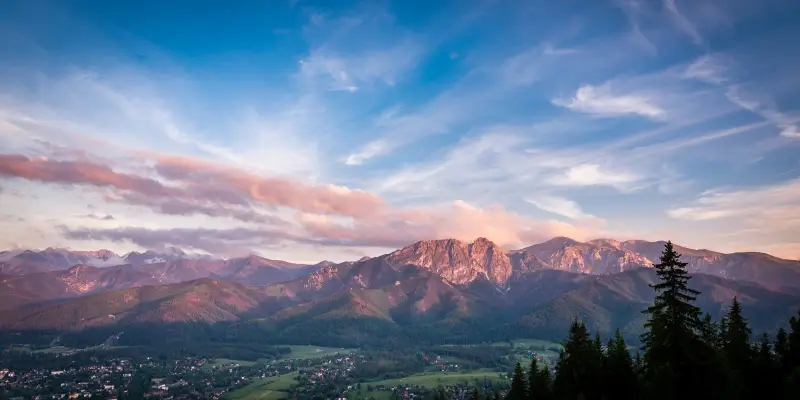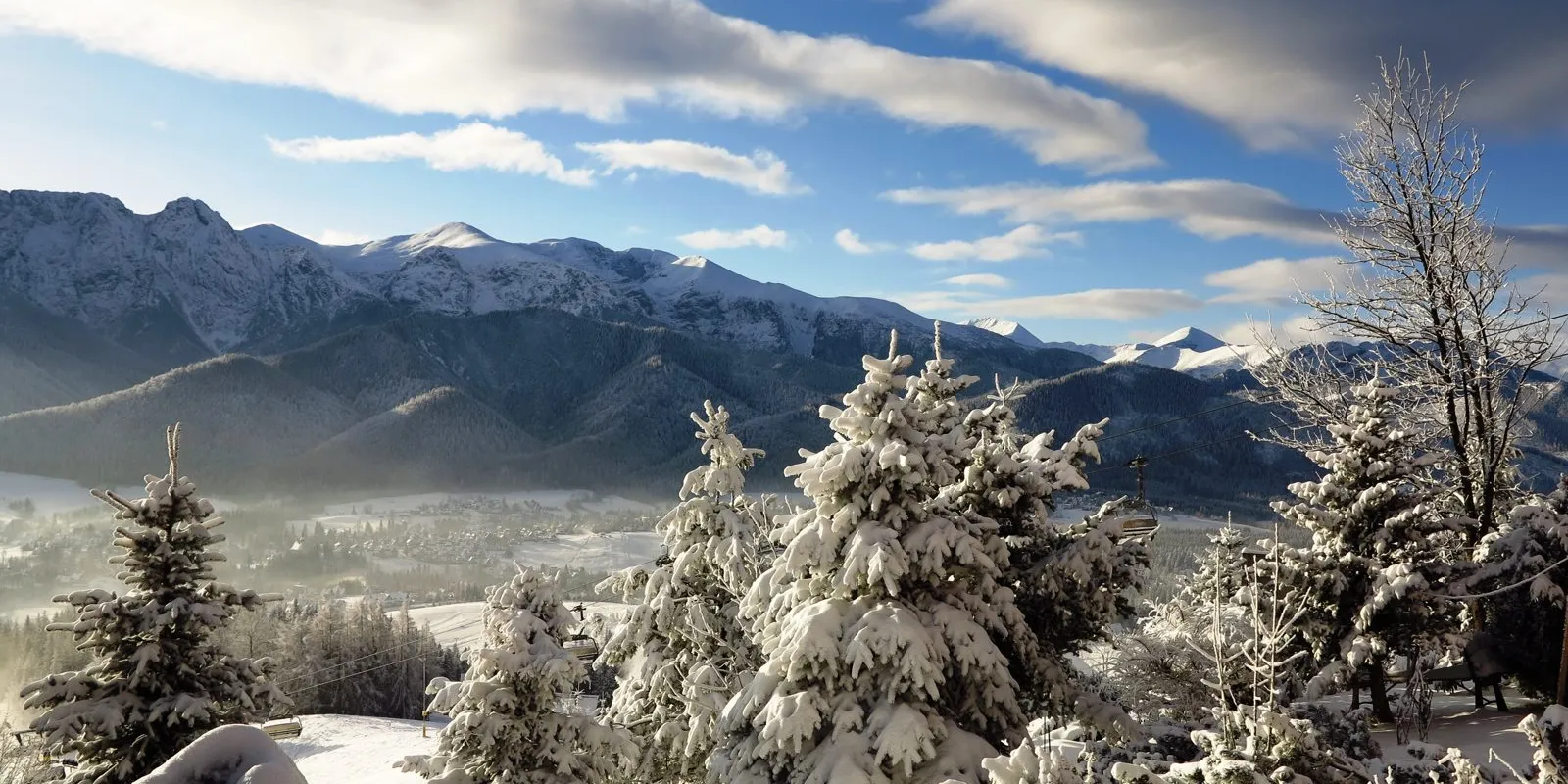
Zakopane averages roughly 179 days a year with snow, and July is wetter than any other month. That tells you something simple: the question «when to go» has no single answer, because this is a mountain town where the climate gives no season a free pass. The weather station, at 855 metres, records a mean annual temperature of 6.2 degrees, and the differences between seasons are sharp. Rather than hunting for the perfect month, it helps to decide which Zakopane you want to see: the one under snow, the one with green trails, the golden one or the one that is still almost empty.
Winter: deep snow, skiing and the other side of the coin
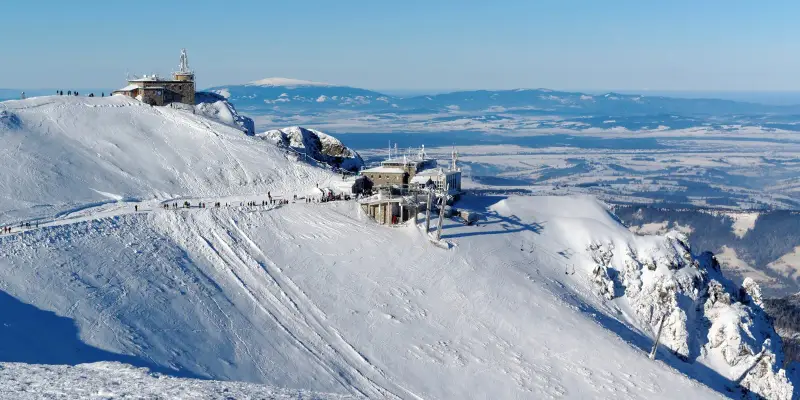
Winter is the season that most defines the place. January averages around −3 degrees, with average lows near −7, and snow cover is normally deepest in February and March. The station's record low is −34.1, recorded in February. People ski on Kasprowy Wierch, where the two runs Goryczkowa and Gąsienicowa are steep and suited to experienced skiers, and on Gubałówka, which is gentler; they watch the jumpers at the Wielka Krokiew ski jump; they walk among timber houses with breath steaming. The other side of the coin: at altitude the trails demand winter equipment, some high routes are closed for part of the year under the park's rules, and the days are short. Trust the conditions of the day, not an idea of an «open» trail. Non-skiers can still enjoy the town, the thermal baths and walks in snowy low valleys.
Spring: the in-between season, for those who can wait
Spring is the most elusive. Snow lingers at altitude while the valley floor thaws, and the result is a landscape at two speeds: meadows colouring below, summits still white above. It is the time of crocuses in the clearings and walks in the valleys, but also of the in-between season, with lifts and trails in transition and mud on your shoes. The advantage is quiet: crowds are thin. The drawback is uncertainty: a sunny day can be followed by a snowfall. Anyone coming in spring needs a plan B and waterproof boots.
Summer: the season of trails and crowds
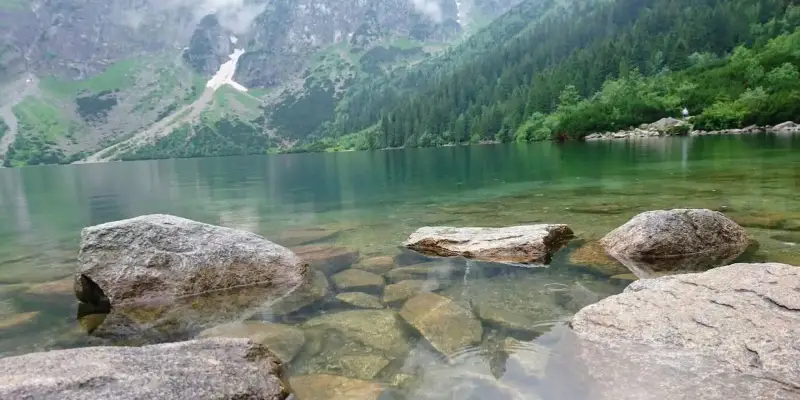
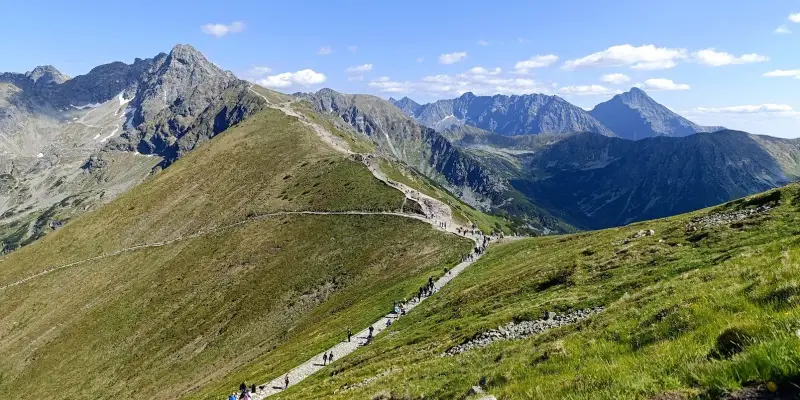
In July the mean temperature is about 16 degrees, with highs around 21, and it is the season of open trails: nearly every destination is within reach. It is also the wettest, peaking in July, often in afternoon storms: the rule is to start early and be down before the afternoon. The best-loved destination is Morskie Oko, the lake at 1,395 metres, reached along an 8.5 km asphalt road from Palenica Białczańska that is closed to private vehicles. On fine days it is very busy: the only strategy is dawn. Kasprowy Wierch has its queues too, and Krupówki in the evening resembles a festival promenade. Those who want solitude in summer find it in lesser-known valleys and at the edges of the day. At altitude the rule of warm, windproof layers always applies, even with 25 degrees in town.
Autumn: colour, clear air and short days
Autumn is the choice of people who know the place. The forest changes colour, the air sharpens and visibility on the Tatras can be the best of the year, with the summer crowds thinning. The downside is days that shorten fast, low cloud and the first snow at altitude: always plan your return around the light. It is an excellent season for photographers and relaxed walkers, less so for anyone dreaming of skiing or of a swimmable lake (which does not exist: swimming in the park's lakes is forbidden in every season).
So when should you really go?
If you want a single recommendation: late summer and early autumn combine passable trails, clear air and fewer people. For snow, deep winter; for meadows and quiet, late spring. For families with small children, the warm months and the baths beat any ski run. First-timers with only two or three days should check the forecast close to departure and keep days flexible, because the mountain decides.
Whatever the season, remember that mountain conditions change quickly: in an emergency 112 works across the European Union, and the Polish mountain rescue, TOPR, answers on 985.
Frequently asked questions
Which is the rainiest month in Zakopane?
July, with about 190 millimetres of precipitation on average, mostly as afternoon storms. The full year exceeds 1,100 millimetres. In summer, set out early for excursions and always carry a waterproof jacket.
Can you swim in the Tatra lakes in summer?
No. Swimming in the national park's lakes and streams is forbidden in every season, Morskie Oko included. For a swim, use the thermal pools in the area, which work even when it is cold outside.
When is there the most snow in Zakopane?
February and March are usually the months with the deepest snow cover. At altitude snow can linger far longer, even into late spring, and high trails require suitable equipment.
Is Zakopane worth visiting outside the ski season?
Yes, because the mountains have no dead season: in spring and autumn you can walk the valleys with few people around, and in summer you can climb higher. Those are the months when the town and trails are calmest.