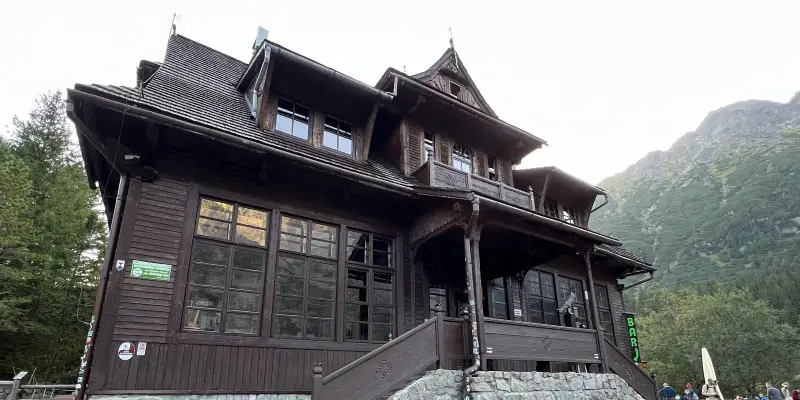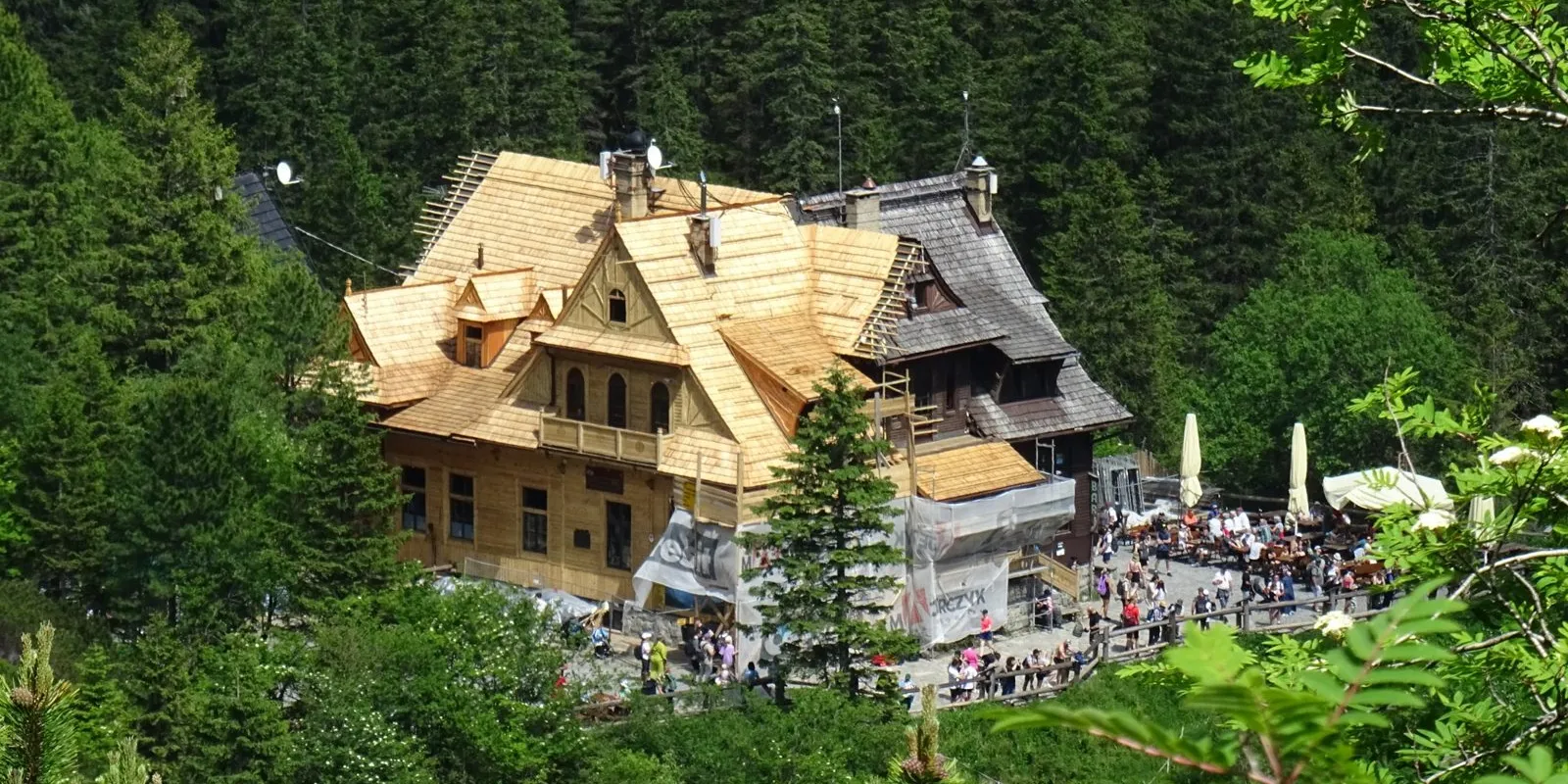
In some Tatra huts you still sleep in a shared room of thirteen, fourteen or sixteen beds, and nobody finds it odd. The Old Shelter at Morskie Oko is exactly that: it began as a coach house in 1891 and took over from the main building after the fire of 1898. To understand how a schronisko works you have to accept that logic, which sits closer to a high-altitude hostel than to a mountain hotel.
What a schronisko is and what it offers
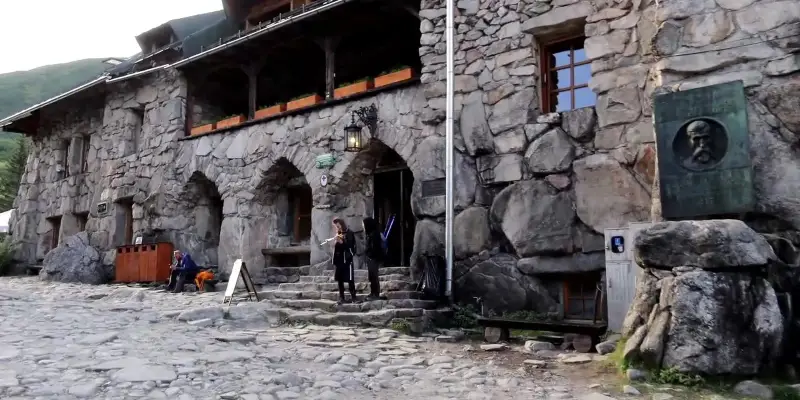
The word means «shelter», and in most cases in the Polish Tatras the PTTK, the Polish tourist and sightseeing society that runs a network of huts, is behind it. These are not hotels. They are buildings made for walkers, with rooms of two to ten beds, larger shared dormitories, a kitchen serving hot meals and a dining room where hikers, climbers and people who came up only for lunch sit together. Murowaniec, on the Hala Gąsienicowa meadow at about 1,500 m, has around 110 beds, in rooms for 2 to 10. The Morskie Oko shelter, at 1,410 m, has 79 across the New and Old Shelters.
Not everyone comes up to sleep. Many stop for a soup, a tea or a hot plate after hours of walking. Some huts carry a long history. Murowaniec opened on 12 July 1925 in the presence of Polish president Stanisław Wojciechowski; since 2019 it has been listed as a monument.
Why you should book, especially in summer
Beds are few and good days are fewer. On summer weekends, long holiday weekends and school holidays the best-known huts fill up, and a bed is never guaranteed to someone who turns up at the door unannounced. The advice is to contact the hut well ahead, either directly or through the channels indicated by the PTTK and the hut itself, and ask clearly what is included: sheets or a sleeping-bag liner, meals, showers, kitchen hours. Terms and methods differ between huts and between seasons, so do not rely on what you remember from a previous trip.
Off season or on a weekday things are less tense, but weather changes quickly up high, and a full hut is not a reason to compromise on safety. People in difficulty get help, but that is no excuse for setting off without a plan. Booking also means knowing where you sleep and what time you must arrive.
The unwritten rules: quiet, boots, respect
Sleeping in a hut follows simple etiquette. Boots stay in the entrance or in the room provided, night-time quiet is respected, a headlamp lets you move without waking everyone, and neighbouring beds really are neighbouring. If you leave at dawn, for Rysy or Zawrat for instance, pack your rucksack the evening before. The hut is not a restaurant with table service: the room is often crowded and you share.
In Tatra National Park the park rules apply: you stay on marked trails, you carry your rubbish down, and around the huts on the meadows there are notices about bears. On the Hala Gąsienicowa, which has a TOPR (mountain rescue) station, it pays to read the local notices.
Getting to the three best-known huts
To Murowaniec you climb from Kuźnice, above Zakopane, on the blue trail via Boczań or the yellow one via Jaworzynka: about 2 hours. From the hut you can go on towards Kasprowy Wierch, Czarny Staw Gąsienicowy and Zawrat, high-mountain destinations where snow, ice and fog change the difficulty from one day to the next.
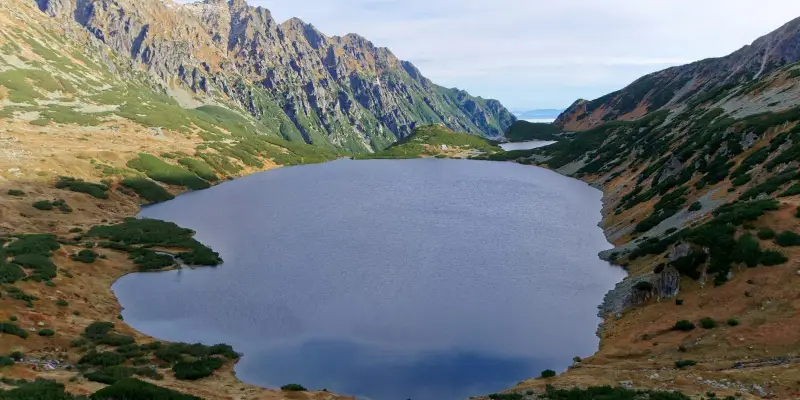
For Morskie Oko you start at Palenica Białczańska: an asphalt road of about 8-9 km, closed to private cars, red trail. From Wodogrzmoty Mickiewicza to the hut takes about 1 hour 30 minutes. It is the busiest outing in the Tatras, so start early.
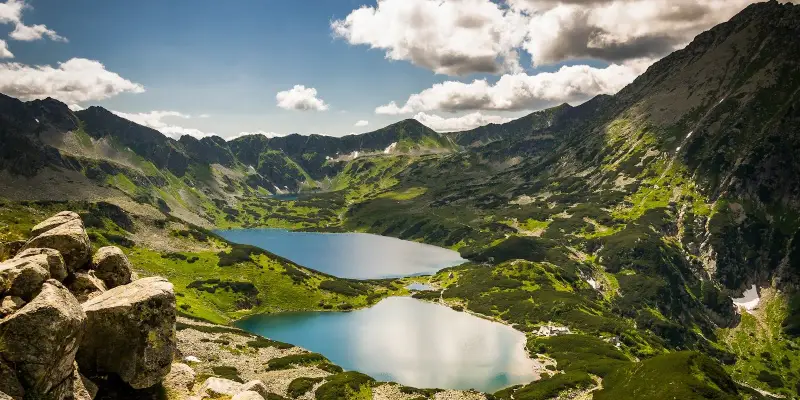
The hut in the Valley of the Five Polish Ponds, named after Leopold Świerz, is reached from Morskie Oko on the blue trail in about 2 hours, or from below through Dolina Roztoki on the green trail. It stands above Przedni Staw and is the highest hut in the Polish Tatras, quieter and more remote than the other two.
What to bring and when to arrive
Three things matter more than the rest: a headlamp, warm layers even in summer and a waterproof jacket. Then ID, hiking shoes you have already worn in and a light towel. Find out beforehand how payment works and what the hut provides: take nothing for granted.
- headlamp and spare batteries
- warm layers and a rain jacket
- a light towel and earplugs
- some food for the walk and water
Above all, arrive in daylight. Darkness comes early in the Tatras outside midsummer, and a climb that ends in fog after dusk is the classic mistake. Check the weather and trail conditions on the day itself, and if in doubt turn back: the hut will still be there. In an emergency call 112 or TOPR on 985.
Frequently asked questions
Can you eat at a Tatra hut without staying the night?
Yes, most huts serve hot meals and drinks to passing walkers too. On busy days you share tables with other hikers. Do not arrive for lunch too late, and ask on the spot about kitchen hours, which vary.
Do I need a sleeping bag?
It depends on the hut: what is provided changes from hut to hut. When you contact the hut ask what is included, and for peace of mind bring a light sleeping-bag liner.
Can I walk up for the day without booking?
For a visit and a meal yes, for a bed no. Places are limited and run out in busy periods. If you think you might sleep, contact the hut first, and in any case plan to be back down before dark.
Which hut is the easiest to reach from Zakopane?
Murowaniec, reached from Kuźnice in about two hours. Morskie Oko is reached on foot from Palenica Białczańska along a paved road, while Pięć Stawów needs a longer climb at altitude.