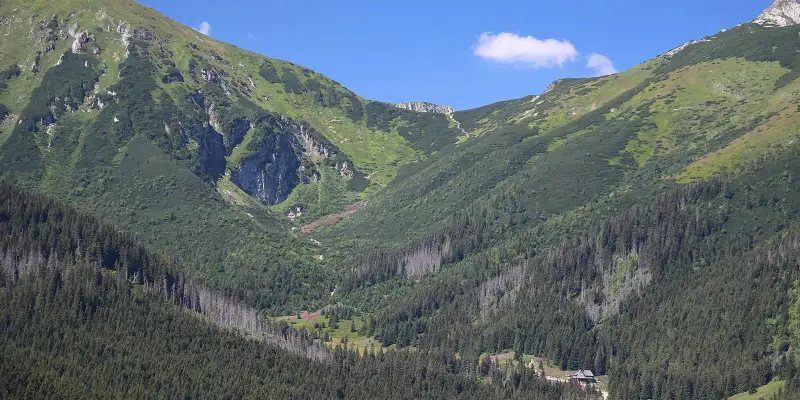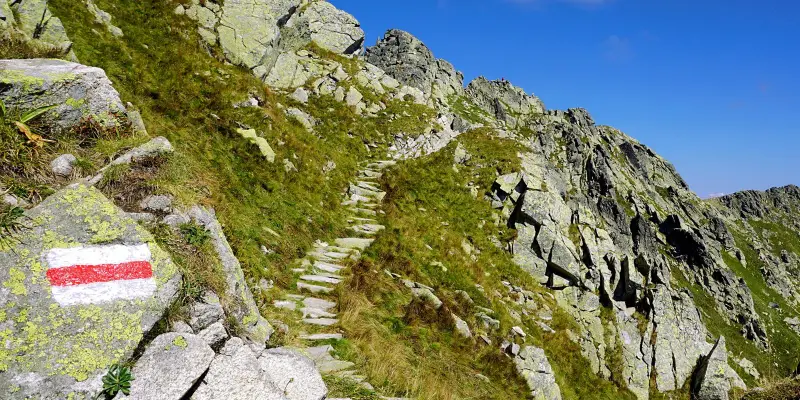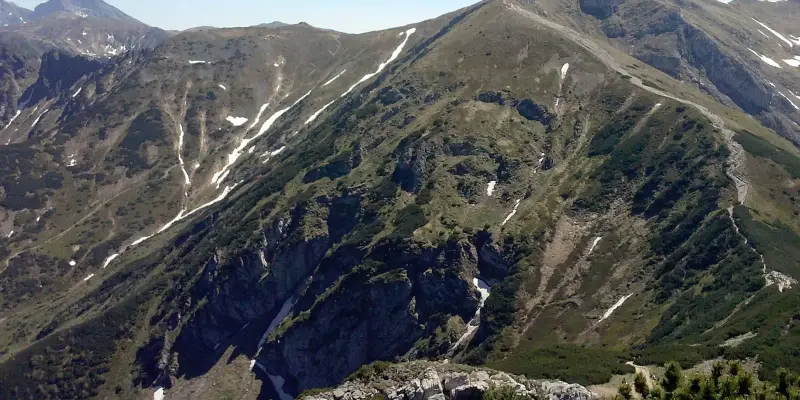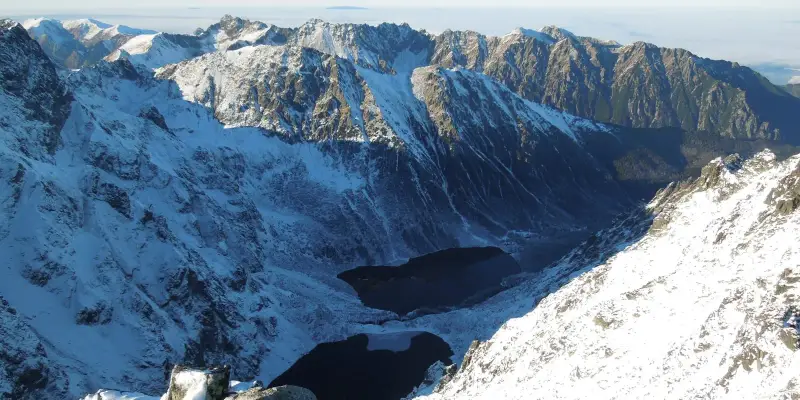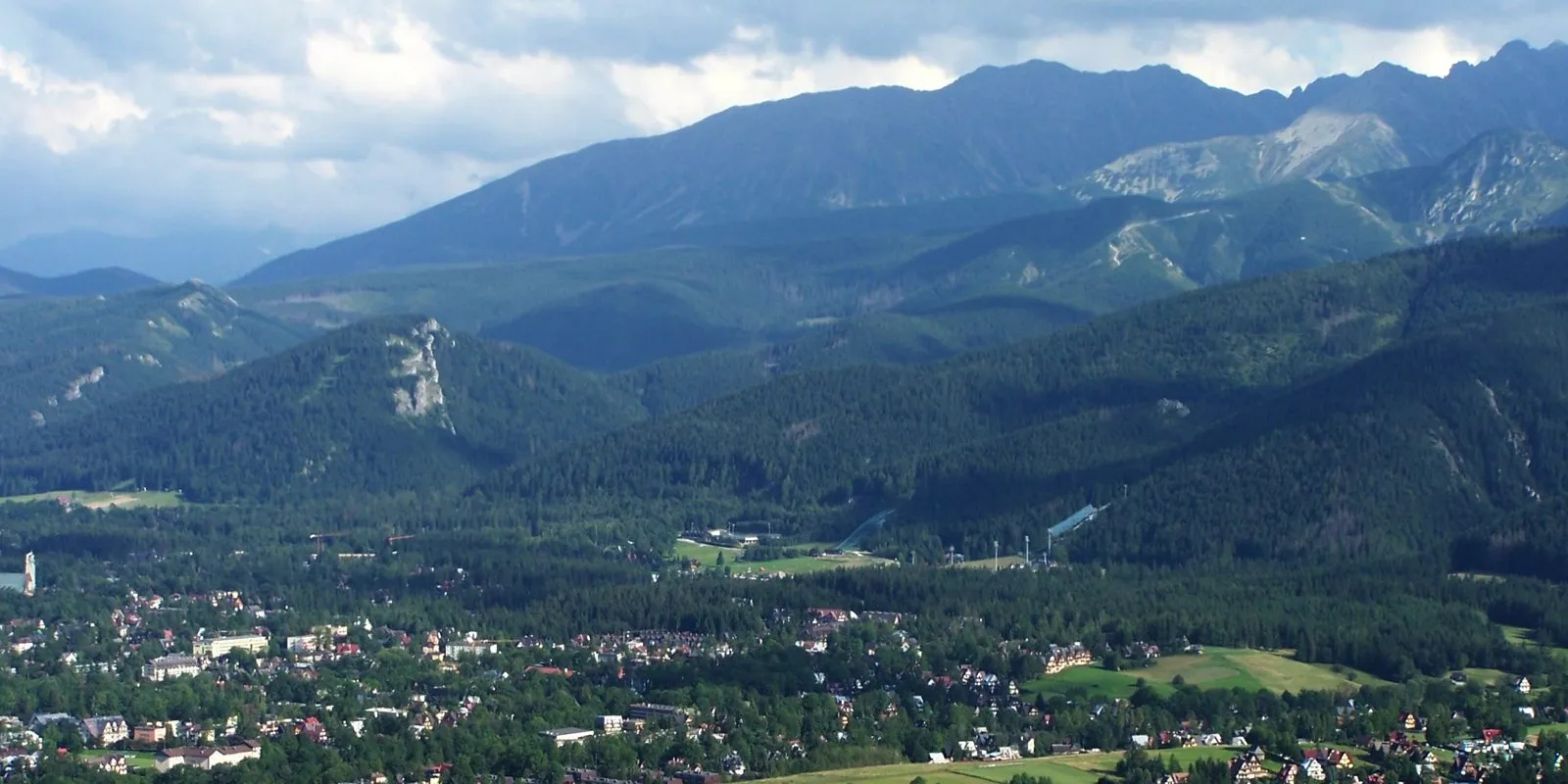
On the meadow of Kalatówki, in 1910, the first ski races in the Tatras were held: the mountains we now associate with lift queues had one of their first racing grounds just steps from Zakopane. It is a good reminder that you can reach pastures, beech woods and viewpoints with under an hour's walk. Four destinations are enough to fill a stay, with no harness or helmet: Nosal, Kalatówki, Polana Strążyska and Polana Rusinowa.
Nosal: the half hour that tastes of the Tatras
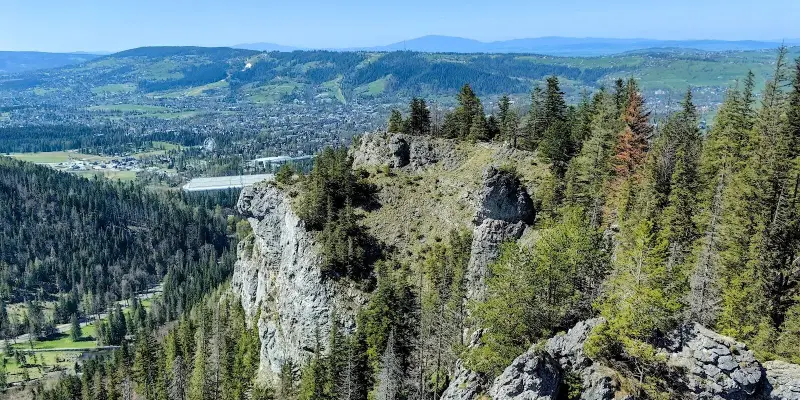
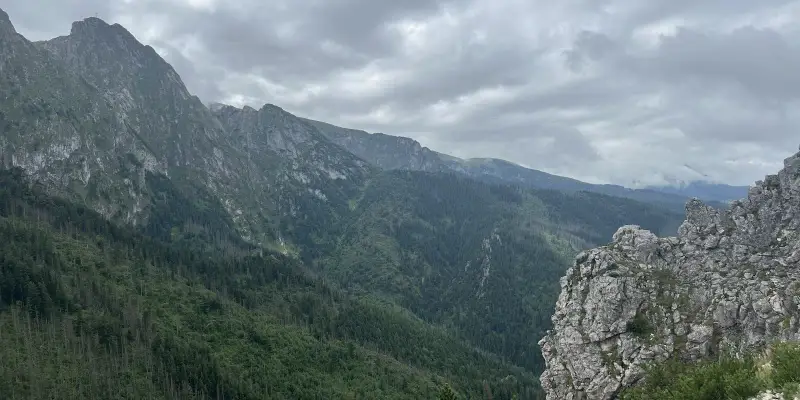
Nosal is 1,206 metres high and rises above Kuźnice, between the Bystra and Olczyska valleys. It is the ideal outing for anyone who wants to get a taste of the Tatras without committing: from the starting point you climb by the green trail in about thirty-five minutes, and come down in about thirty. The summit is wooded, with spruce, beech and Scots pine; the limestone rocks hold lime-loving plants, among them edelweiss, now rare because of collectors, and a few orchids. That is why the rule is to pick nothing and stay on the path: climbing the western walls is forbidden by the park.
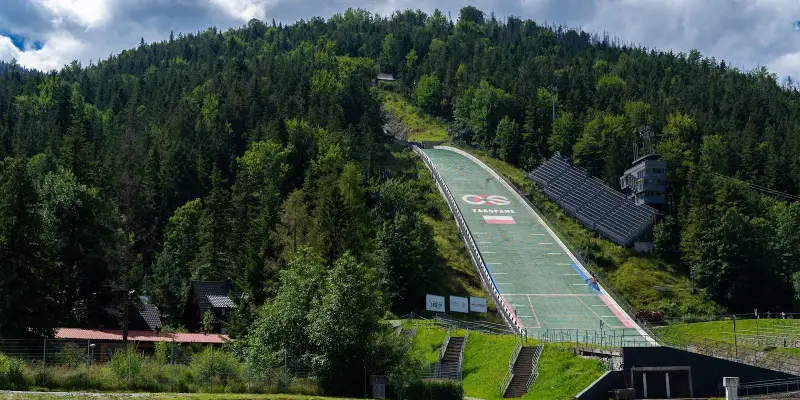
Nosal is a perfect choice for half a day, a late summer afternoon or days when the weather is unconvincing. The north slope has a ski area with several lifts, but from the climbing path you will hardly notice.
Kalatówki: history, a convent and a hermitage
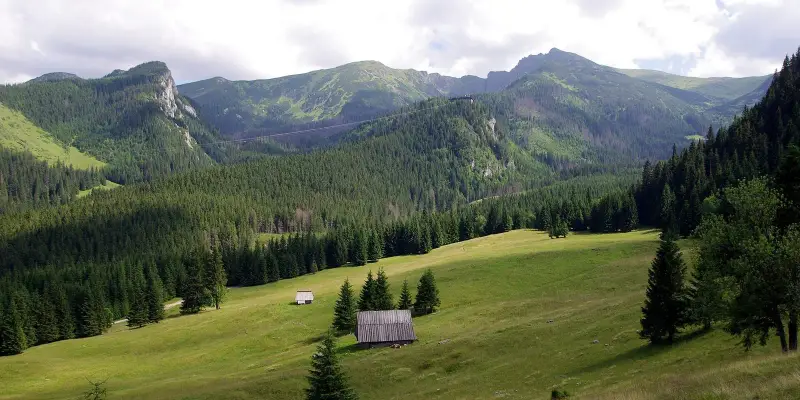
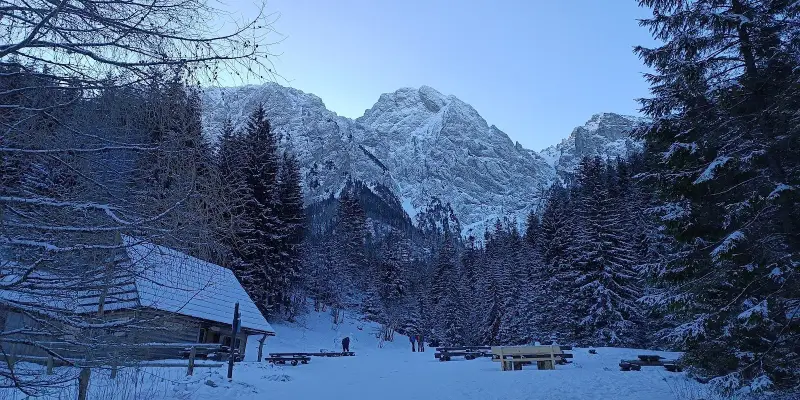
From the same Kuźnice area starts the climb to Kalatówki, the clearing at 1,160 to 1,250 metres in the Bystra valley. The blue trail takes about thirty-five minutes, and there is also the Droga Brata Alberta, the granite road linked to the name of Brother Albert. The clearing was pasture from the eighteenth century and today, owned by the national park, has sheep again. On its edge you see the convent of the Albertine Sisters, designed by Stanisław Witkiewicz, and Brother Albert's hermitage, from 1902, while a mountain hotel stands on the moraine rim.
Those with energy left can continue: about fifty minutes lead to Hala Kondratowa, and a black trail, in about an hour and twenty-five, climbs to Czerwona Przełęcz. From there the outing stops being «easy»: stop at Kalatówki if you are not equipped.
Polana Strążyska: the short valley with the waterfall
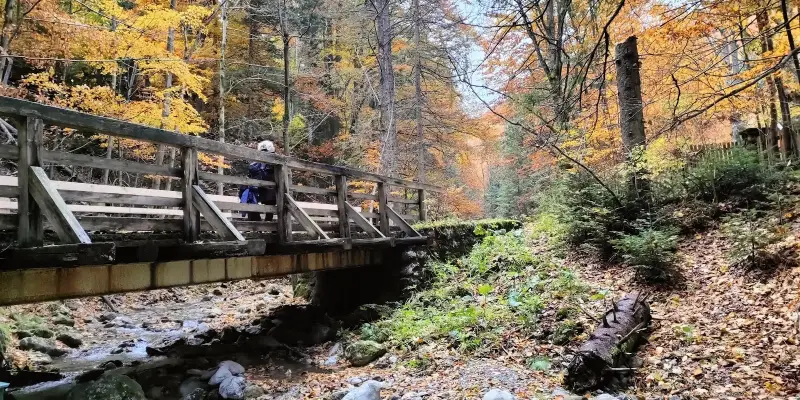
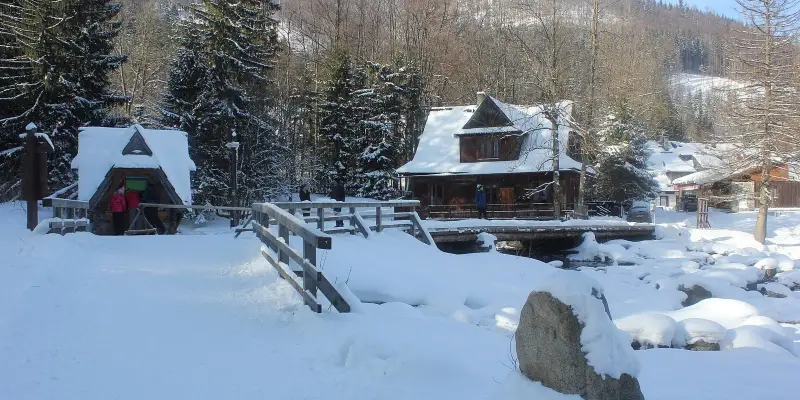
From the centre you take the Strążyska valley, and the red trail leads to the clearing of the same name in about forty minutes uphill. From there a short yellow trail leads to the Siklawica waterfall, about a quarter of an hour there and back. It is among the busiest valleys, and for good reason: old forest, a stream beside you, the Sfinks boulder and a kiosk in the clearing. In the rain, however, the ground becomes slippery, especially near the waterfall.
Polana Rusinowa: the meadow with the view
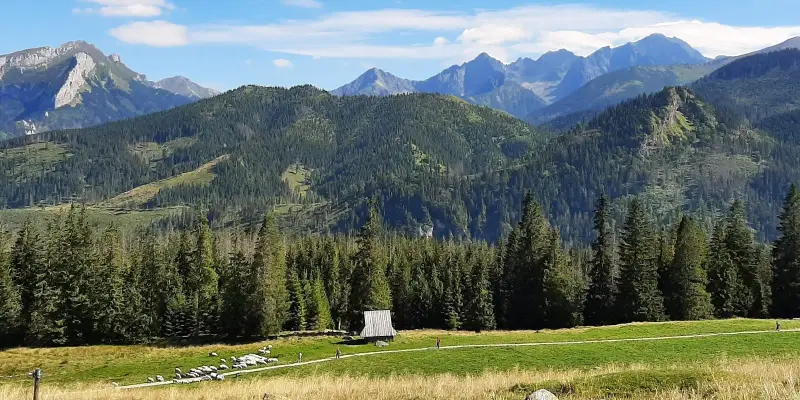
Polana Rusinowa is the opposite of closed forest: a clearing of about twenty hectares between 1,180 and 1,300 metres, dotted with granite boulders left by a glacier. In 1628 King Sigismund III Vasa granted it to the Rusin family, hence the name. Of the twenty wooden huts there in the mid-twentieth century about six remain, but since 1981 the sheep have returned, up to two hundred of them, and in season the bacówka sells oscypek and other sheep's cheeses.
The blue trail from Palenica Białczańska takes about fifty minutes uphill; from Zazadnia about an hour and a quarter, and the green trail from Rówień Waksmundzka about an hour. The Tatra panorama here was «discovered» in 1867, and one of the discoverers called it one of the finest. A short distance away is the Marian shrine of Wiktorówki. On the pastures take your rubbish with you and leave the livestock alone.
How to choose, what to pack and when to turn back
If you are short of time, Nosal; if you want history and a place to stop, Kalatówki; for water and forest, the Strążyska; for space and views, the Rusinowa. All four need shoes with a real sole, even in summer, because wet stones slip, and a jacket: higher up the weather changes quickly.
Do not call these paths «easy» as if they were pavements: conditions change with weather and season, and after rain or snow it is wise to ask locally. The park forbids walking at night, from dusk to dawn, all year round; exact hours can change, so check the park's website and plan your return with a margin. And if the sky closes in, go down: the clearing will still be there tomorrow.
Frequently asked questions
What is the easiest and shortest walk near Zakopane?
Nosal, which by the green trail takes about thirty-five minutes uphill and about thirty down from the Kuźnice starting point. It has no exposed sections, but it is still a mountain-path climb: you need suitable shoes and care if the ground is wet.
Where can I eat sheep's cheese in the mountains?
On Polana Rusinowa, where in season the bacówka sells oscypek and other sheep's-milk cheeses, in a place where sheep graze again. Opening depends on the season and the weather, so do not count on a guaranteed meal, and carry water and something to eat anyway.
Can I take small children on these walks?
Yes, with children who walk without trouble, choosing short targets such as Nosal or the Siklawica waterfall in the Strążyska. Bring shoes with a good sole and warm clothes, start early and stop when the little ones tire: the descent on wet ground is when most slips happen.
Can I swim in the streams or lakes of the park?
No, swimming is banned in all the lakes and streams of the national park, and so are bivouacking, fires and drones. Mountain water is icy in every season and wet rocks are very slippery, so the ban protects both the environment and walkers.