You smell it before you see it: a sharp, steamy cloud of fermented cabbage and smoked pork fogging the windows of a timber dining room on a cold afternoon. In the Podhale that smell usually belongs to kwaśnica. Soup here is not a quick starter to get through; it is the meal itself, the dish through which mountain cooking introduces itself. It helps to know what is in the bowl, because the gap between a soup cooked slowly and one reheated by the batch shows at the first spoonful.
Kwaśnica: why it is sour, and why it is not kapuśniak
The name comes from kwaśny, “sour”, which is the first instruction for use. The base is sauerkraut (kapusta kiszona), cabbage fermented in salt, which for centuries kept vegetables on Polish tables well into winter. It is cooked with pork ribs, often partly smoked, and plain seasonings such as marjoram and caraway. The liquid from the fermented cabbage gives the soup its bite.
Anyone who knows kapuśniak, the cabbage soup eaten across the country, may be taken aback: the traditional highland kwaśnica has no carrots or other vegetables, so the sour, smoky flavour stays in front. There are many family variations, including meatless versions, and every household swears that theirs is the right one. It often comes with boiled potatoes served on the side and a slice of bread, which for many people is already dinner.
How to order it without surprises
The bowl is generous, so if you plan a main course as well, share: one kwaśnica between two is a sensible taste. If you dislike sourness, ask for a trial spoonful or pick another soup, and do not treat it as a dare. The tang is deliberate, not a kitchen mistake. The right moment is after a day outdoors, when it is cold or a damp walk has left you tired. In summer people eat it too, but the logic of the dish is clearest with a wet jacket hanging by the stove.
Żurek: the soup built on rye starter
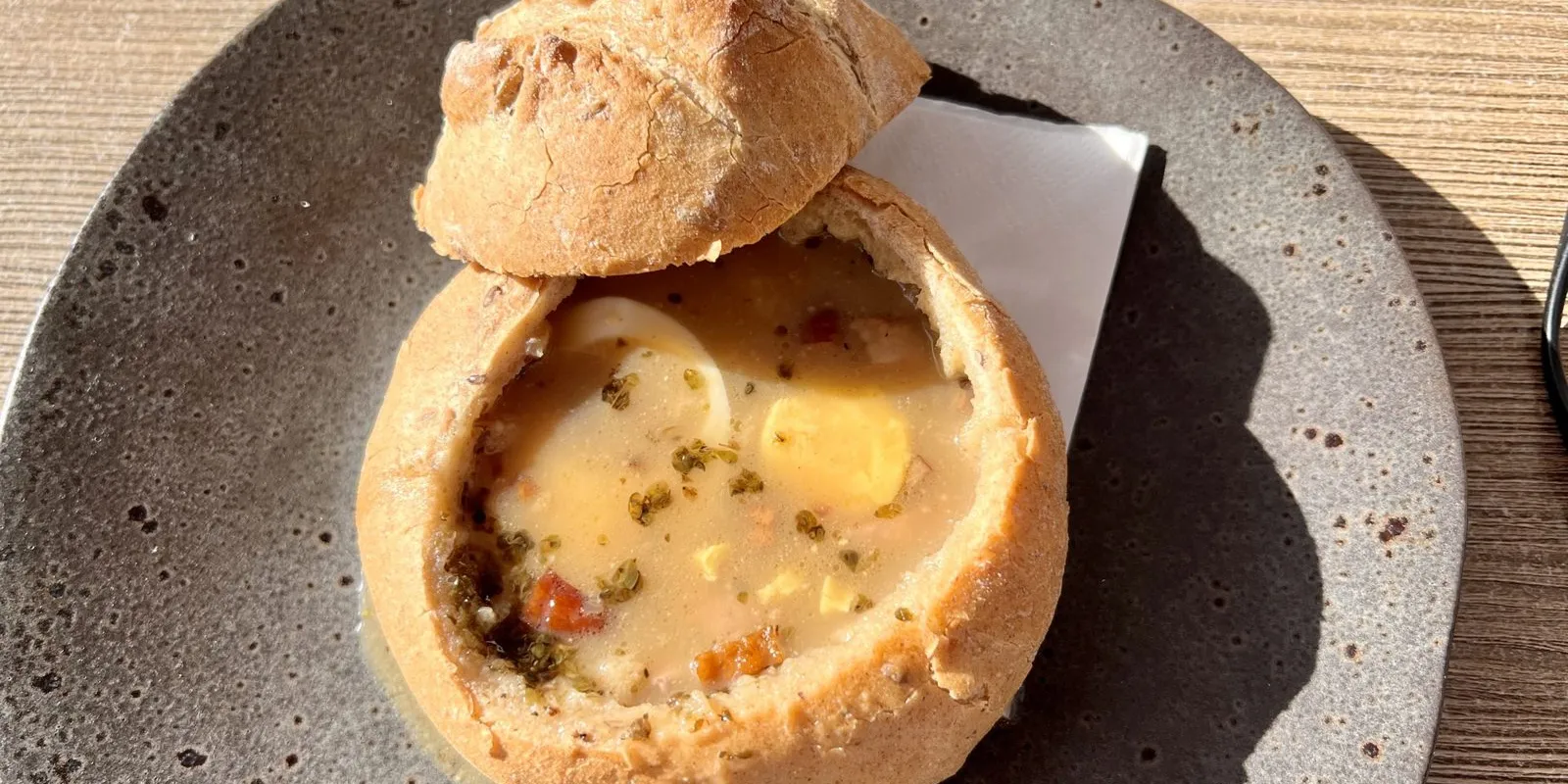
If kwaśnica is the soul of the mountains, żurek is a classic of the whole country, and it reaches Podhale tables in several versions. Its character comes from a fermented rye-flour starter, the “zakwas”, left in water for days until it turns sour and fragrant. It is then cooked with sausage, garlic, marjoram and a halved hard-boiled egg. The result is rounder and creamier than kwaśnica, with a soft, almost bread-like acidity.
You will often meet żurek served in a bread bowl: the soup is poured into a hollowed-out round loaf, which acts as a bowl and is eaten at the end once it has soaked up the broth. It makes a good show but only works if the bread is good and the soup is not too thin. Żurek is also the traditional Easter soup, made with white sausage, which explains why Poles who ate it as children are so fond of it. For anyone wary of strong flavours it is the safer of the two.
The other soups worth knowing
The general rule in Poland is that soup is a proper dish, not filler, and menus rarely offer just one. Rosół, a clear chicken broth with fine noodles, is the family Sunday soup: light, gentle and ideal after a rough journey. The mushroom soup (grzybowa), made with dried forest mushrooms, has a dark scent of undergrowth and a place of honour on Christmas tables too. Ogórkowa, a soup of pickled cucumbers with potatoes, is another sour variant but lighter. Red barszcz, made from beetroot, is often served clear, in a cup or with small filled dumplings.
A practical tip: if you are not very hungry, or travelling with children, build a meal from one soup and one dish to share, such as moskole or pierogi, instead of ordering two courses each. Mountain portions are designed for people who have been walking since morning.
Where to try them, and how to tell a good bowl
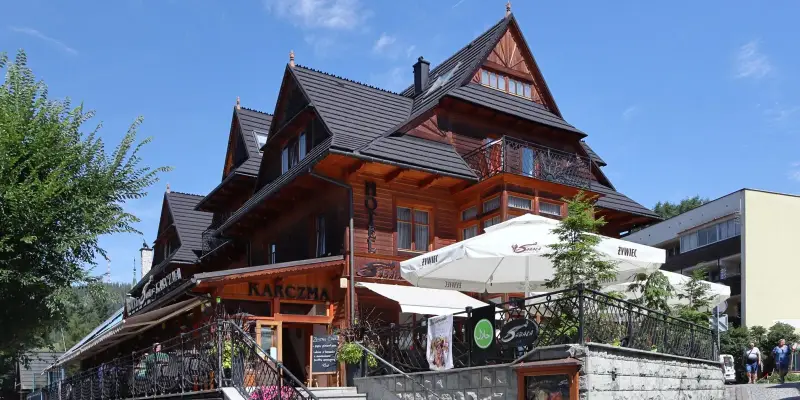
You find these soups in the timber inns of the centre and the villages, and also in plainer places away from the coach-party routes. A good sign is a soup that actually smells of something: kwaśnica should be sour but not sharp like vinegar, with meat that slides off the bone, and żurek should taste full, not like a packet. If the menu is enormous and runs from sushi to pizza, the soup probably comes from a tub. If the menu is short and built around a few local dishes, the big pot is often the right one.
In grocery shops and at the market under Gubałówka you can also buy ingredients to cook at home, such as sauerkraut and spices, but the real thing is eaten hot, indoors, with bread. One last note: sauerkraut and broth are salty, and the same name can hide different recipes from kitchen to kitchen, so if you follow a special diet, ask what is in the soup before you order.
Frequently asked questions
Is kwaśnica suitable for vegetarians?
The traditional version is not, because it is cooked with pork ribs. Meatless versions exist, made with sauerkraut and dried mushrooms. Always ask what is in it, since żurek and other soups also often contain sausage or meat stock.
How do you eat żurek served in bread?
Eat the soup with a spoon, and as the level drops tear off pieces of the bowl, which by then has soaked up the broth. The bread lid can be broken up and used on the side. The bread is meant to be eaten, not left as decoration.
Can I take sauerkraut or the soup home?
Sauerkraut is sold loose or in jars in grocery shops and markets, but it is heavy and awkward in a suitcase, especially with its liquid. The soup is best eaten on the spot. For the road, spices and a sturdy loaf of bread travel better.
What is the difference between kwaśnica and kapuśniak?
Traditional highland kwaśnica is made with sauerkraut and ribs, without carrots or other vegetables and with potatoes on the side; kapuśniak, eaten all over Poland, has more varied recipes and often includes vegetables. The basic idea is the same: a sour cabbage soup with meat.