The ciupaga, the walking stick topped with a small brass axe that highlanders have carried for centuries, began as a mountain tool and a badge of honour, not a trinket. Yet the stalls of Zakopane sell them by the dozen, some forged with care, others stamped out in bulk in factories a long way from the Tatras. That is the whole puzzle of what to buy in Zakopane: the same shape can be a real object or a souvenir identical to a thousand others, and at first glance the differences are subtle.
Where to shop: Krupówki and the market below Gubałówka
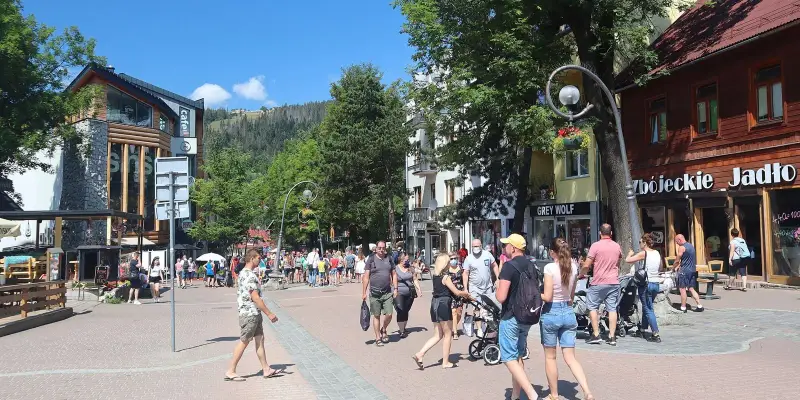
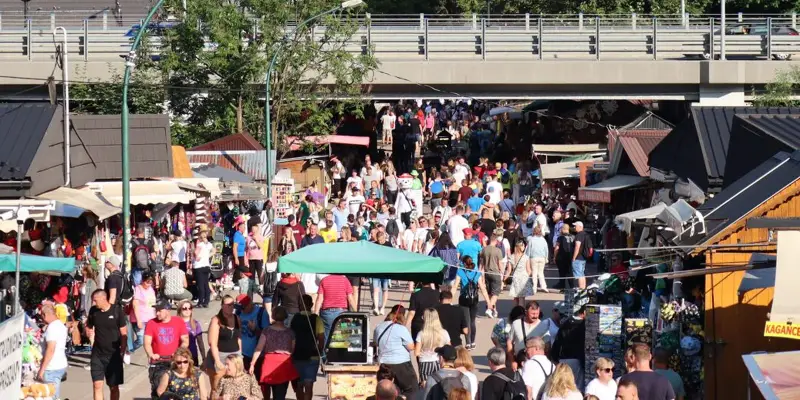
The two main shopping places have opposite characters. Krupówki is the shop window: tidy stores, wooden signs, plenty of well-made goods but also a lot of material for the passing visitor. The Targ pod Gubałówką is the market on Na Gubałówkę street, a short walk from the lower funicular station, and it feels more down-to-earth: stalls of regional produce and crafts, the place to find oscypek alongside socks, hats and small wooden objects.
The practical rule is to walk the whole market before buying. If you go through it once, see the same objects at three different stalls and ask where they come from, you quickly learn which things are repeated in bulk and which are rarer. A real craftsperson can usually say who made the piece, from which wood or wool, and does not mind you turning it over in your hands.
Wood, leather, wool: materials that tell the story
Wood is the material of tradition: spoons, chopping boards, carved boxes, ladles and small objects decorated with motifs echoing the Zakopane style, born in the late nineteenth century and recognisable in the town's villas. A handmade piece shows irregular tool marks, grain that never repeats, edges never perfectly alike. If everything is identical, glossy and cut to the millimetre, it probably came off a machine.
Leather has its emblem in the kierpce, the traditional heel-less highland leather shoes, and in wide belts with metal studs. The test is simple: real leather smells like leather, has strong stitching and an inner edge that is not glued. As for wool, socks, scarves, jumpers and woven blankets are among the most useful purchases because you will really use them. Look for heavy fabric with a visible weave, and distrust anything too soft and light at a very low price, which is often synthetic.
Sheepskin is part of the tradition too: slippers, waistcoats, rugs. They are warm and long-lasting, but check the seams and the smell, because the treatment of the fleece is not the same at every stall.
Oscypek, the souvenir you can eat
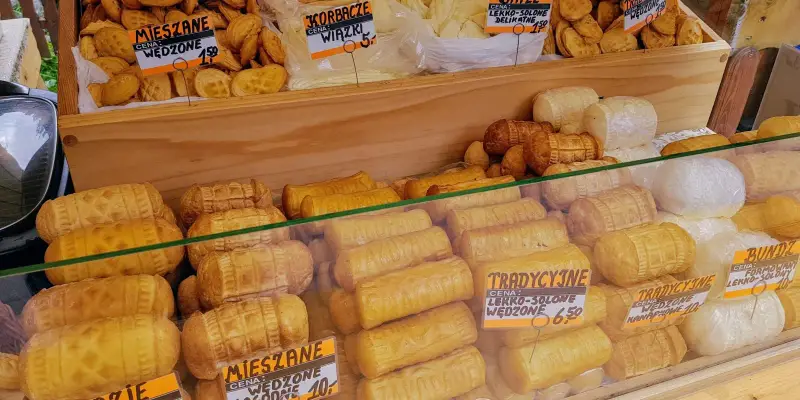
The food most tied to the place is oscypek, the smoked sheep's-milk cheese of Podhale, spindle-shaped and printed with patterns from its wooden mould. It has European protected status, so an authentic oscypek is made under set rules about milk (mostly sheep, with a limited share of cow's milk allowed by the specification) and territory. At the market you will find it next to smaller cheeses, often in decorative shapes, known as redykołki.
A realistic tip: ask to taste first, and if you plan to take it home, ask for it to be vacuum-packed. Travellers going outside the European Union should check customs rules for dairy products beforehand. To eat it the way people do here, grilled and served with cranberry jam, you need a stall or an inn instead.
How to recognise the handmade
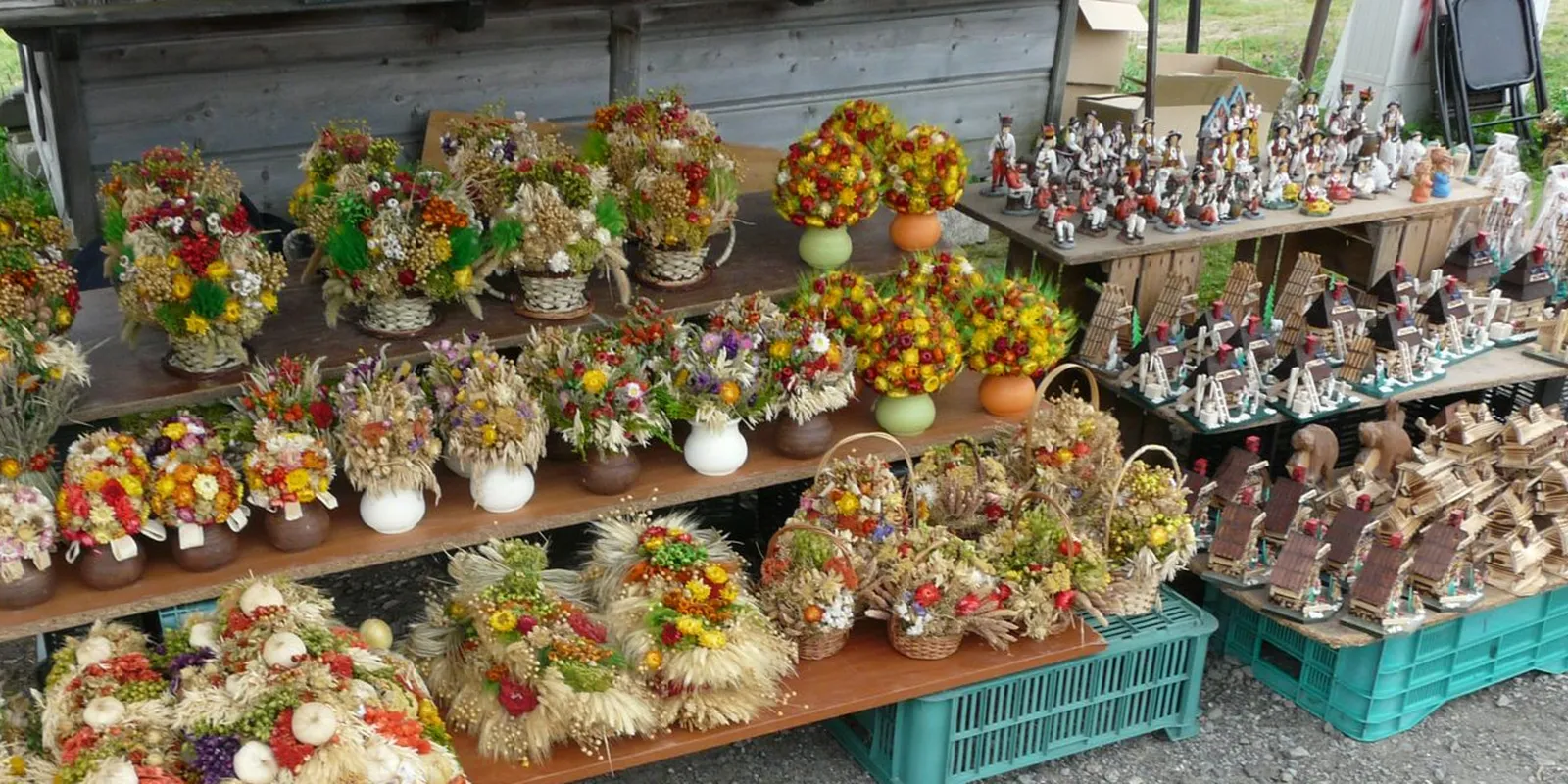
There is no infallible trick, but certain signs repeat. The first is variation: two handmade objects are never identical. The second is conversation: a seller who knows the object talks about how it is made, not just what it costs. The third is price against labour: a complex carving that costs about the same as a sandwich is hardly handmade in Poland.
Watch the labels too: «Made in Poland» does not mean «made in Podhale», and «highland style» does not mean made by a highland craftsperson. Many objects, from ciupagas to fridge magnets, come from industrial production, and the more honest sellers admit it freely. If you want something certain, look for the stall with a few well-made pieces, not the one with a thousand identical ones.
What to avoid, what to choose
Skip display ciupagas in light metal, and mugs and magnets with standard slogans: they turn up identical in every tourist town in the world. Better to spend on one thing you will really use: a pair of wool socks, a carved board, a wooden spoon, a woven blanket. If you do want a ciupaga, pick one with a well-fixed brass head and a seasoned wooden shaft, better suited to standing at home as a memento than to supporting a mountain walk.
A final note of common sense: not every souvenir deserves scorn. A painted box or a fridge magnet chosen with affection can make a perfectly good gift, as long as you know what you are buying. The point is not to pay for a mass-produced object as if it were a one-off piece.
Frequently asked questions
Can I bring oscypek home on a plane?
Usually yes, if it is vacuum-packed and kept cool, since it is a smoked, firm cheese. Within the European Union no special formalities apply. Outside the EU, check the destination country's customs rules on dairy products before you leave.
Can I take a ciupaga on a plane?
Not in hand luggage: it has a blade and will be stopped at security. You can pack it in checked luggage, well wrapped. Ask the airline before flying, because rules can vary.
Is it better to buy at the start or the end of the trip?
At the end, but not at the last minute. The first days are for looking and comparing, the last ones for buying with a clear mind. For fresh food such as cheese, choose the last morning so it reaches home in the best condition.
Can you haggle at the market?
Markets allow some bargaining, but gently and politely. A small discount on several items bought together is often accepted, while asking to halve the price of a crafted piece is seen as disrespectful.