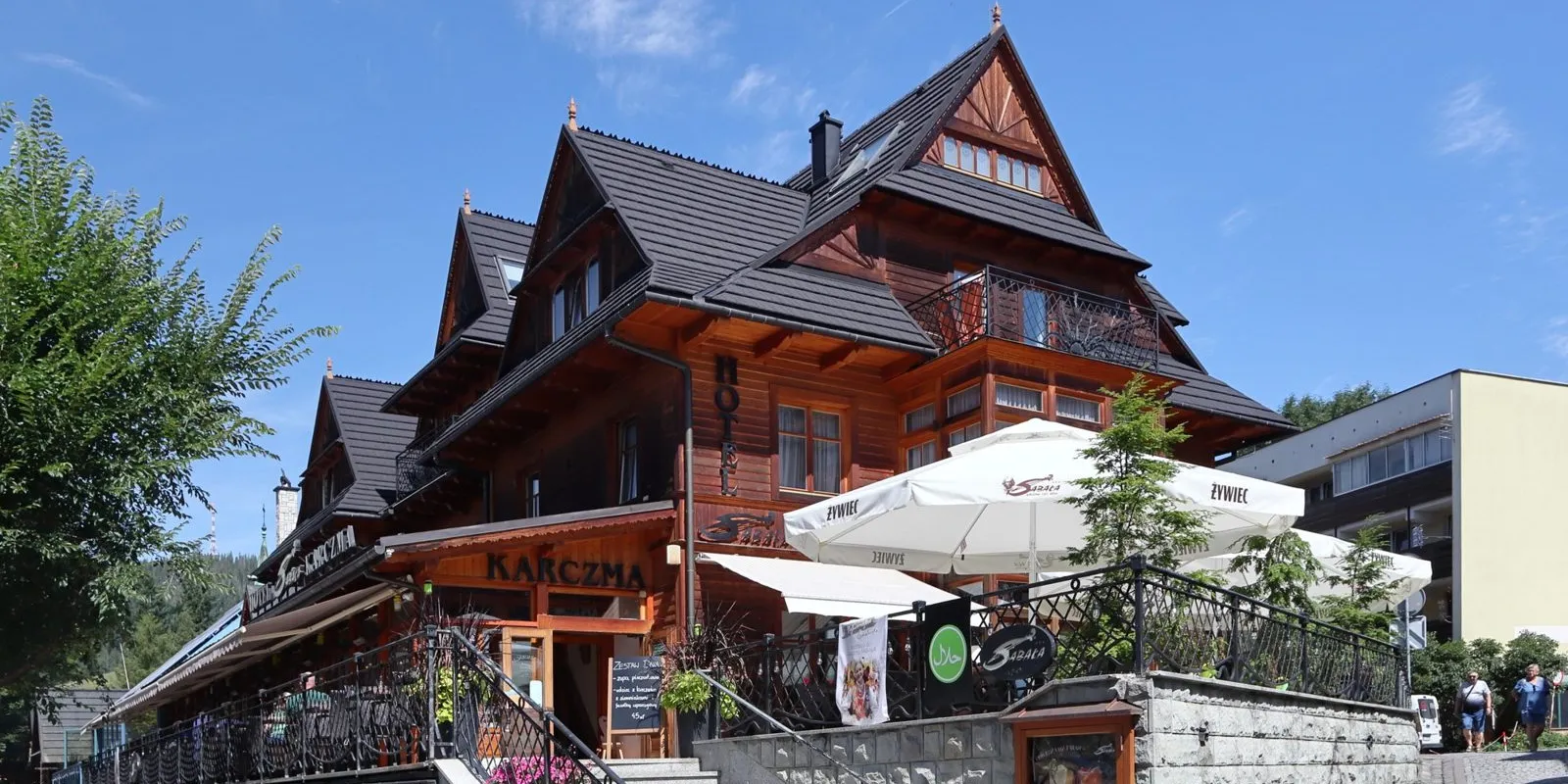
The word karczma is older than mountain tourism: in Polish it meant the roadside inn, the place where a traveller found a roof, a bench, something to eat and drink. In Zakopane the term survived and now names a restaurant in highland style, with beams, sheepskins and a crackling fire. Some are worth planning an evening around; others are stage sets for coach parties. The difference can be learned, and a few habits help you choose well.
What a karczma really is
Rural and roadside Poland knew the karczma as a resting stop, where people ate, drank and, if they wished, slept. In the Podhale the name has passed to places that evoke górale culture: the food of shepherds and woodcutters, carved decoration, music at the table. The name alone says nothing about the quality of the place. So look at substance (menu, room, clientele) more than at the sign.
The interiors: timber, fleece and details to look for
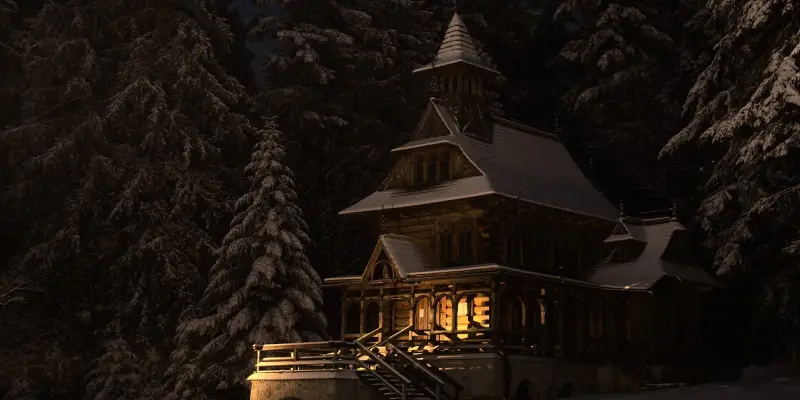
The picture is almost always the same: walls of logs or dark planks, a beamed ceiling, benches and long solid tables, sheepskins thrown over the seats. Look up and you often find ornaments from highland dress, such as the embroidered motifs on felt trousers (parzenice), the mountaineer's axes (ciupagi) on the walls, and small paintings on glass, a folk art typical of these mountains. A good place keeps a real fire or a big hearth in view, not only as decoration.
There is a practical side to the timber that visitors underrate: you sit close together, at shared tables, and what looks like folklore to you is simply a way of eating in company. Arrive unhurried, and do not expect hushed, private tables like a city restaurant.
Live music: to listen to, not to endure
Many karczmas have a kapela góralska, the small Podhale band of fiddles and bass, playing songs and dances at a quick, rough pace. One of the best-known dances is the zbójnicki, a men's dance whose name recalls the brigands of the Tatras, in which men dance with the ciupaga in hand. Musicians sometimes pull tables into it, and if you do not want to dance, a smile and a no are enough.
The problem is volume. Where the music is amplified at full power and goes on for hours, conversation becomes impossible. Before you sit down, look around: if the musicians play for the diners and not for the cameras, and if you can talk between pieces, that is a good base. With small children, or if you want a quiet dinner, ask for a table farther from the stage.
How to order and what to look for on the plate
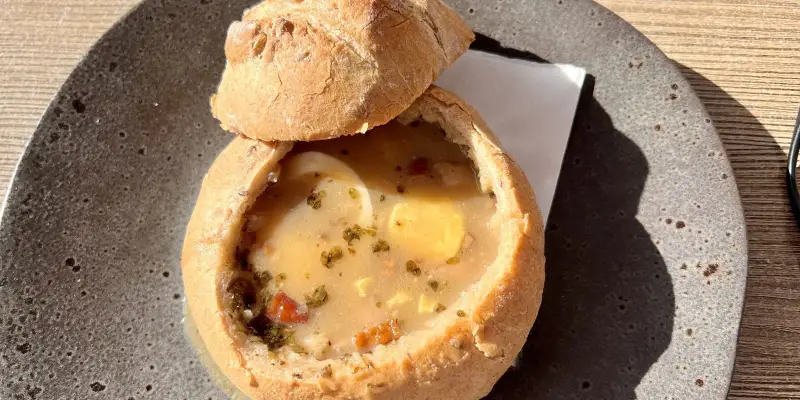
You order at the table and portions are large, so it makes sense to share: start with a soup and a couple of dishes for everyone and add later. Typical things include bread with lard and pickled cucumbers brought at the start (often charged separately, so send them back if you do not want them), soups such as kwaśnica, moskole, pierogi, grilled oscypek, trout and grilled meats served on wooden boards. The menu may name dishes in highland dialect: if you do not follow, ask the staff, who are used to questions.
You ask for the bill at the table. Leaving a small tip for good service is customary in Poland, but check whether service is already included before adding it.
How to avoid the tourist trap
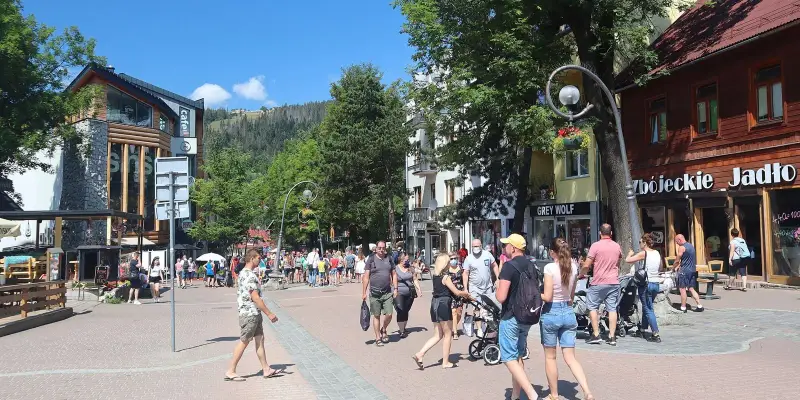
The warning signs are few and recognisable. Someone calling you in from the door, a menu in six languages with a photo of every dish, an endless list mixing Polish food, pizza and burgers, and a room filled only with organised groups all suggest a place that lives off passing trade rather than repeat custom. Position matters too: the closer to the promenade, the higher the odds, and moving a street or two away is often enough.
The good signs are just as simple: a short, coherent menu, local dishes well described, Polish customers at the tables, staff who explain without hurry. If the menu lists oscypek and says it is the protected one, that is a good sign of care. You do not need to distrust everything: a karczma with music and show atmosphere can still serve a good dinner, and sometimes folklore is exactly what you came for.
When to go and who it suits
A karczma works best at an early dinner, when staff are under less pressure, and better still after a day on the trails or on skis. It is a great choice for anyone who wants Podhale cooking in a warm, enclosed setting, for families with older children and for groups of friends. It suits less well if you want silence, a light menu or a quick meal: the cooking here is made for people with an appetite and time.
Frequently asked questions
Do you need to book a karczma in Zakopane?
At peak times and on weekends it is wise to let them know in advance, especially in a group or if you want a table near the music. Asking the place directly is the safest method, as each room has its own rules. Out of season you can usually find a seat.
Is a karczma suitable for children?
Yes, they generally welcome families, and children tend to like the music and the timber decor. The noise can tire them, and the tables near the stage are the loudest. Large portions make it easy to share a dish or order simple things such as pierogi or potatoes.
What do people drink in a karczma?
Besides Polish beer and hot tea, you often find spiced hot drinks in winter, plus regional wines and spirits. Tea with alcohol, called “with a current”, is a local speciality. If you are driving, ask for soft drinks: water is ordered separately.
Do I need Polish to order?
No, in central places staff usually speak English and the menu is translated. A few Polish words such as “dzień dobry” (good day) and “dziękuję” (thank you) are much appreciated. For dishes with dialect names just ask for an explanation.