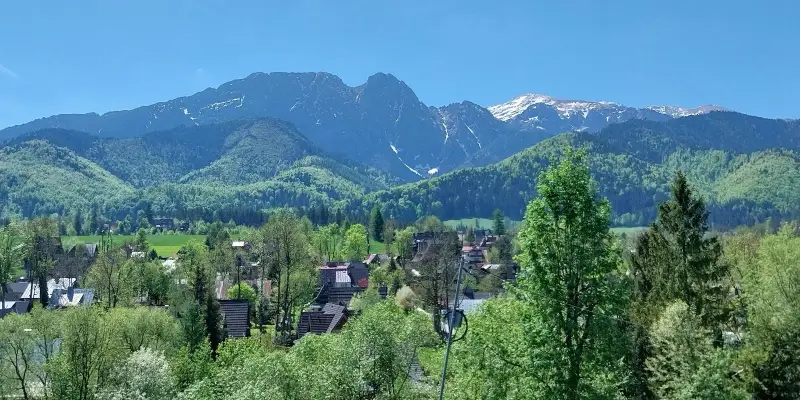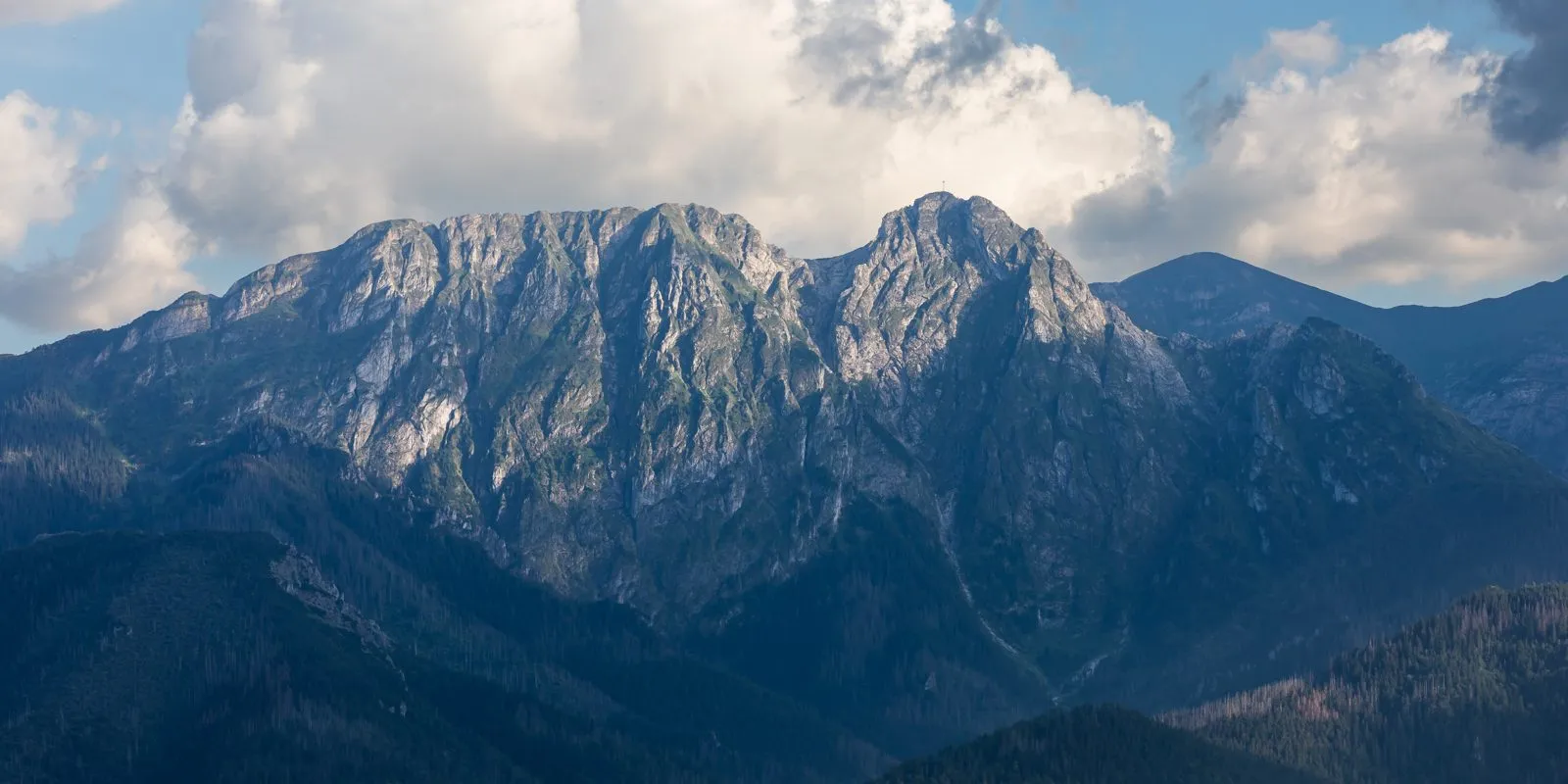
Look south from almost anywhere in Zakopane and the silhouette is there: a long line of rock that resembles a man lying on his back, with nose, chest and legs clearly distinct. This is Giewont, and for the locals it is far more than a mountain. According to one version of the legend, the knights sleeping beneath the Tatras will awaken in the hour of great danger for Poland, and they are placed right under this massif. Many caves are tied to the myth, as if the mountain had decided to guard the story on its own.
A profile you recognise from afar
The massif stretches for 2.7 km and its main summit, Wielki Giewont, stands at 1,895 m. It is not the highest in the Tatras, nor the hardest, but it is probably the most recognisable, and that has a clear effect: people arriving in Zakopane want to climb it, even if they have never hiked before. Seen from below, the shape changes with light and season: at sunset the knight seems truly asleep, and in winter he becomes a white blade.
The north faces lie in a strictly protected zone where climbing is forbidden. That explains why walkers always talk about the southern side and the marked trails, and why straying from the path is a bad idea. The wildest part of the mountain is protected precisely because the side next to it is so busy.
The iron cross on the summit
On top stands an iron cross 15 metres tall, and there is nothing merely decorative about it: for many it is a pilgrimage destination, and the climb is a small rite of passage for people from the area. Seen from below, it gives the mountain its unmistakable character, a small vertical in the knight's profile.
The cross, however, is also the reason Giewont must be treated with respect. In a thunderstorm the summit is a dangerous place: in 2019 a lightning strike killed four people and injured more than a hundred. This is not a detail to skim over. The rule here is do not climb when storms are coming, and stop or turn back if the sky changes during the walk.
The trail from Kuźnice, step by step
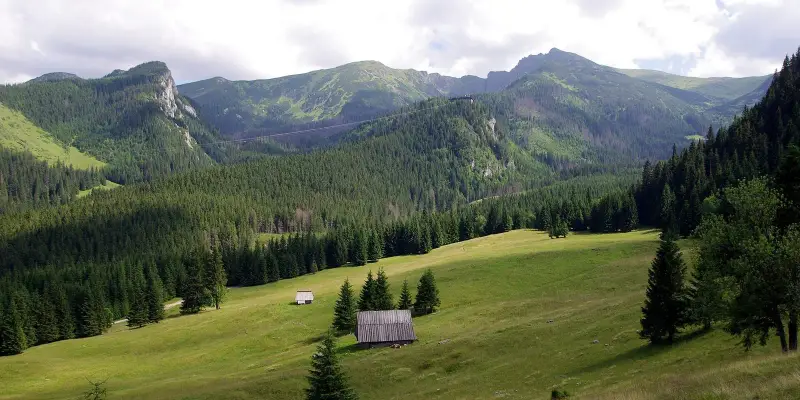
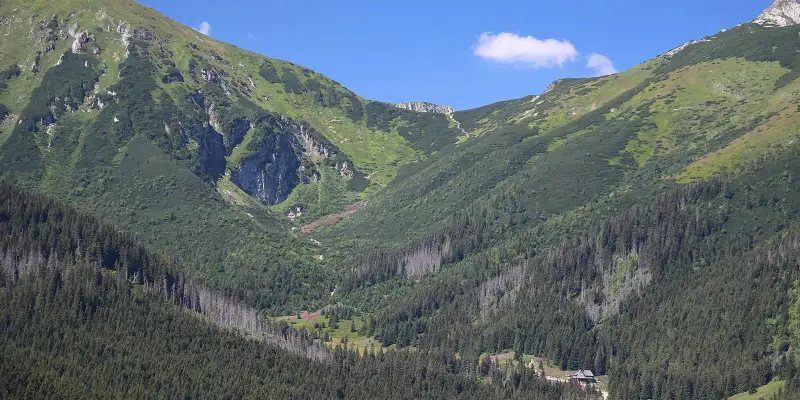
The most popular route starts at Kuźnice and follows the blue trail via Kalatówki and the Dolina Kondratowa up to the Kondracka Przełęcz. It takes around three hours to get there, and from the pass you continue towards the cross. Forest, then meadows, then rock: you can tell from the scenery that altitude is building and that this is not a stroll.
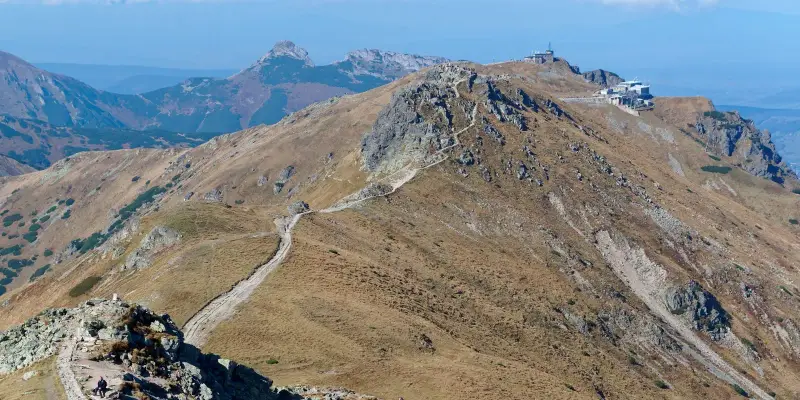
The last stretch, beyond the Wyżnia Kondracka Przełęcz, is equipped with chains, with a one-way system uphill in season. On peak days there is a queue, and the risk is less technical difficulty than waiting in an exposed spot, with people climbing in unsuitable shoes. If you are not used to exposed passages, take your time to judge calmly, and turn back without shame. Trail conditions change through the season, and it is unwise to promise yourself it will be “easy”: ask on the spot before setting out.
How to prepare, and when to give up
In practice the danger on Giewont is not the rock but the weather. Summer storms in the Tatras tend to arrive in the afternoon, often after a clear morning, and up there there is nowhere to shelter. That is why the timing rule matters: start early, be on top with plenty of time to spare and already descending when the sky starts to build. Check the forecast before leaving, and again on the way up if there is signal.
Minimum equipment: mountain shoes with a lugged sole, a waterproof and windproof jacket, water, food, and a headlamp in case the day runs long. Walking in the park at night is not allowed, so a late climb means a descent in the dark. In an emergency call 112 or the mountain rescue service TOPR on 985.
Who it is for, and who it is not
Giewont is for those with good stamina, proper shoes and a whole day to spare; for those who want to touch the mountain they have been watching from their window. It is not for anyone alarmed by chain sections, nor for days with doubtful forecasts, nor for those who think trainers will do. If you want something gentler, you can admire it from a walk across the meadows on the edge of town, or from a side valley, and understand without effort why people call it the knight.
The legend says the knight will wake when he is needed. The real mountain asks something simpler, to be respected: if you reach the top under a good sky, the cross and the valleys beneath you do the rest, and the queue at the chains becomes a memory.
Frequently asked questions
Where is the knight's profile best seen from?
The profile is recognisable from Zakopane and the meadows around it, looking south, with low light in the morning or at sunset. The shape depends on the viewpoint, so it is worth trying more than one spot.
How long does the climb from Kuźnice take?
To the Kondracka Przełęcz it takes about three hours, and the last stretch towards the cross is chained. Allow for the return and a margin for queues, especially on peak days.
What should you do if a storm arrives during the climb?
Stop climbing and head towards lower, more sheltered ground, avoiding the cross and the chains, which attract lightning. In danger call 112 or TOPR on 985, and keep away from isolated spots and ridges.
Is Giewont suitable for children?
It depends on age and fitness: the trail is long and the last stretch has chains and exposed passages. With small children choose a shorter outing nearby, and consider Giewont only for teenagers used to the mountains.