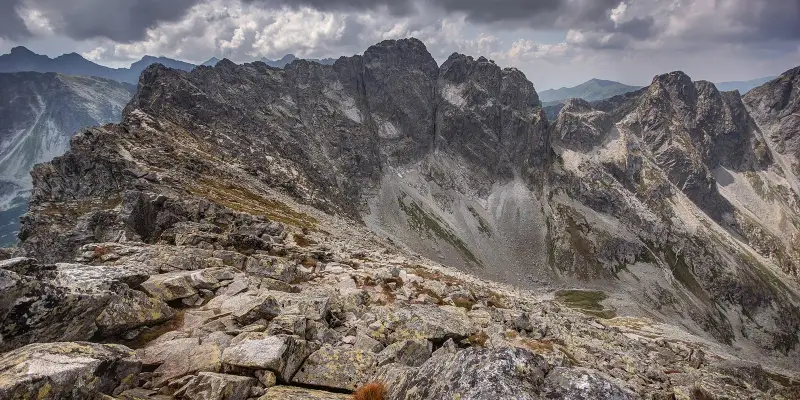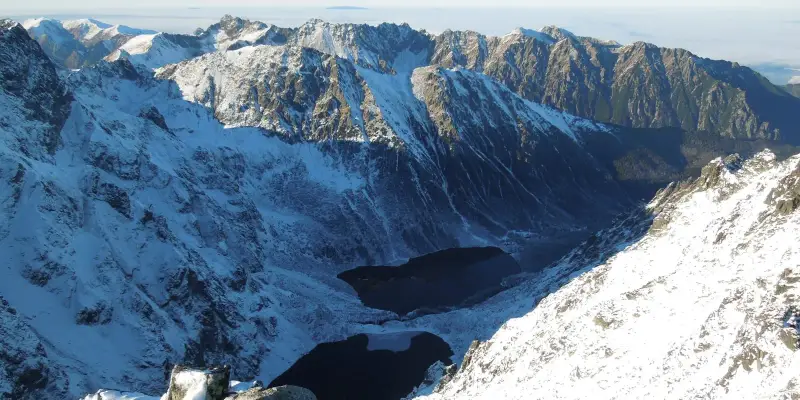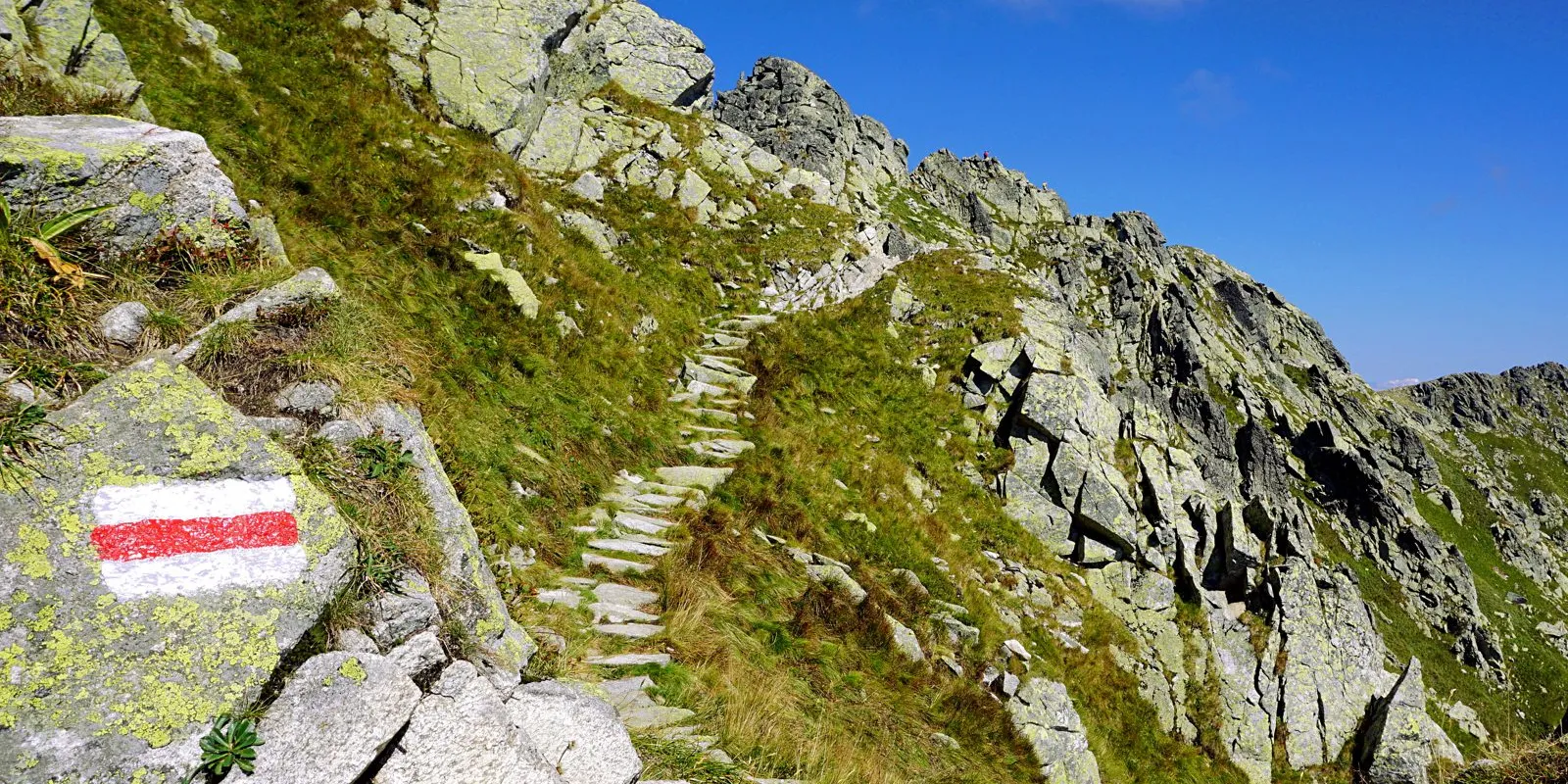
Before it was a trail, the Orla Perć was a letter. In 1901 Franciszek Henryk Nowicki wrote to the Tatra Society proposing a route along the highest ridges of the Polish Tatras, and the Society worked on it for several years with the priest Walenty Gadowski and local helpers. The result, the «Eagles' Path», is still considered the hardest hiking route in the Tatras: more than four kilometres of ridge, chains, stirrups and empty space, with no tolerance for mistakes.
A trail laid out by hand above two thousand metres
The route was marked between 1903 and 1906 and runs for about 4.3 kilometres from Zawrat to Krzyżne, via Kozia Przełęcz, Kozi Wierch and the Granaty. It is not a stroll along a crest: it is a protected route with chains, stirrups and two steel ladders that take you up walls, chimneys and ledges. On Orla Perć the fixtures are an aid, not complete protection. Chains and stirrups do not replace the caution and skill of the person climbing.
That is why many mountaineers and rescuers advise treating it like a via ferrata, with the right equipment and the ability to move safely on exposed ground. The difficulty is not only the rock but the whole package: altitude, drop, length, weather.
What «exposed» really means here
On an exposed section a slip does not mean falling a metre. On Orla Perć the drop is real, often a few steps from the path, and the hardest points are around Zawrat and Kozia Przełęcz. Anyone prone to vertigo finds out immediately, and sometimes too late, once they are far from any way out.
Another feature is traffic control. The section between Zawrat and Kozi Wierch is one-way, heading east, to avoid meetings where there is no room for two: the rule has applied since 2007, is signed on the ground and must be followed to the letter. The part beyond Krzyżne towards Polana pod Wołoszynem has been closed since 1932 to protect the environment. Temporary closures are also possible, so check the state of the trail before you set out.
What you need to walk it
The reference time in summer conditions is six to eight hours for the route itself, not counting the approach and the descent. You need excellent fitness, a head for heights, mountain experience and some coolness. A via ferrata kit with harness and lanyard is advisable, because chains are a help and not a guarantee, and a helmet is essential: above you there are other people and more rock.
A short list of what must not be missing:
- A helmet, harness and via ferrata lanyard
- Boots with a stiff sole and good grip
- Water, food, warm layers and rain protection
- A carefully checked forecast and a very early start
With rain or wet rock, and even more with a risk of thunderstorms, the right answer is to turn back. Storms on a ridge are among the gravest dangers in the Tatras, and at that height there are no quick escape routes.
Who should skip it, and what to do instead
If you have never done a protected route, have little mountain experience or suffer from vertigo, do not do Orla Perć. It is not a question of pride: this is a place where one person's mistake can become a rescue operation for everyone. A good way to approach it is to start with shorter trails and simpler protected sections, perhaps with a mountain guide, and decide calmly whether you really enjoy it.
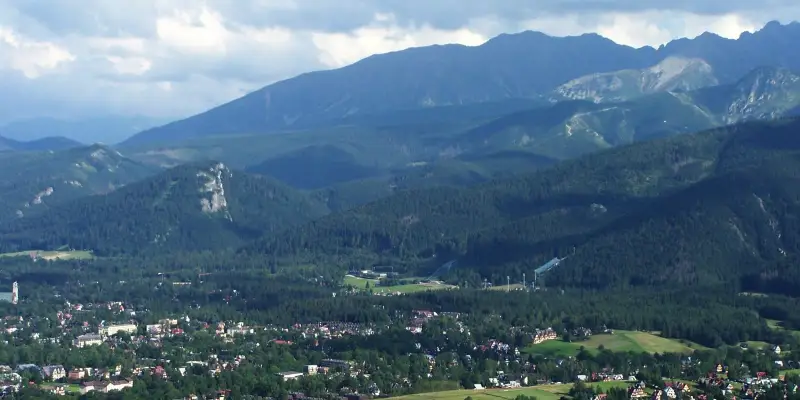
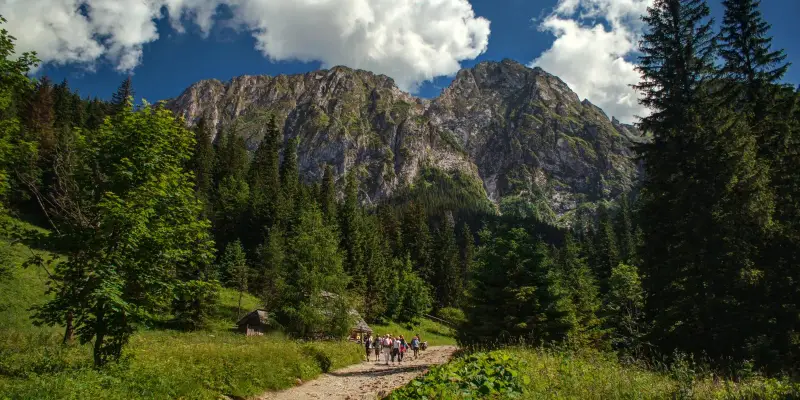
To see the Tatras from above without the drop, the valley and basin trails and the routes to huts, lakes and clearings give powerful views with far less risk. The summits and ridges can wait: Orla Perć has existed for over a century and will still be there in a few years, when you have the experience.
Anyone who decides to tackle it does so knowing the mountain gives no credit. It is worth saying, because many photographs online make everything look simpler than it is: at that height only preparation, weather and the ability to turn back when needed count.
Frequently asked questions
Who came up with Orla Perć?
The idea came from Franciszek Henryk Nowicki, who proposed it in a letter to the Tatra Society in 1901. The Society then marked the trail between 1903 and 1906 with the priest Walenty Gadowski and some local helpers, and it became known as the «Eagles' Path».
How long is Orla Perć and how much time does it take?
The main section is about 4.3 kilometres, from Zawrat to Krzyżne, via Kozia Przełęcz, Kozi Wierch and the Granaty. In summer conditions it generally takes six to eight hours, not counting the approach and the return to the valley, so plan on a full day.
Can I do Orla Perć in winter?
It is not advisable for anyone without specific mountaineering training. With snow, ice and avalanche risk the difficulties rise sharply, and the chains lose part of their usefulness. Before any winter outing check the TOPR bulletin and ask someone who knows the area about current conditions.
What should I do in an emergency on the trail?
Call 985, the number of the Polish mountain rescue TOPR, or 112, valid across the European Union. Calmly give your position, the number of people and the condition of anyone injured, and stay where you are until you get instructions. In the mountains the signal may be missing.