Town itinerary
With children in town: the upside-down house, the snow maze and Krupówki
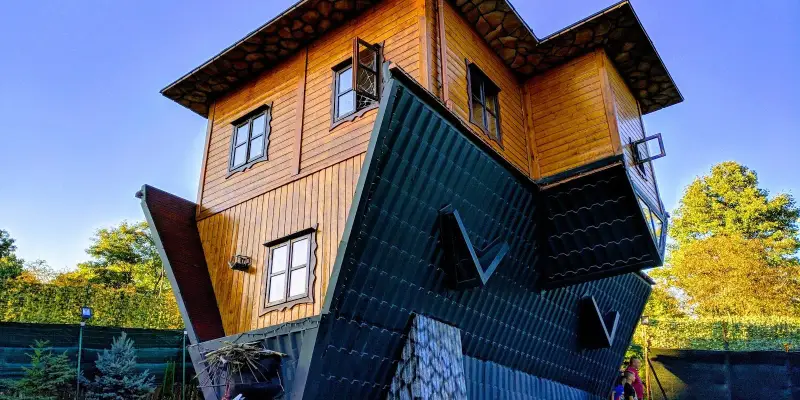
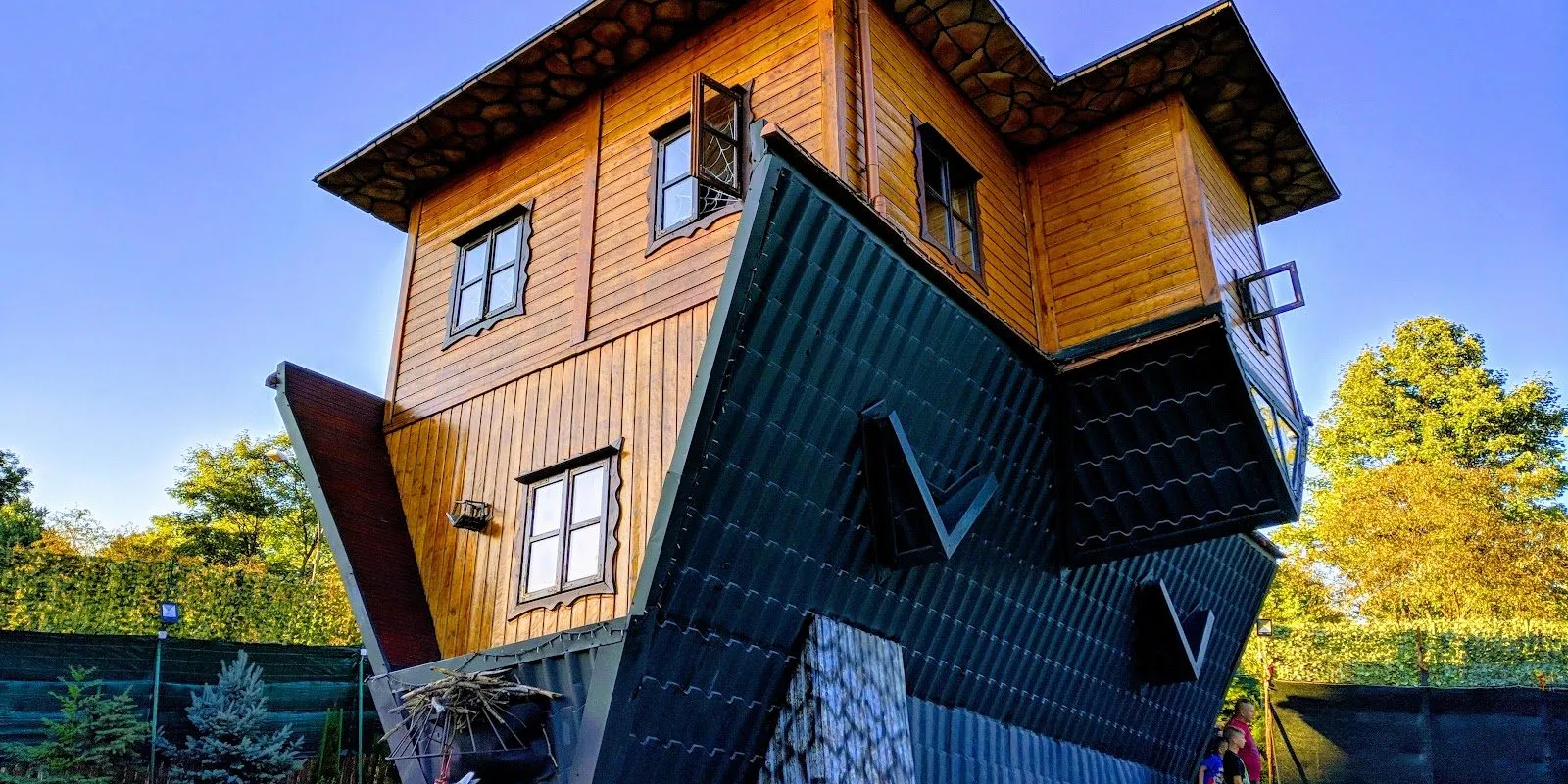
In this house the stairs do not lead to the floor above but to the one below: the Dom do góry nogami, at Aleja 3 Maja 7, rests on its roof and is tilted, so the furniture seems to hang from the floor and you walk where the ceiling normally is. It is not a historic building but an entertainment attraction, one of several houses with the same concept scattered across Polish seaside and mountain resorts; here the theme is góralski, that is, highlander. The idea comes from afar: one of the first upside-down houses was built in 2007 at Szymbark, in Pomerania, and the workers had to take frequent breaks because the unnatural angles of the walls disoriented them. The reason is that sight and gravity usually agree on where up is, whereas in a tilted, well-furnished room the brain gives more weight to what it sees. Sensitive visitors may feel slight dizziness or a touch of nausea: move slowly and do not linger. The visit is generally short, not a half-day outing.
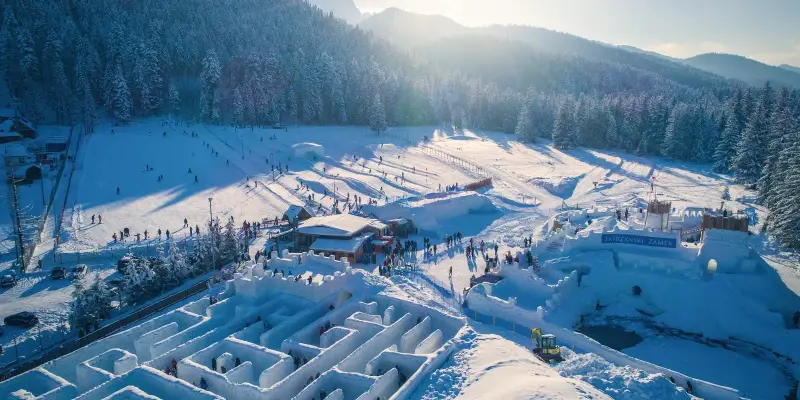
Further south, at the foot of the Wielka Krokiew imienia Stanisława Marusarza, every winter someone builds a maze that exists for only a few months. Snowlandia was first built in the 2015/2016 season: a course of white corridors designed for getting lost and found again. Making the artificial snow and raising the walls takes about two months, and only in sub-zero temperatures, so the maze is strictly seasonal: it depends on the frost, not on the calendar, and when winter ends it disappears. The area also has an igloo with snow and ice sculptures, a small sledding hill and, next door, the Tatrzański Park Edukacyjny, a small educational zoo. Bring waterproof shoes with a good sole, and keep little ones by the hand in the dead ends.
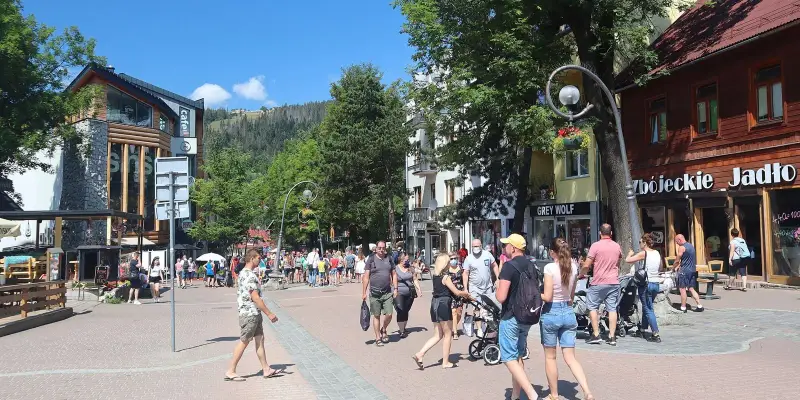
The third stop is Krupówki, which exists because there was an ironworks at Kuźnice: the road was laid out to connect the village to the workshops. Today it is a pedestrian street, closed to cars and bicycles, just over a kilometre long. For children the programme writes itself: the tilted lampposts are shaped like shepherds’ crooks, there are horse-drawn carriages, and there is the white bear, which is not a statue but a person in a sheepskin costume. The tradition began in 1922, when the photographer Henryk Schabenbeck ordered the first costume from a furrier. From some points along the street you can see Gubałówka and Giewont, and at number 10 stands the Tatra Museum in Zakopane, one of the few brick buildings in the Zakopane style.
The most convenient order is this. Start on Aleja 3 Maja, where Krupówki ends and the Dom do góry nogami stands; in winter go on to Snowlandia; return to the centre and walk down Krupówki, which climbs from the junction of Nowotarska and Kościeliska streets towards Aleja 3 Maja, so it is downhill, for tired feet. Outside the cold season the maze is not there and the day gets shorter, but it holds up with the house and the street. To beat the high-season crowds, climb Krupówki early in the morning. The Dom is also a good idea on a rainy afternoon, when the trails are not the best choice.
Good to know before you go
- The stops are not all a short step apart: the Dom do góry nogami stands where Krupówki ends, while Snowlandia lies further south, below the Wielka Krokiew imienia Stanisława Marusarza; with small children, allow for a bus or a taxi between them.
- Snowlandia is strictly seasonal: it exists only when the frost allows snow to be made, so check on the official website that it is open before planning the day.
- The Dom is a short stop and can cause slight dizziness: sensitive visitors should move slowly and not prolong the visit.
- Waterproof shoes are needed for the maze, and in high season Krupówki is crowded: keep the little ones by the hand.