The dog that follows you up every path in the Alps stops at the gate in the Polish Tatras. Tatrzański Park Narodowy, which covers most of the Polish side of the range, bans dogs on the great majority of its trails, and the rangers do check. It is the first thing to know before booking a trip with an animal, because it changes the kind of holiday you will have: with a dog, Zakopane means a lot of walking, but almost always outside the park.
What the park rule actually says
The principle is simple: dogs are not allowed in the park, to protect chamois, marmots, bears and the rest of the wildlife, which reacts to the smell and the barking of even a leashed dog. The exceptions are few and specific: the Droga pod Reglami, the path running along the foot of the mountains, and the floor of the Chochołowska Valley up to the hut, always on a lead, are the ones usually mentioned. They match what appears in park materials, but rules are updated and the valley is partly owned by a local community, so check the park's official website or the entrance signs before you set out. The ban concerns bringing a dog into the park, and the only other exceptions in the law are assistance dogs for people with disabilities and rescue dogs.
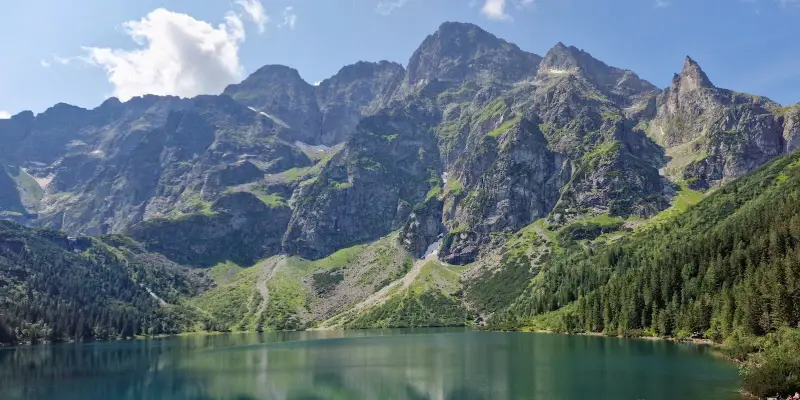
If your plan was to reach Morskie Oko or a summit with the dog, this is the moment to change the plan. Otherwise you will have to leave the dog behind, and leaving it alone in a car or a room for hours is no solution.
Where to walk outside the park
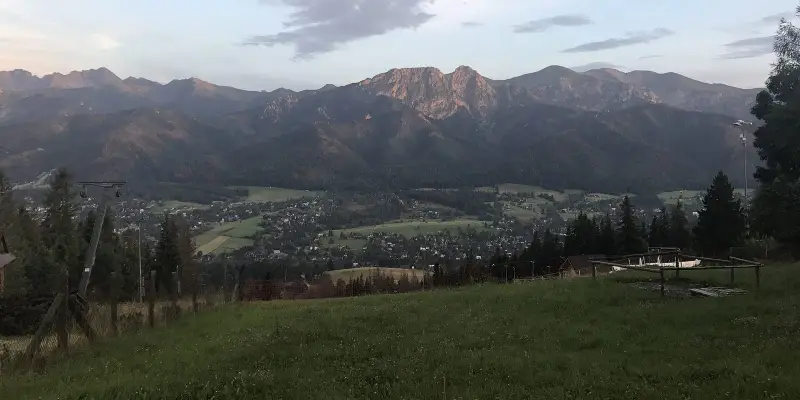
The good news is that the mountains do not end at the park boundary. Gubałówka, the long ridge above Zakopane, gives you a view of the Tatra chain without the park's restrictions: a walk along the crest, through meadows and timber chalets, is the natural choice for a dog used to walking. The best-known stretch is crowded in the middle of the day, so go early or late afternoon, or simply move away from the funicular top station.
Around town there are the meadows and woods of Podhale: paths between wooden villages, farm tracks across pastures, low hills with the Tatras as a backdrop. The side roads of the villages are easy and usually quiet. For longer outings outside the park, ask locally: routes change with season and weather, and those near the park edge can run beside restricted ground without an obvious sign.
Krupówki and town life on a lead
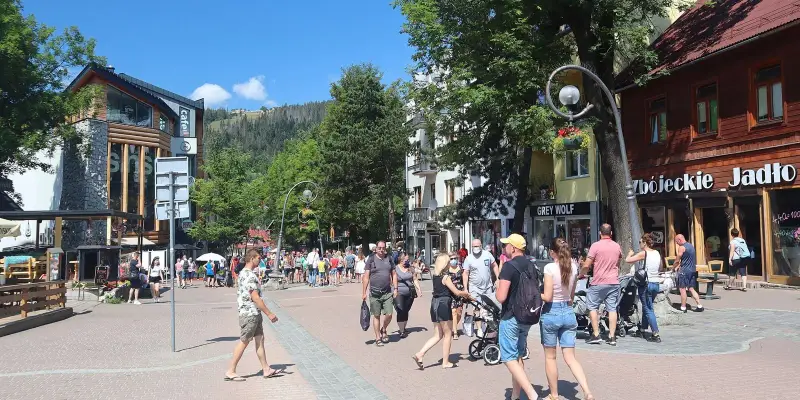
Krupówki, the main street, is a river of people, music and stalls, and not a relaxing place for a dog that dislikes noise or crowds. Go early in the morning or late in the evening, on a short lead. Cafés, terraces and shops set their own rules, so ask before going in: some tolerate dogs and some do not. The same applies to public transport and lifts: conditions vary, and it is worth asking the operator before counting on taking your dog aboard.
Flocks, heat and other cautions
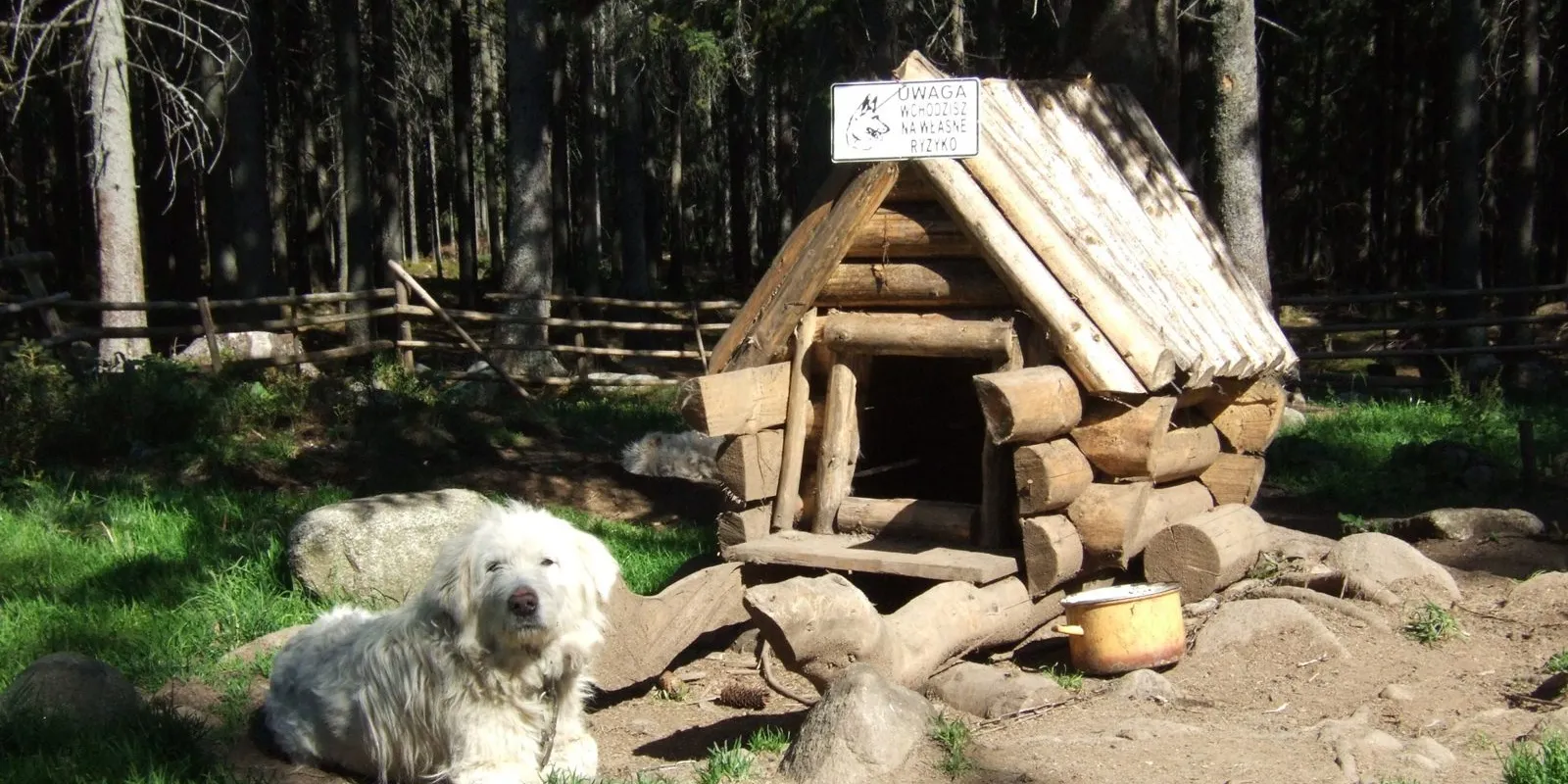
Pastures in Podhale are working land, and flocks are often watched by the Polish Tatra Sheepdog (owczarek podhalański), the big white guardian dog of the region, which takes its job seriously. If you meet sheep, keep your dog on a lead, walk a wide circle around the flock and do not approach the guard dogs: they are there to defend livestock, not to play. The same goes for grazing cattle in general.
In summer the heat is felt even at altitude, and valley asphalt burns paws: carry water and a bowl, choose the cool hours and never leave the dog in a car, not even for a few minutes. In winter, frozen snow and road salt can irritate paw pads. Check for ticks after any walk through meadows, and always pick up after your dog, in villages and on paths alike.
Planning the trip
Before you book a place to stay, ask explicitly whether dogs are accepted and on what terms, because policies differ from one place to the next. Bring the health record and check the microchip and entry requirements for Poland from your own country. On the days you want to enter the park without the dog, decide beforehand who stays with it: travelling as a pair and taking turns is the easiest solution. A holiday with a dog in Zakopane works well if you accept the change of programme: fewer summits, more ridges, meadows and slow afternoons.
Frequently asked questions
Can I take my dog to Morskie Oko?
No, the Morskie Oko trail lies inside Tatra National Park, where dogs are not allowed apart from the few exceptions the park lists. With a dog, it is better to pick destinations outside the park, or arrange for the dog to stay somewhere that accepts it.
Can I leave my dog alone in the room?
It depends on the accommodation and on the dog, so ask before booking. Leaving a dog alone for many hours, especially one that barks, is a bad idea and may disturb other guests. If someone enters the park, it is better to plan shifts.
Do I need documents to bring a dog into Poland?
Usually yes: a microchip and a health document showing rabies vaccination. Requirements depend on your country of origin and current EU rules, so confirm them with your vet shortly before departure.
What should I do if I meet a sheepdog?
Stop, keep your dog on a lead and move slowly away from the flock, keeping your distance. Guardian dogs protect the livestock and may react badly to a stranger approaching, so do not run and do not try to pet them.