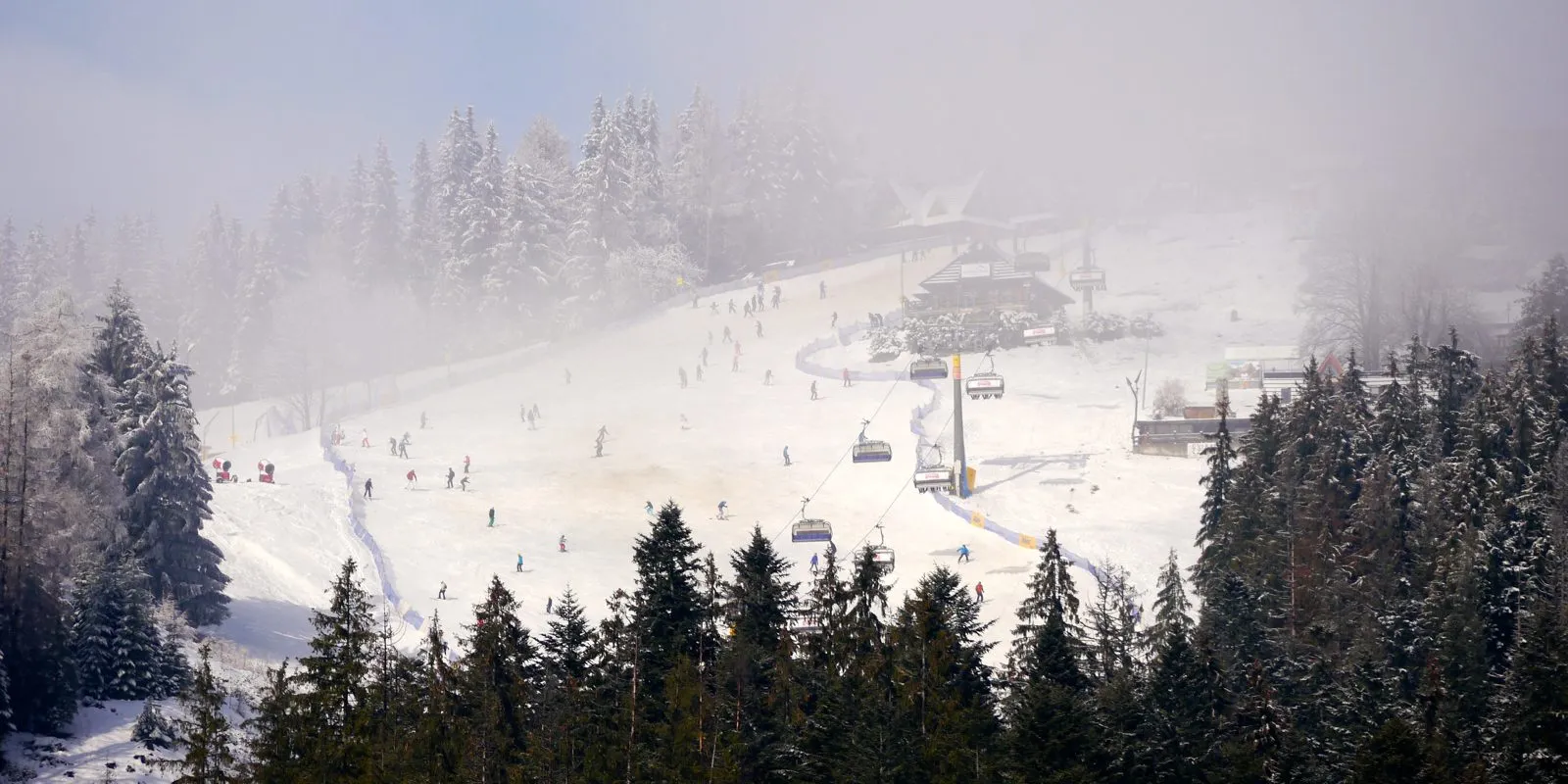
Snow falls in Zakopane on roughly 179 days a year, and average maximum snow depth tops 90 centimetres in February and March: winter here is not an exception but the reference season. The cold record, set on 1 February 1956, is −34.1 °C, while January lows average around −7. With numbers like these, Zakopane in winter offers much more than skiing, and it pays to tell what is truly worth your time from what is mere scenery.
The kulig: the horse-drawn sleigh
The kulig is the quintessential winter tradition of Podhale: a horse-drawn sleigh crossing snowy meadows and woods, with sheepskin blankets over your knees and often a final stop around a fire. The best versions are the simple ones, with a few minutes of silence broken only by bells and hoofbeats while the Tatras turn pink at sunset. It works above all for families and couples, and is lovely even for people who do not care for physical activity.
To choose well, look at the animals before climbing aboard: horses in good condition, properly covered and not worn out by work are the first sign of a serious operator. Overloaded sleighs and rushed rides are a bad sign. The evening kulig with a fire is more atmospheric but also colder: bring extra layers, especially for legs and feet, which freeze first when you sit still.
Snowmobiles on the snow: what to know first
The snowmobile is the noisiest winter offer and divides those who try it. It can be fun for a group of friends, but be realistic: the ride is often short, the route fixed, and the experience much the same from one operator to the next. Above all, motor vehicles are banned off the roads in the Tatra National Park, so rides take place on land outside the park, often near the valleys. Anyone seeking the silence of the mountains will be disappointed.
If you decide to try it, check that a helmet and clothing are provided, that it is clear who drives and who rides, and that the operator is insured. If something does not convince you, skip it: here one ride fewer is no loss.
The bonfire and the evening on the snow
The ognisko, the bonfire with a sausage on a stick, is probably the simplest and most successful activity of the whole Polish winter. It is often offered with the kulig, in a clearing or beside a hut, and works because it needs nothing special: wood, fire, something hot to drink. It is a great reason to go out in the evening with children, who usually remember the fire more than any ski run.
Watch for the classic traps: «all-inclusive» packages that promise a lot and then shrink to twenty minutes, music so loud it drowns the atmosphere, enormous groups. Ask beforehand how many people will come and how long you will really stay by the fire. A small group is worth more than any long menu.
Snowlandia and activities for children
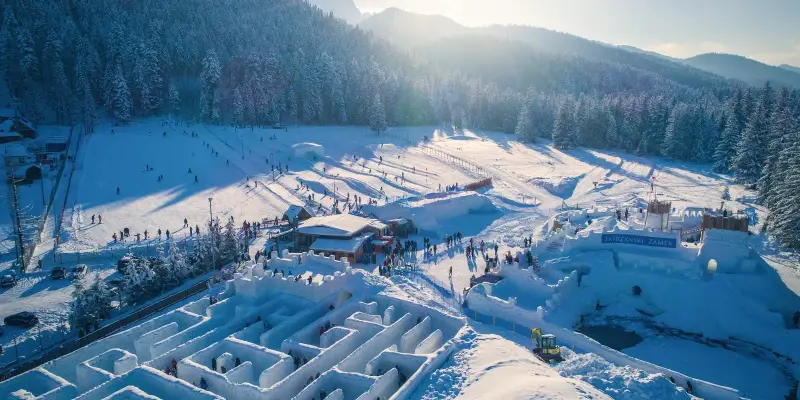
Below the Wielka Krokiew ski jump, next to the national park, stands Snowlandia, a snow labyrinth first built in the 2015/2016 season and, according to its own website, the only one of its kind in Poland. Building it takes about two months and sub-zero temperatures, so it is a seasonal work that vanishes with the end of winter. The site also lists an igloo with sculptures. It is a light activity, perfect for children and for half a day of play without effort.
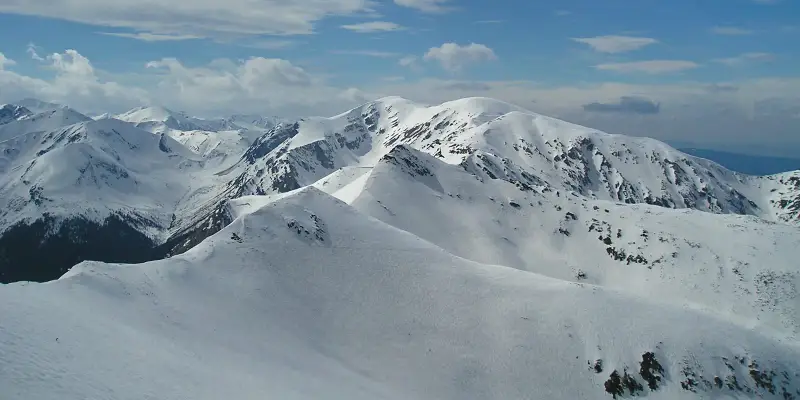
For a more contemplative day, the Chochołowska Valley in winter is a fine alternative: the longest and largest valley on the Polish side of the Tatras, about 10 kilometres long, usually with a trodden track and wide meadows. As always in the mountains, conditions change: ask locally about snow, ice and avalanche risk, and remember that the park does not allow walking the trails at night, from dusk to dawn, all year round; exact hours can change, so check the park's website before you set out.
What to pack and what to avoid
Clothing makes the difference between a pleasant winter and an unbearable one. Nothing extreme is needed, but it must be well thought out:
- Layers: thermal top, fleece and windproof jacket, to take off and put on.
- Waterproof shoes with a sole that grips ice, or slip-on spikes to add on the streets.
- Spare gloves, hat and neck warmer, since they get wet in snow.
- Sunglasses: the glare of snow tires the eyes even under cloud.
Among things to avoid, the first is over-planning: winter days are short, darkness comes early and cold drains energy. Two activities a day are enough, with a warm break between. The second is safety: faced with ice, fresh snow or strong wind, giving up an outing is not defeat. For emergencies, 112 and TOPR (985).
Frequently asked questions
When is the best time to see Zakopane in the snow?
Midwinter, between January and early March, when the snow cover is deepest and most stable. December is atmospheric but snow cover can be less reliable, while by late March snow in town tends to retreat. Conditions vary a lot from season to season.
What shoes do I need for walking in town in winter?
Waterproof boots with a lugged sole, preferably lined. Streets and pavements ice over, and smooth soles are the most common cause of falls. When ice persists, slip-on spikes for your shoes are very useful and light to carry.
Is a horse sleigh suitable for small children?
Generally yes, provided they are well wrapped: blankets help, but sitting still feels colder than walking. For the youngest, choose a short ride in the middle of the day, with a hot drink on hand.
Can I do a winter hike without a guide?
On the simplest, well-trodden routes usually yes, but check snow, ice and avalanche conditions before setting off. At higher altitude, winter equipment is required. If you lack experience, a mountain guide is the sensible choice.