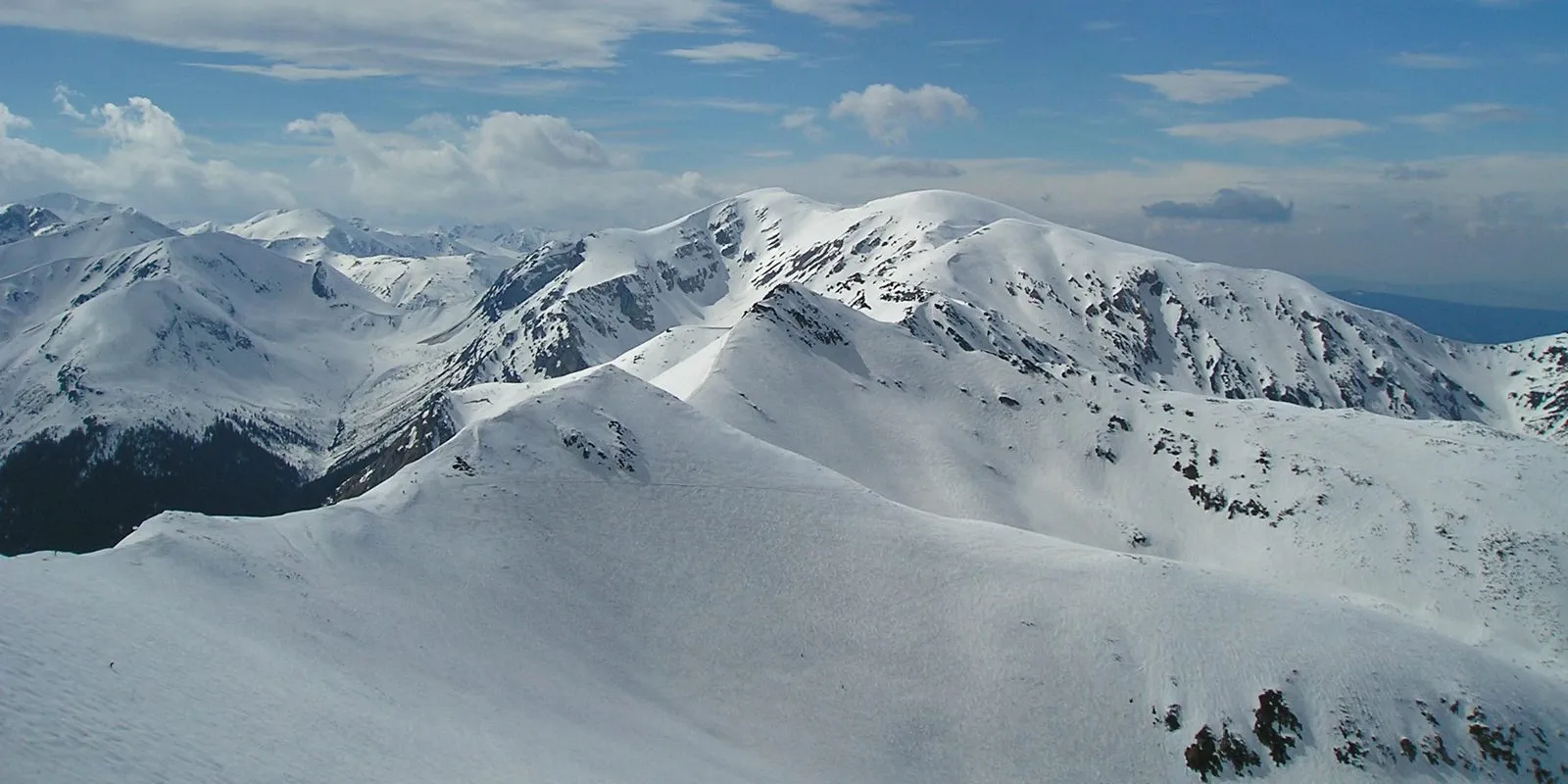
The Kasprowy Wierch cable car was built in about eight months between 1935 and 1936, and it still lifts skiers to a summit that sits exactly on the border with Slovakia: at 1,987 metres, the southern slope already drops into another country. It is a good way to see that skiing in Zakopane does not mean one resort but a mosaic of very different areas, from the severe high-altitude slope to gentle runs where children learn the snowplough.
Kasprowy Wierch: the area for experienced skiers
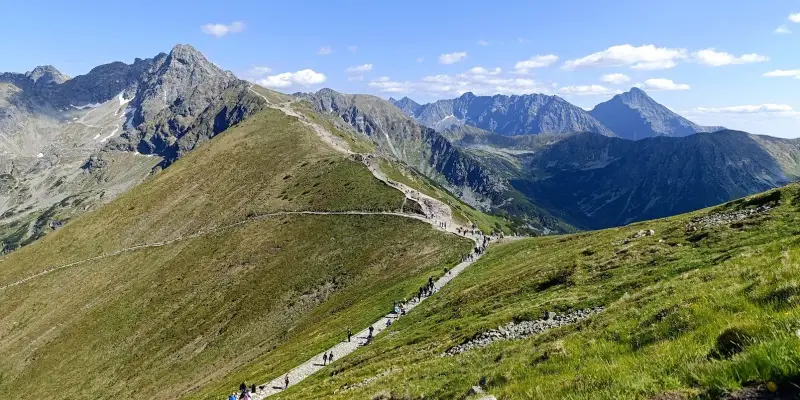
From the Kuźnice station the cable car climbs towards the main Tatra ridge, and up there the mountain changes character. The runs at Kasprowy are Goryczkowa and Gąsienicowa, two steep descents meant for experienced skiers. They are not as long as in the big Alpine resorts, but the gradient and the high-mountain setting demand solid technique and fitness.
One thing must be said seriously: here the weather changes fast and altitude is unforgiving. Wind, fog and ice can turn an easy descent into a problem, and off the prepared runs the rules of winter high mountains apply, avalanche risk included. If you are unsure of your level, choose another area and come back to Kasprowy later. Mountain rescue is TOPR (985), and 112 works everywhere.
Gubałówka and the runs for learning
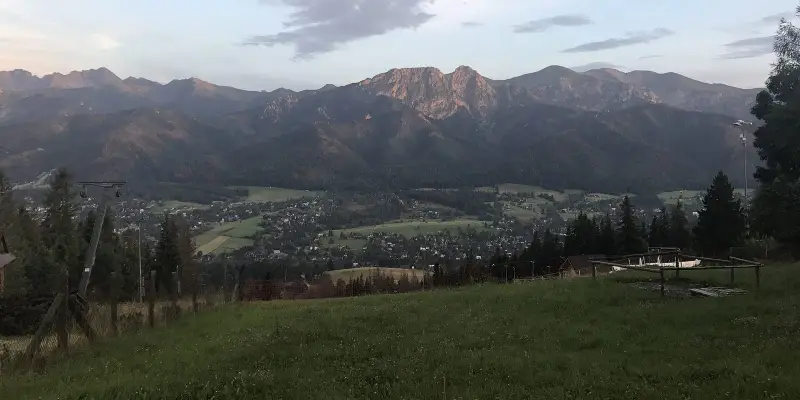
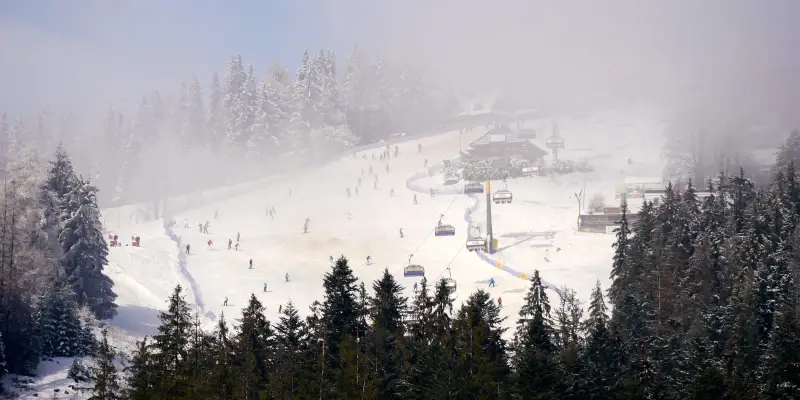
Gubałówka is the hill north-west of town, at around 1,120-1,129 metres, and since 1938 a funicular 1,298 metres long, rising about 300 metres, has climbed it. For skiing it is the gentle alternative: shorter, softer slopes suited to beginners, families and anyone returning to skis after years. The advantage is not only the slope but the view: from the top you see the Tatras, Zakopane, Podhale and, on clear days, the Slovak mountains too.
Its small size is also an honest limit: anyone seeking long descents and variety gets bored quickly. As a first trial day, or a quiet day in the middle of a more demanding week, it works very well. The advice is to go in the morning, when the snow is firmer and the fog has already lifted, and leave the afternoon for a walk along the ridge.
The smaller areas around town
Beyond the two main names, the Zakopane area is dotted with smaller lifts, often with one or two runs and a few drag lifts, such as those on Nosal and Harenda, close to the centre. They are made for people who want a couple of hours on skis without organising a whole day: handy for children and, where offered, for evening sessions. Further away, around Białka Tatrzańska and Bukowina, you find larger ski areas, often with a wider choice of runs for those who want to cover kilometres rather than short descents.
The practical criterion is simple: choose according to the group's level, not that of the best skier. With companions of different abilities it makes more sense to split the day, part in one area and part in another, than to push someone onto a slope that makes them uneasy. Ask locally which lifts are running, because in some seasons snow cover decides a great deal.
Schools, rental and getting organised
If you have never skied, or only rarely, the choice is easy: a ski school, with qualified instructors who speak several languages and often work on the easy runs. Schools offer private or group lessons and are usually close to the lifts. For those who do not want to carry equipment, rental is widespread in town and at the resorts, including gear for children. You can try boots in the shop and swap them if they hurt: boots are the most important item, more than the skis.
A good order of play: rent the evening before, so you do not lose the morning in a queue, and take the lesson in the first hours, when the snow is better and beginners are fresher. A helmet is recommended for everyone and required for children at many lifts; either way it is a small investment compared with a fall.
How to choose, and what not to underestimate
A reasoned choice sums up like this: Kasprowy Wierch for the experienced, Gubałówka for learning, the larger areas for those who want kilometres. Add a factor that counts here more than elsewhere, altitude and climate: Zakopane has snow on about 179 days a year, but snow quality changes from season to season, and January's sub-zero averages call for proper clothing.
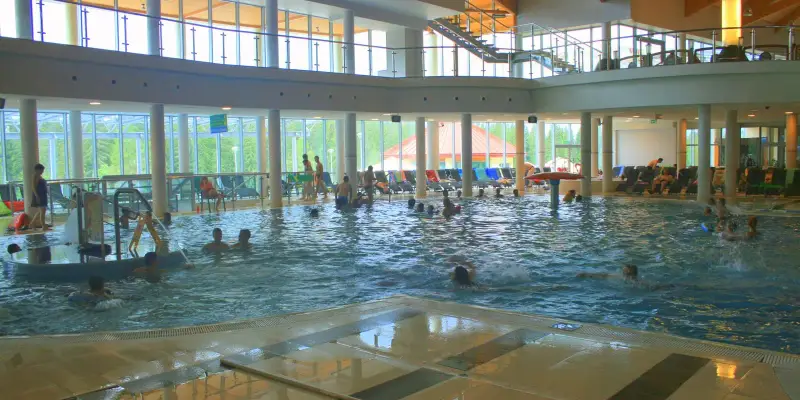
Finally, the rest of the day. Once the skis come off, the town offers plenty: thermal pools for tired muscles, dinner in a highland inn, the Wielka Krokiew ski jump to watch. Planning a rest day mid-week is not weakness: legs and knees say thanks, and you ski better the next day.
Frequently asked questions
Is Zakopane suitable for complete beginners?
Yes, provided you pick the right area: the slopes of Gubałówka and the small lifts near the centre are made for starting out. Kasprowy Wierch is best left to experienced skiers. With a ski school, the first days are much quicker and less tiring.
Do I need insurance to ski in Poland?
It is not a general obligation for foreign skiers, but it is strongly recommended. Travel insurance covering winter sports and rescue avoids trouble after an injury. Check that it names skiing explicitly, as some policies exclude it.
Can I ski off-piste at Kasprowy Wierch?
It is discouraged and in some areas forbidden, because the terrain lies in the national park and carries avalanche risk. Anyone attempting it should know the avalanche bulletin, carry proper equipment and ask locally about the rules in force.
Is it better to ski on weekdays or weekends?
Usually weekdays: slopes are less crowded and lift queues much shorter. Weekends and Polish school holidays bring more people, especially to the lifts nearest the town.