Fifty-two pools beneath the Tatras
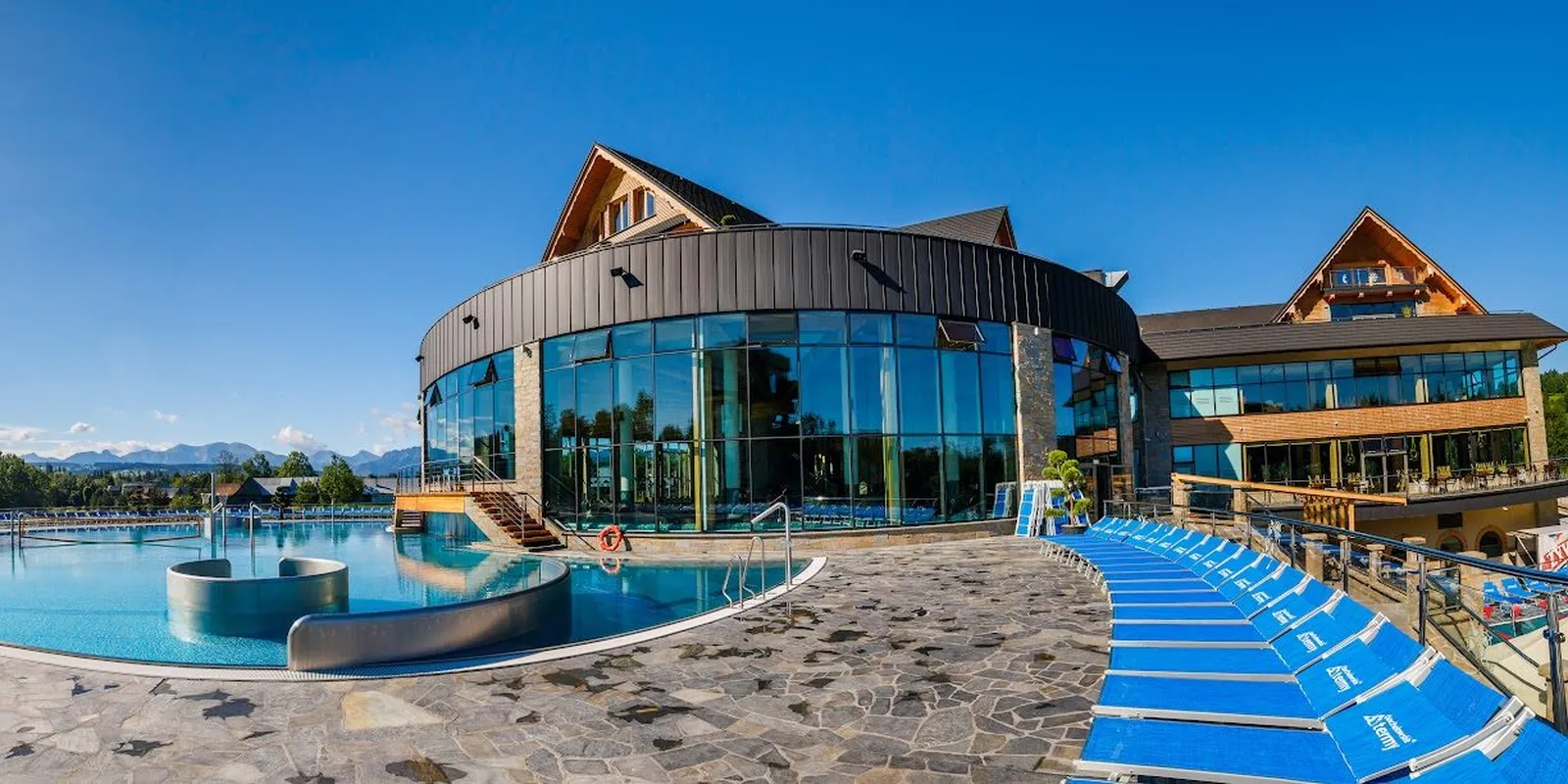
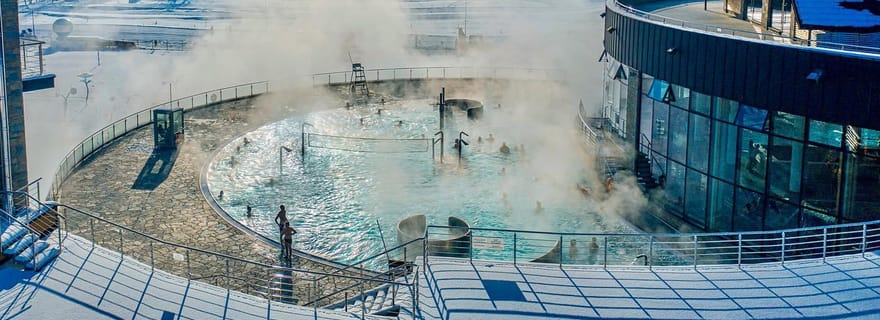
The water of the Chochołów baths rises from a well about 3.6 km deep, Chochołów PIG-1, drilled between 1989 and 1990: at the surface it is around 80 °C and has to be cooled before it reaches the pools. The complex brings together 52 pools on almost 4,500 m² of water surface, at temperatures of around 32-38 °C, and describes itself as the largest in Podhale.
From the well to the pool
The well passes through almost 3,000 m of flysch (2,996 m) before reaching Middle Triassic rocks, and its exploitable resources have been estimated at 160 m³ per hour. The installations came into use in June 2016. Geothermal energy heats the entire complex. The water is rich in minerals; in the healing zone raw sulphide and brine waters are used.
The pools are very different from one another: there are geysers, a lazy river, a wave pool, hydromassage stations and a sandy beach; in summer an outdoor water playground also operates. Anyone who wants to move will find a sports pool with swimming lanes and, outdoors, a basin where people play volleyball and basketball in the water. There are three slides, over 300 m in all: a trapdoor slide and two pontoon slides.
Saunas, salt rooms and a normobaric chamber
The Saunarium has several saunas: the Sauna Pierońska, the largest in Podhale, holds up to 300 people; then there are a dry sauna, a juniper sauna, an infrared sauna, a two-storey salt-and-herb sauna, and the rustic Góralska Chata on the terrace. Besides these there are a steam bath, a salt grotto and a salt room with a water cascade, a relaxation room with water beds and a snow cave and a viewing terrace for resting. The rule is clear: saunas are entered naked, without swimwear or jewellery, and in the dry ones the towel goes under the whole body.
The normobaric chamber is entered through an airlock where the pressure changes very slowly over 3-4 minutes. Inside, according to the operator, the pressure is about 1,500 hPa (outside it usually does not exceed 1,000 hPa) and the air contains 32-40% oxygen instead of the roughly 21% of everyday air. You walk in, sit down and breathe for a two-hour session; children under 6 are not admitted. Use is governed by regulations with contraindications that must be read beforehand: the categories include acute infections with fever, pregnancy, epilepsy, pacemakers, some eye, ear and lung conditions, and claustrophobia. The complex is completed by a SPA zone at the foot of the Tatras, a sports centre with a gym and a restaurant.
Chochołów, the village that washes its houses
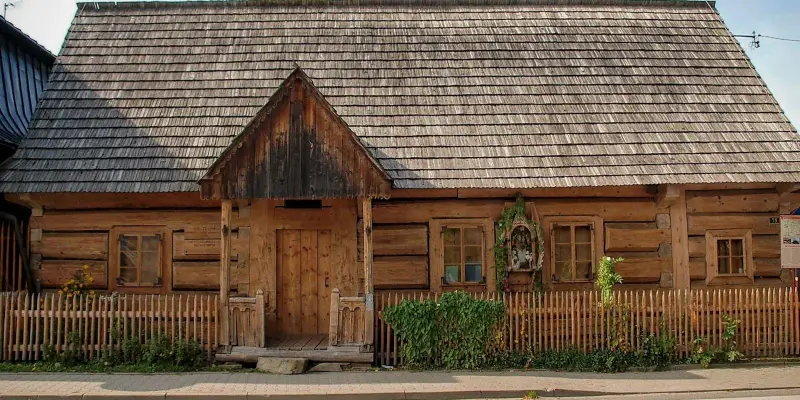
The village, founded in 1592 as a royal village, lies in the Czarny Dunajec valley and almost all its houses are original highlander timber cottages. Twice a year, at Easter and Corpus Christi, the residents wash them on the outside with soapy water. The Church of St Hyacinth (św. Jacek) is of brick: work began in 1853 and ended in 1873.
Chochołów is also a place in Polish history. On 21 February 1846 highlanders from here and nearby villages, led by the organist and teacher Jan Andrusikiewicz and by Wojciech Lebiocki, a veteran of the November Uprising, attacked the customs-guard barracks at Sucha Góra; the next day a detachment of guards and peasants from the Czarny Dunajec valley put the revolt down and more than a hundred people were imprisoned. The uprising museum, a branch of the Tatra Museum, is housed in the Bafia family cottage, a building from the late eighteenth century.
To organise the day it helps to separate the activities: water at 32-38 °C is lukewarm rather than hot, and after a sauna the body asks to cool down and rest. If you arrive after a mountain walk, the pools are a way to ease tired legs, but they should not be added to a day of effort without breaks. Anyone with health problems or taking medication should read the contraindications of the normobaric chamber before using it.
Where it is
Tours and activities
-
 From €5 per person
Zakopane
Chochołowskie Thermal Baths Entry with a Personal Host
★ 4.5 (116 reviews) · Free cancellation
Duration: 3–10 h
Guide in:
See availability Details


-
 From €22 per person
Zakopane
Terma Bania Aquapark Tickets in Białka Tatrzańska
★ 4.6 (132 reviews) · Free cancellation
Duration: 3h30
See availability Details -
 From €81 per person
Zakopane
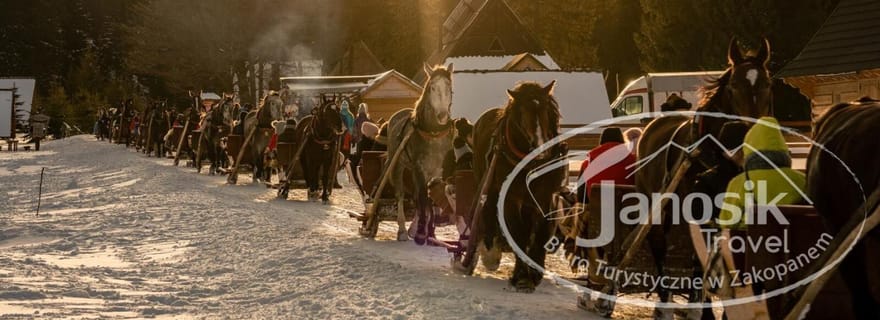
Zakopane: Chochołowska Valley Sleigh Ride with Bonfire
★ 4.4 (58 reviews) · Free cancellation
Duration: 3 h · Hotel pick-up
Guide in:
See availability Details -
 ★ Top rated
From €18 per person
Zakopane
Zakopane and the Tatra Mountains Day Trip from Kraków
★ 4.7 (371 reviews) · Free cancellation
Duration: 5–9 h · Hotel pick-up
Guide in:
See availability Details